Portuguese
  Spanish


Fabiana Santos Amorim da Silva, from the Hinterlands of Pernambuco, was the only representative from the Northeast to qualify in the competition concluded on June 30, and adds to her credentials the title of the first analog astronaut of the municipality and the creation of an astronomical knowledge league
On July 6, 2026, Petrolina, in the Hinterlands of Pernambuco, had a rare reason to look to the sky: a student from Petrolina on the podium of a world competition. According to A Notícia do Vale, chemistry student Fabiana Santos Amorim da Silva, 19 years old, was announced among the awardees of the International Astronomy and Astrophysics Competition, the IAAC, with a bronze medal.
The achievement is significant in its details: the competition gathered more than 9,000 participants from around the world, was contested in three stages concluded on June 30, it was Fabiana’s first participation, and she ended up as the only representative from Pernambuco and the Northeast to qualify, becoming the second Brazilian to win a medal in the history of the IAAC. A debutant, alone in the region and on the world podium.
The debutant who faced 9 thousand competitors

The IAAC is an international competition that tests knowledge of astronomy and astrophysics in successive elimination rounds. There were three stages until the decision, in a funnel that started with more than 9,000 entrants from all over the world and ended with the student from the Hinterlands of Pernambuco among the medalists. For someone entering for the first time, stopping at bronze is the result of someone who had been training for a long time.
-
Rio de Janeiro Launches Unprecedented Operation Against Criminal Gangs Extorting Beach Vendors for $100 Million

-
Entrepreneur Turns Motorhome into Hot Dog Business, Sells 850 in Four Days, Plans to Travel Across Brazil

-
Paraíba Teen Foregoes 15th Birthday Party for Laptop, Wins Gold in Brazil’s Largest Public School Math Olympiad
-
Surprising Discovery Reveals That the History of Artesian Wells Began Over 7,000 Years Ago, Revolutionizing Humanity’s Access to Groundwater



And she had indeed been training, but away from the spotlight. A chemistry student, Fabiana built her own path in astronomy on her own, accumulating courses and parallel projects while pursuing her degree, the kind of quiet dedication that scientific olympiads reveal every year throughout the interior of Brazil.
Analog Astronaut and Scientific League Creator
The bronze is not the young woman’s first achievement. According to the Blog do Didi Galvão, Fabiana was the first person from the municipality to become an analog astronaut in 2025, created the Inter-American League of Astronomical Knowledge, and serves as an ambassador for the Wogel Space Lab Brazil, where she received her training. An analog astronaut is someone who participates in simulated missions in environments that replicate space conditions, a training used in research.
The resume shows a pattern: instead of waiting for the opportunity to reach the Sertão, she built her own structures, from the scientific league to the role of ambassador. When the international competition appeared, the student already had plenty of experience to turn the first attempt into a podium finish.
Why a Medal Like This is So Valuable Coming from Petrolina
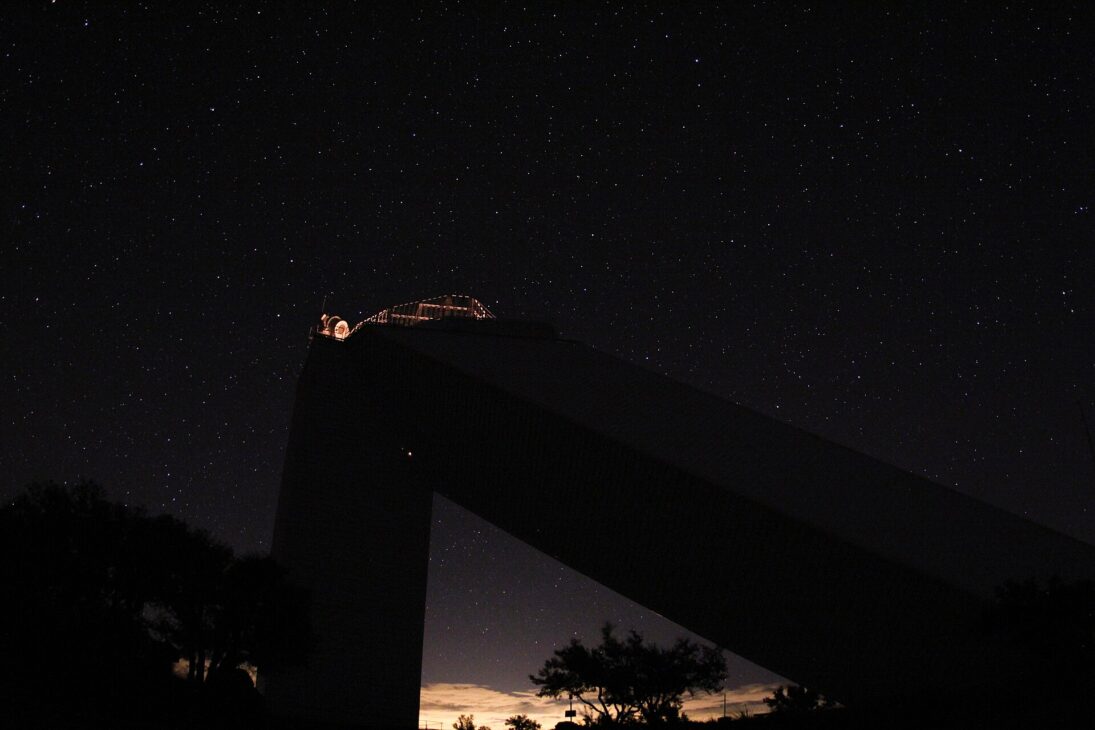
The geographical context gives another dimension to the result. Competitive astronomy is usually concentrated in major centers, near universities with observatories, olympiad clubs, and a tradition of medals, and Fabiana reached the world podium starting from Petrolina, more than 700 kilometers from the capital of Pernambuco. The clear sky of the Sertão, ironically, is one of the best in the country for stargazing; what is lacking is infrastructure, not talent.
Such results tend to have a domino effect in cities. The medal becomes news, the news becomes inspiration in the classroom, and the next student who likes physics or astronomy discovers that it’s possible to compete with the world without leaving the countryside. This is how unlikely scientific olympiad hubs have emerged throughout Brazil.
What is the IAAC and How Can a Brazilian Student Participate
The competition that awarded the student from Petrolina is one of the most accessible entry points in the international scientific circuit. The IAAC is contested remotely, in elimination rounds with increasingly difficult astronomy and astrophysics problems, allowing a student from any city in Brazil to face competitors from around the world without needing to travel, requiring only registration, dedication, and internet. It’s a format designed to discover talent wherever it may be.
This drawing explains why medalists have been emerging from increasingly less obvious places. Without the barrier of displacement and without the requirement of a laboratory, what decides the competition is study: mastering celestial mechanics, star luminosity, telescopes, and basic cosmology, content that is now available in open material from universities and olympiads. The funnel is tough, but the entry door is open to anyone.
The Sky of the Sertão: the Natural Observatory that Brazil Forgets
There is a geographical irony in the story. The northeastern Sertão has one of the clearest skies in the country, with low humidity, few clouds, and less light pollution than the capitals, conditions that professional observatories worldwide seek, and yet the region almost does not appear on the map of Brazilian astronomy. The natural potential is up there, every night, waiting for structure and encouragement on the ground.
Initiatives like the scientific league created by Fabiana herself address exactly this gap, organizing those interested in the subject and showing the way to competitions. If the interior of Pernambuco produces more medalists in the coming years, the seed will have been planted now, by those who decided not to wait.
Brazil Competing by Looking at the Sky
Fabiana’s achievement adds to a growing crop of Brazilians awarded in international scientific competitions. From mathematics and physics olympiads to astronomy tournaments, students from the country have been collecting medals in global competitions, many of them coming from public schools and small towns, proving that Brazilian scientific talent is spread across the map, not concentrated in major centers. What changes from one city to another is access to information that these competitions exist.
For the student reading this story, the practical message is direct: most international science competitions have online stages and accessible registration, and preparation can start with free material. The distance between the interior and the world podium has never been so short.
The Lesson of the Student Who Didn’t Wait for an Invitation
Fabiana’s bronze carries a message greater than the medal. She did not wait for an astronomy course to appear in Petrolina: she studied on her own, became an analog astronaut, founded a scientific league, and at the first chance to measure forces with the world, she climbed the podium as the second Brazilian awarded in the competition. Each stage was built before any spotlight existed.
At 19 years old, the chemistry student from the Sertão has already left her name in the history of a world competition.
Tell us in the comments: did you know about the international astronomy competitions, and do you think the interior of Brazil can reveal the country’s next great scientists?