Portuguese
  Spanish


Launched in November 2025 by Luizalabs in partnership with Meta and Google, the tool concentrates the entire purchase within the WhatsApp conversation, has already accumulated more than 16 million conversations, and has a satisfaction rating around 85
On July 7, 2026, Magazine Luiza announced the number that changes the conversation about app sales in Brazil. Lu’s WhatsApp, a shopping channel powered by artificial intelligence, surpassed R$ 100 million in sales in just eight months of operation, according to Money Times, which revealed the data exclusively.
The character that for years was just the friendly face of advertisements has become a real sales operation: through the channel, the customer chats with Lu on WhatsApp, requests the product, negotiates, and completes the purchase without leaving the message screen. It’s the store counter rebuilt inside the app that Brazilians open the most every day.
How the store works within the conversation

The mechanics are simplicity taken to the limit. The entire sales process takes place within WhatsApp, with artificial intelligence guiding the dialogue: the consumer describes what they are looking for, Lu suggests products, answers questions, applies conditions, and completes the order in the same conversation, according to Money Times. There is no app to download, no new registration, and no cart to abandon.
-
Mozambican Teen Develops Drone Using Market Kits to Deliver Food and Medicine to Remote Areas

-
Experiment Shows Sea Water-Treated Ice Resists Melting Better from May to September

-
Israel Develops “Stone Battery” Using Crushed Rocks to Store Energy for Factories, Releasing Industrial Steam When Solar and Wind Power Are Unavailable
-
In the Desert, Nearly Black Solar Panels Could Trigger Rainfall: Researchers Aim to Prove if Heat from Solar Farms, Combined with Humid Winds and Artificial Dunes, Can Generate Clouds in Arid Regions




The technology was developed by Luizalabs, Magalu’s technology arm, in partnership with Meta, owner of WhatsApp, and Google, according to Money Times. It is a heavyweight alliance: the retailer provides the catalog and brand, Meta provides the channel where the entire country is already present, and Google provides the AI muscle.
The numbers that impress retail
The performance in eight months surprised even those who follow the sector. According to E-Commerce Brasil, the channel has already been used by 7.7 million unique users, recorded a conversion rate three times higher than the company’s existing digital channels, and achieved a satisfaction score (NPS) of 84.5. In digital retail, a conversion rate three times higher is not an improvement, it’s another category of result.
The engagement also shows that the customer has returned to talking with the store, literally. There were more than 16 million conversations and 7 million interactions recorded, with about 20% of consumers returning to buy through the channel, according to Money Times. Repeat purchase is the most important data: it shows that the novelty was not just a first-time curiosity.
Why conversational selling works so well in Brazil
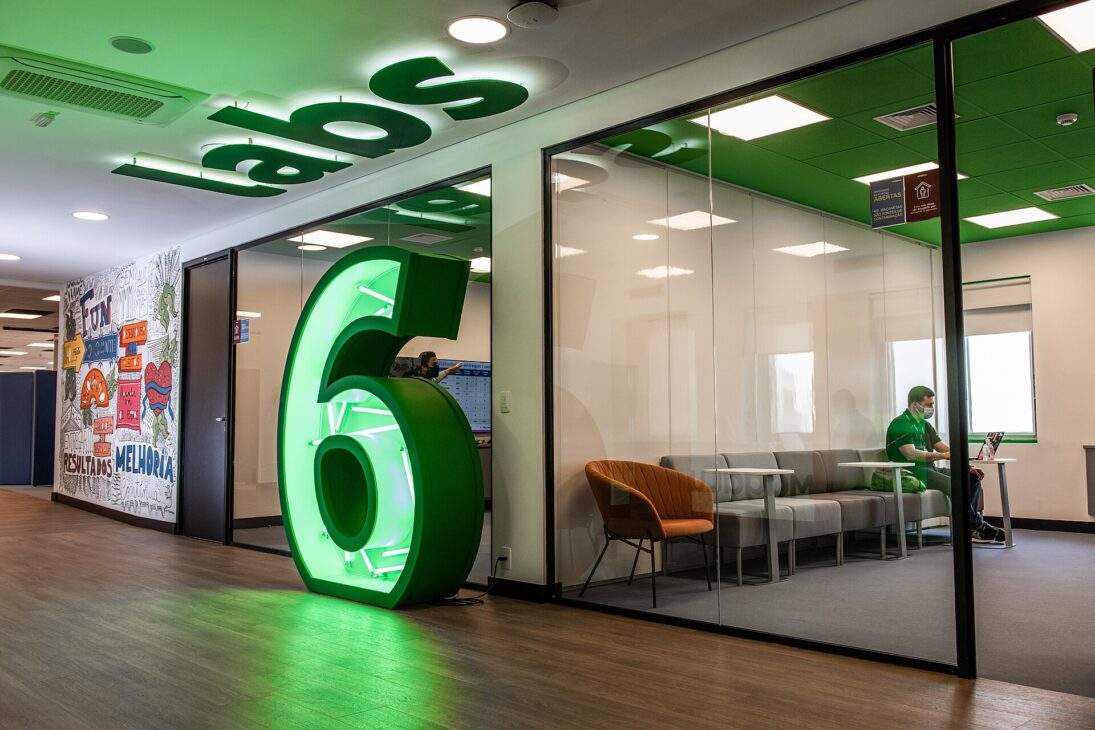
The result has a cultural explanation that any neighborhood shopkeeper knows. Brazilians have always bought by chatting, bargaining at the counter, and asking the seller for recommendations, and WhatsApp da Lu simply brought that counter back into the cell phone, with a salesperson who responds immediately, at any time. Traditional e-commerce, with search and cart, has always been cold compared to this.
There’s also the reach factor: WhatsApp is installed on practically every smartphone in the country, including the simplest devices and generations that never adapted to store apps. For millions of Brazilians, buying via messenger is more natural than browsing a website, and the checkout line has turned into a green message bubble.
Lu, from brand ambassador to selling machine
The blue character from Magalu was already a marketing phenomenon, with millions of followers and presence in a national campaign. The difference now is that Lu has gone from just presenting products to selling them end-to-end, transforming years of public familiarity with the character into trust when closing the purchase. The customer doesn’t feel like they’re talking to an unknown robot, they feel like they’re talking to Lu.
This asset is difficult to replicate. Competitors can hire the same AI technology, but they don’t have a character with decades of brand building to put on the other side of the conversation. In the chess game of Brazilian digital retail, Magalu played a piece that only it had.
The silent war for the Brazilian chat
The movement of Magalu does not happen in a vacuum, it starts a race. The global retail industry has already understood that the next competition is not about who has the best app, but about who occupies the customer’s conversation, and in Brazil, this conversation has only one address: WhatsApp, present in practically every cell phone in the country. Whoever builds the most seamless sales operation within the messenger gains an advantage that no website can reach.
In this game, every piece matters. AI needs to understand colloquial Portuguese, slang, and hurried customer audio; the catalog needs to respond in seconds; the payment needs to be completed without leaving the conversation. It’s heavy engineering disguised as a chat, and that’s exactly why the project involved Luizalabs and giants like Meta and Google, instead of just being an off-the-shelf chatbot.
The size of the leap for a retailer in recovery
The company’s context makes the number even more symbolic. Magazine Luiza has spent the last few years squeezed by high interest rates and competition from Asian platforms, and finding a new channel that converts 3 times more than existing ones is the kind of lever that can change the trajectory of an entire retailer. R$ 100 million is still a small fraction of the company’s total revenue, but the speed of the curve is what the market is watching.
There is also the showcase effect on the brand: the company that created the most well-known character in national retail now shows that it knows how to transform it into cutting-edge technology. For investors, it’s a sign that the house’s innovation remains alive; for consumers, it’s the promise that shopping will become less and less bureaucratic.
What the R$ 100 million says about the future of shopping
The R$ 100 million mark in eight months is more than a showcase number. It indicates that the next frontier of Brazilian retail is not a new app, it’s the conversation: the purchase migrating to the messenger, guided by AI, with the entire store compressed into a chat. If the conversion rate remains 3 times higher, the trend is for the channel to become a priority for investment, and Magalu’s movement forces the competition to respond.
For consumers, the competition is good news: more channels fighting for your attention means more convenience and better conditions.
Tell us in the comments: would you already buy a TV or a refrigerator by chatting with a virtual assistant on WhatsApp, or do you still prefer to see the product on the website or in the store?