Portuguese
  Spanish


Sam Adam Hoffmann founded the startup in Curitiba in November 2022 alongside Vanessa and Mariana Motta de Matos, with an initial investment of R$ 6 thousand divided among the three, and the business has already impacted more than 6 thousand young people and aims for 100 thousand by 2027
On July 7, 2026, the story of Professor Sam Adam Hoffmann spread across the country as a portrait of an unlikely career turnaround. After more than ten years teaching biology, earning around R$ 5 thousand per month, he realized that students were not engaged in any subject, and began using games in the classroom to capture the class’s attention.
According to UOL, from this experience, Investeendo was born, created in November 2022 with Vanessa Cristiane Motta de Matos and her daughter, Mariana, and an initial investment of just R$ 6 thousand, about R$ 2 thousand from each partner; last year, the company earned R$ 1.2 million. It’s the education business that was born from chalk, board games, and R$ 6 thousand in the cash register.
The teacher, the bankers, and the R$ 6 thousand bet
The partnership brought together two worlds that rarely intersect. Sam came from the classroom, and Vanessa and Mariana conducted voluntary financial education activities with young people from public schools, until the three decided to transform the two experiences into an educational games company, according to UOL. The initial money paid for the production of the first kit, tests in partner schools, digital tools, and accounting.
-
65-year-old man lived in Arizona forest for 8 years, built illegal campsite, and accumulated half a ton of trash before being discovered by U.S. Forest Service agents

-
Brazilian Entrepreneur Launches Staff-Free Laundry Chain with 636 Locations Nationwide, Generating $5 Million in Revenue

-
From Painting Houses in the U.S. to Producing Beyoncé and Paul McCartney Shows, Entrepreneur Opens Luxury Hotel in Brazil’s Trancoso with $8 Million Revenue Goal
-
Massive 109-Meter, 5,500-Ton Ship Built to Supply Energy in War Crossed the Atlantic, Powered Rio in the 1950s, and Was Sunk in Pará to Protect Tocantins Riverbank




The validation phase was treated as a real experiment: before scaling, the trio wanted proof that the material improved learning. The biggest obstacle, in his words, was learning to venture into a niche without a manual for educational games. “Although it seems like there’s a lot of content available on the internet and in books, each niche is different, and in the education part, there’s little for those who want to venture,” Sam told UOL.
The app where the allowance is virtual and the interest is real
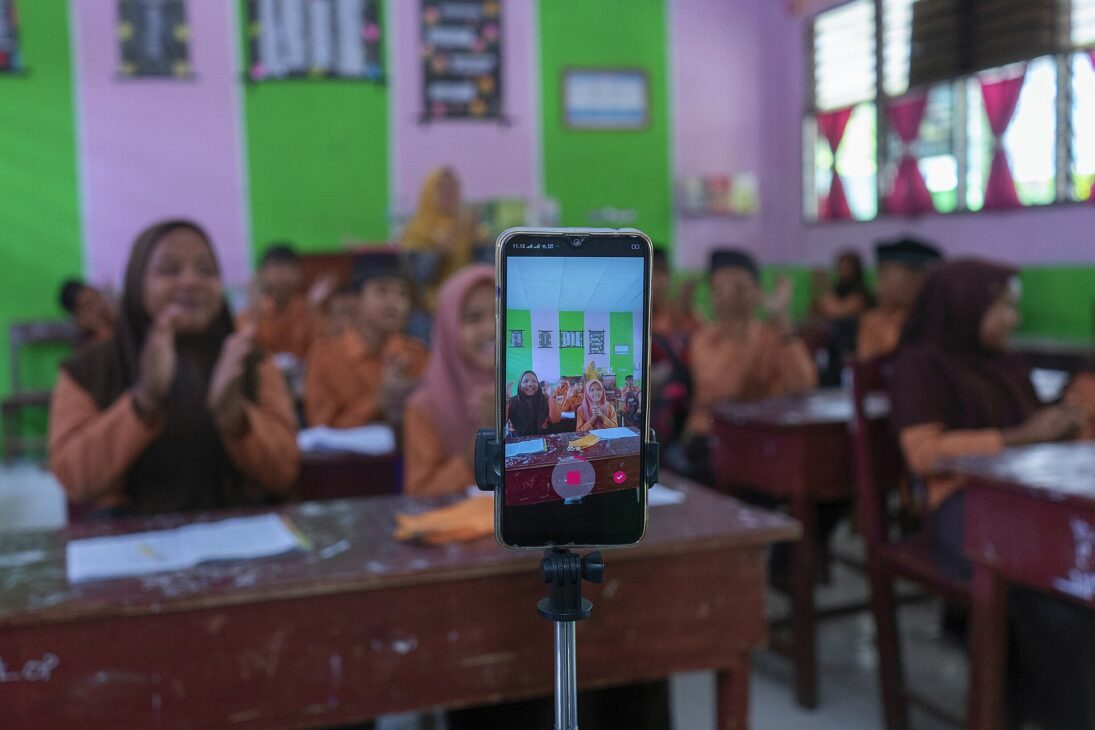
The main product is a gamified app used within schools. Students receive missions and tasks, accumulate digital coins as they complete activities, and use this virtual money to simulate investments in fixed income and variable income, learning in practice concepts such as liquidity, grace period, risk, and profitability, according to UOL. The platform even allows negotiation between peers, mimicking the dynamics of a miniature financial market.
The stroke of genius is in the “little shop” that each school customizes. With the accumulated coins, the student buys real benefits: taking a test in pairs, extra minutes of recess, eliminating a question from the evaluation, or reserving the court during the break. The reward ceases to be a grade and becomes something that teenagers truly value, and good management of their own “money” starts to have immediate consequences.
From the board to the management of fake companies with real problems
The startup also creates analog materials, and the most ambitious is the “Entrepreneurial Challenge”. In this format, the Investeendo team spends a period immersed in real companies to understand their operation and transform them into games, and then students take over the management of mini-versions of these companies, learning administration, strategy, and decision-making in practice, according to UOL. It’s a simulated internship within the classroom.
The model caught the attention of the innovation ecosystem. Paulo Krauss, technical director of the Curitiba Development and Innovation Agency, summarized to UOL what differentiates the business: “The model is very attractive to students, with real-time application of learning and gamification. Young people have immediate access to the benefits generated by good management of their financial resources.”
Awards, Shark Tank, and the goal of 100,000 young people
The recognition came in waves. According to the Observatório do Terceiro Setor, Investeendo has already been awarded the Prêmio Legado and Shark Tank Brasil, impacting over 6,000 young people with financial education and aiming to reach 100,000 young people by 2027. The founders’ thesis is that teaching about money early combats the early indebtedness that plagues Brazilian families.
The local ecosystem also embraced the startup, which gained a prominent place at Pitch Vale do Pinhão, Curitiba’s innovation showcase. For a company of three founders that started with R$ 6,000, each of these stages becomes a sales channel: schools and companies that watch the presentation become potential clients.
Why Financial Education Became a Giant Market in Brazil
Investeendo’s timing couldn’t be better. Brazilians reach adulthood without ever having learned to deal with money in school, and the result is seen in the debt numbers of families and the explosion of online betting among the younger generation, a scenario that has turned financial education from a luxury into a national urgency. Private schools have become buyers of this type of solution, and public networks are starting to follow.
For the teacher thinking about entrepreneurship, the case shows a concrete path: classroom knowledge, which seems like a commodity, is worth gold when packaged as a product. Sam didn’t invent gamification or financial education; he combined the two into a format that schools can buy and students want to use.
The Lesson of the Teacher Who Multiplied His Own Salary
The measure of the turnaround is simple to gauge. The R$ 5,000 teacher’s salary turned into a company that earns R$ 1.2 million per year, and the R$ 2,000 investment from each partner multiplied into a nationally awarded business in less than four years. And the raw material for all of it was exactly the problem he faced every day: uninterested students.
While many people complain about the profession, he turned its pain into a product.
Tell us in the comments: if your school had a virtual currency that was worth extra recess and double exams, would you have learned to invest sooner?