






 Portuguese
  Spanish


Satellite monitoring reveals silent transformation in global freshwater reserves, with increasing impacts on cities, agriculture, and ecosystems, indicating unprecedented pressure on aquifers and persistent changes in the terrestrial water cycle.
The loss of freshwater on continents has reached a new alert level after a study led by Arizona State University indicated that 101 countries, home to about 75% of the world’s population, have registered a reduction in reserves since 2002.
Published in the journal Science Advances, the work analyzed more than two decades of measurements made by the GRACE and GRACE-FO satellites, missions developed in partnership by the United States and Germany to detect mass variations on Earth, including changes in water storage.
The data shows that the reduction has ceased to appear as a localized phenomenon and has begun to form large connected areas of drying.
-
A fossil kept for years in a small museum in Montreal concealed 450-million-year-old soft tissue, a discovery that has only happened once before in history.

-
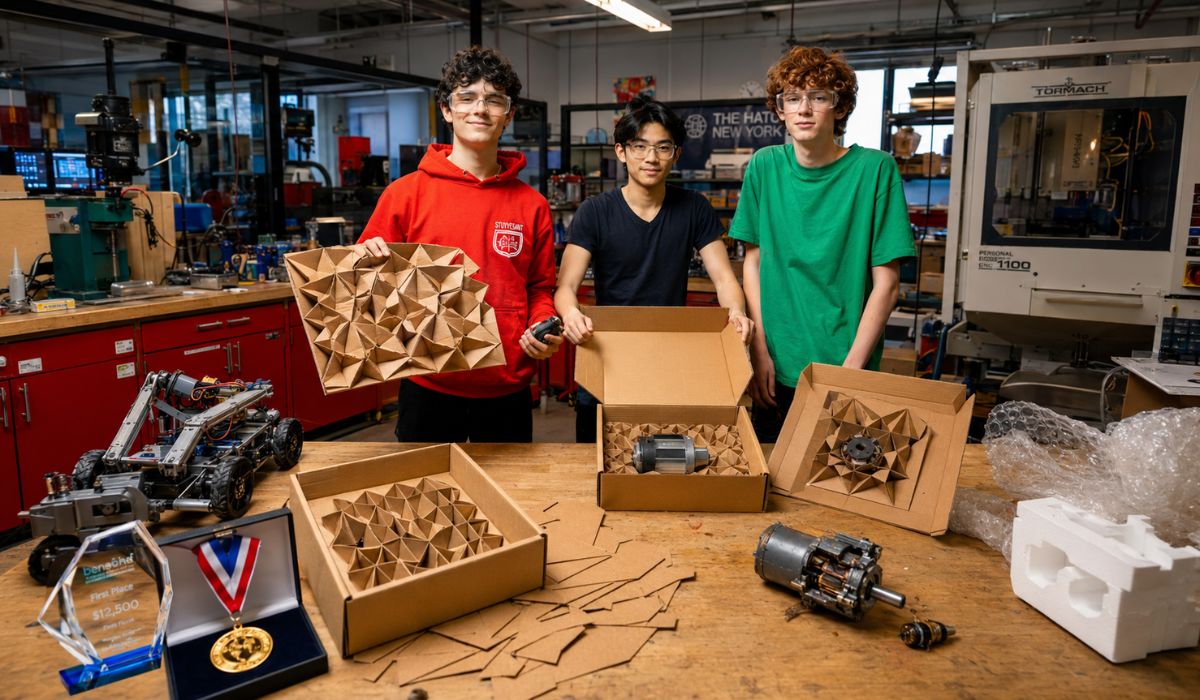
Three teenagers transform cut cardboard into Japanese origami-style packaging that promises to retire styrofoam and bubble wrap, win a $12,500 prize, and target giants like Amazon, FedEx, and Home Depot after a robot motor arrived broken.

-
The large jar blender has a rival: Oster Ultra Power bets on 1,000 W, six stainless steel blades, and two portable cups with leak-proof lids.

-
Tesla injected an additional $250 million into the German factory, doubled the battery cell target, and opened its own production line for startups.



The process affects aquifers, rivers, agricultural soils, urban supply systems, and regions dependent on groundwater to get through drought periods.
Satellites indicate continuous advance of continental drying

The research indicates that areas experiencing water loss advance each year at a rate equivalent to about twice the territory of California.
At the same time, dry regions became drier at a faster rate than the gain observed in wet areas.
This imbalance indicates a persistent change in the terrestrial water cycle.
According to the authors, the pattern observed by satellite shows that continental storage has become more unstable and has begun to respond more intensely to climate extremes.
The most sensitive signal appears in aquifers.
According to the study, 68% of water loss in continental regions not covered by glaciers came from groundwater, which reinforces the impact of excessive pumping in agricultural and urban areas.
These reserves usually replenish slowly and act as a kind of protection during dry periods.
When extraction exceeds natural replenishment, cities, crops, and industries become dependent on a resource that is increasingly difficult to recover.
Critical regions concentrate losses in the Northern Hemisphere
Researchers identified four major drying regions in the Northern Hemisphere.
One of them involves southwestern North America and Central America, an area characterized by intensive agriculture, metropolises, and urban centers in arid zones.

Another band covers Alaska and northern Canada, where the loss of snow, ice, and permafrost alters terrestrial water storage.
Also appearing in the survey are northern Russia and a wide area connecting the Middle East, North Africa, and parts of Eurasia.
The mapping shows that previously isolated hotspots have begun to connect.
As a result, water pressure no longer affects only specific basins but gains continental scale, with implications for food, energy, urban planning, and water security.
Intensive use of aquifers accelerates global water crisis
The combination of climate change, extreme droughts, and unsustainable groundwater use appears as the main driver of loss.
In high latitudes, warming reduces snow, ice, and permafrost; in agricultural areas, drought increases aquifer extraction.
This cycle pressures strategic reserves.
With less surface water available, groundwater pumping increases; with more pumping, aquifers shrink; with lower aquifers, entire regions become more vulnerable to new droughts.
The study also links continental water loss to sea level rise.

Part of the water extracted from underground or released from terrestrial reservoirs reaches the oceans, expanding an impact that goes beyond local supply.
The authors also point to an inflection after the strong El Niño in the middle of the last decade.
Since then, the decline in freshwater storage has remained at a low level, while continental drying has begun to surpass losses observed in glaciers and ice sheets.
Freshwater enters the center of planetary infrastructure
By bringing together moist soil, snow, ice, vegetation, surface water, and aquifers into a single account, the research treats freshwater as an essential part of the planet’s infrastructure.
The loss affects not only isolated reservoirs but also the foundation that sustains cities, crops, and ecosystems.
The GRACE and GRACE-FO satellites allowed this dynamic to be observed on a global scale because they measure gravity variations associated with mass displacement.
In practice, they reveal where Earth gains or loses water over time. The researchers’ interpretation is that the signal is no longer a fleeting oscillation.
The continuous reduction in populous, agricultural, and urbanized countries indicates that groundwater management will be one of the most critical areas for climate adaptation and food security in the coming decades.


