





 Portuguese
  English
  Spanish
  4 min of reading
  0 comments


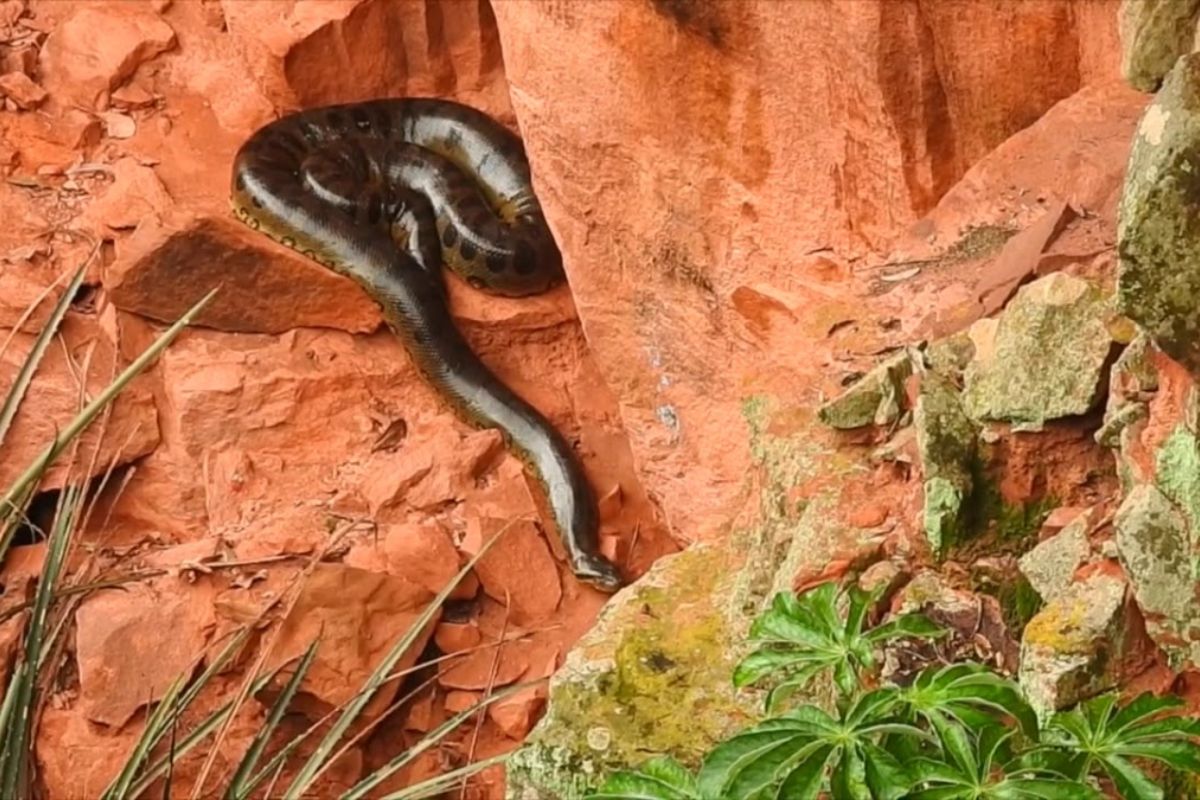
Snake Lives Isolated in the Buraco das Araras, Rare Dolina in the Midwest, with 100 Meters of Depth and 500 Meters of Circumference; Sighted in 2017, Monitored from a Distance, Surrounded by Research, Preservation, and Mystery
The snake lives isolated at the bottom of a crater about 100 meters deep in the Midwest of Brazil and, since the first sighting in 2017, it has become a case closely monitored by researchers and guides.
The setting is the Buraco das Araras, a rare geological formation classified as a dolina, where access to the interior is extremely restricted, which keeps the serpent under monitoring from a distance and broadens the questions without an official response.
Where the Snake Lives Isolated and Why the Place is Rare
The snake lives isolated inside the Buraco das Araras, described as a dolina, a depression formed by the dissolution of rocks.
-
Wax notebook falls into latrine 800 years ago, survives intact in Germany and reveals Latin notes that may expose the routine of a high-status medieval merchant.

-
After more than 11 years orbiting Mars, NASA declared the MAVEN probe lost, which disappeared after passing behind the Red Planet in December, began to spin abnormally, depleted its batteries, and never responded to controllers on Earth again.

-
China creates a capsule with artificial intelligence that scans the stomach in just 8 minutes and can reduce costs by up to R$ 1,400, paving the way for a new era of gastrointestinal diagnostics without tubes, sedation, and discomfort for patients.

-
Scientists simulate nuclear fireball in the laboratory and discover a surprise in the radioactive fallout by observing how cesium, uranium, and cerium change when they remain at high temperatures for a longer time.



The structure is approximately 100 meters deep and about 500 meters in circumference, with nearly vertical rock walls.
The internal environment is marked by typical Cerrado vegetation on the walls and by particular conditions at the bottom: permanent or seasonal water pools form, and there are trees adapted to low sunlight. It is in this set of factors that the snake lives isolated.
The Sighting of 2017 and the Monitoring from a Distance
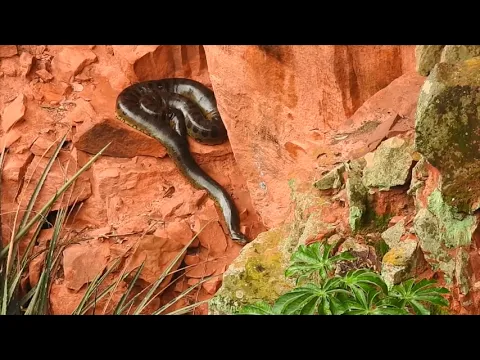

The snake lives isolated and was first sighted in 2017, when a tourist, using binoculars, spotted the animal at the bottom of the crater.
Since then, the case has attracted the attention of visitors and those who monitor the area.
Since the first record, the snake lives isolated under monitoring from a distance, because access to the interior of the hole is considered extremely restricted, limiting direct observation and intervention.
The Mystery of How the Snake Lives Isolated at the Bottom of the Dolina
The way the serpent reached the interior of the crater is described as unknown.
Among the hypotheses raised by guides and researchers, there is the possibility that the animal was washed away by a flood during periods of heavy rain.
In this scenario, the snake would have gotten stuck at the bottom, with no way out, due to the height and the slope of the rock walls.
This point sustains the central enigma: how the snake lives isolated for so long in a space with such rigid physical barriers.
Biodiversity in the Buraco das Araras and What Makes the Snake So Discussed
The bottom and edges of the Buraco das Araras host a biodiversity described as rich, with birds, reptiles, and small mammals.
Although the name refers to the macaws that soar and nest along the edges, the presence of the serpent has become one of the most curious and discussed aspects.
In this context, the snake lives isolated as an element that contrasts with the popular association of the site with birds, while reinforcing the ecological value of the environment.
Preservation, Access Rules, and What the RPPN Changes in Practice
In 2007, the Buraco das Araras was recognized as a Private Natural Heritage Reserve (RPPN).
This type of conservation unit is created by the owner’s initiative and aims to preserve local biodiversity, according to federal decree No. 5,746/2006.
Since this recognition, the entry of people into the interior of the dolina is prohibited, being allowed only in exceptional cases of scientific research, always with authorization and oversight from state and federal environmental agencies.
In practice, this helps explain why the snake lives isolated with indirect monitoring and not with constant human presence.
What is Still Lacking Officially About the Snake Lives Isolated
The case gathers scientific attention, interest from visitors, and strict preservation limits, but the narrative remains with gaps.
The snake lives isolated, is monitored from a distance, and the flood hypothesis exists, but without official confirmation on how the animal arrived and how it survives in the location.
With access prohibited and research conducted only under exceptional conditions, the mystery continues to be sustained by remote observation and conservation rules.
Do you think the priority should be to keep the area untouched, even with the snake living isolated at the bottom, or should exceptions be made to investigate more closely what really happened?




-

-

-

-

-

-

14 people reacted to this.