





 Portuguese
  English
  Spanish
  4 min of reading
  0 comments


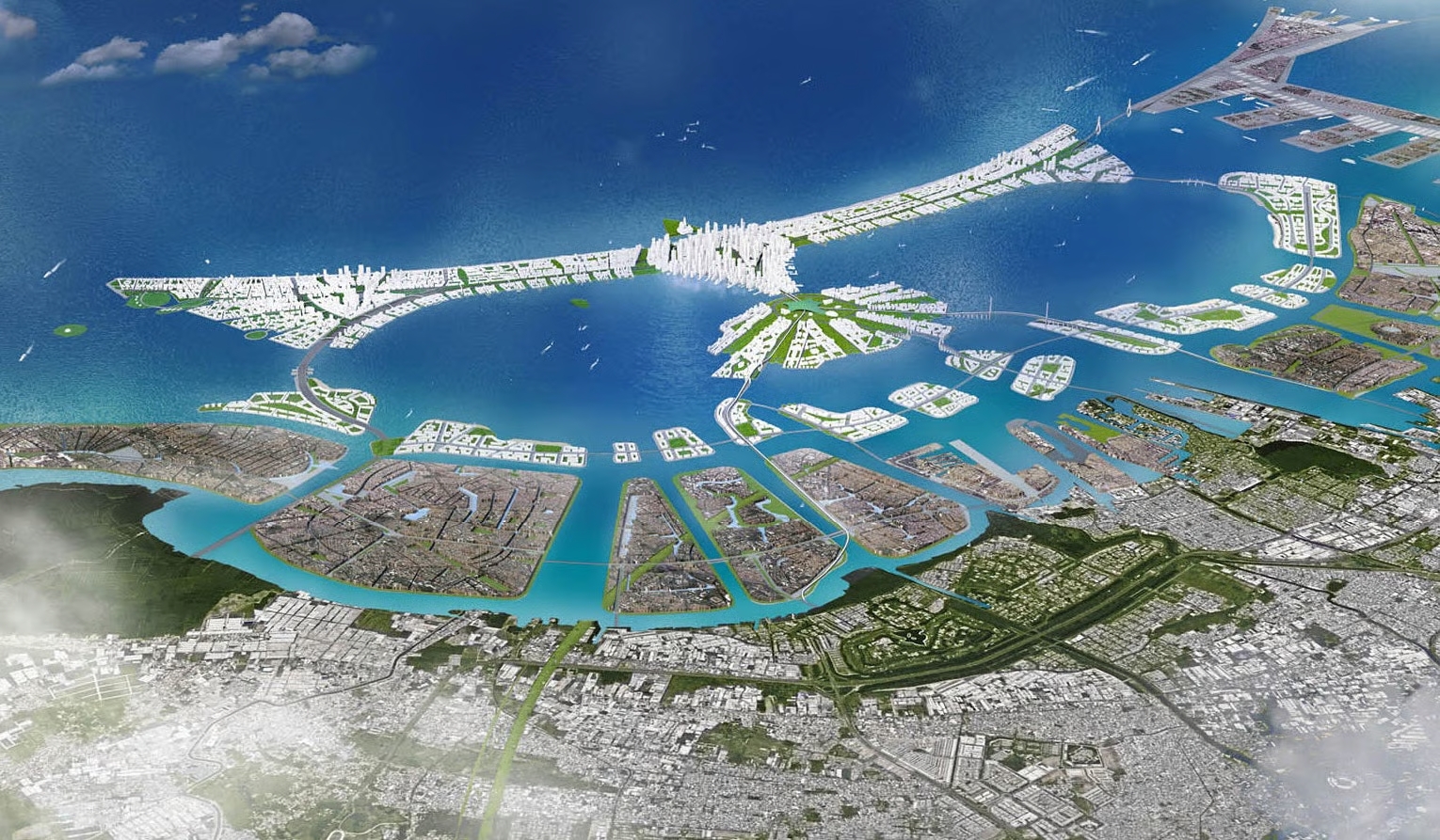
A wall of more than 700 km and up to US$ 80 billion attempts to stop the advance of the sea, land subsidence, and the risk of urban collapse in one of the most threatened coastal regions on the planet.
The work is happening in Indonesia and is named Great Sea Wall of Indonesia, also internationally known as Giant Sea Wall. It is a national megaproject for coastal defense, planned to stretch over more than 700 kilometers along the northern coast of Java Island, a region where some of the country’s most important urban, industrial, and port areas are concentrated. The total estimated cost varies between US$ 40 billion and US$ 80 billion, depending on the phases, employed technologies, and structural adjustments over the decades. It is not an abstract preventive work: it addresses an ongoing, visible, and measurable problem.
A territory that is literally sinking
Unlike other coastal cities threatened only by the gradual rise of sea levels, here the risk is twofold. In addition to the ocean rising, the urban land is sinking at an accelerated pace, a phenomenon known as subsidence.
In several monitored areas, official measurements indicate subsidence of 5 to 12 centimeters per year — one of the highest rates ever recorded in urban environments worldwide.
-
How much does it cost to plaster a 102 m² house: project shows an expense of R$ 40.4 thousand with labor, materials, and extras

-
Germany prepares three giants of 34,000 tons in the North Sea to convert offshore wind energy into high-voltage electricity, in a 6 GW project that will feature converter platforms, HVDC connection, and works scheduled until 2031.

-
In southern Iraq, a structure made solely from marsh plants creates arched halls, dispensing with wood and steel, and showcases an ancient engineering that still challenges modern architecture.
-
While traditional construction consumes enormous amounts of energy and cement, a new material created by scientists uses an enzyme to transform CO₂ into solid minerals, hardens in hours, and could revolutionize civil construction.



In practical terms, this means that in just a decade, entire neighborhoods could be more than a meter below the original level.
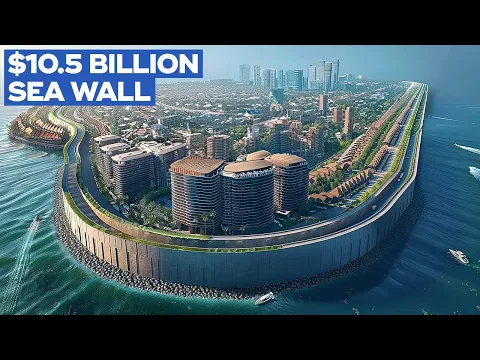

The main cause is not natural geological, but human: excessive extraction of groundwater. Millions of residents, industries, and logistics complexes rely on deep wells for supply, which causes the gradual collapse of soil layers when water is removed.
The result is a vicious cycle:
- the more the soil sinks, the more vulnerable it becomes to the invasion of the sea;
- the more the sea advances, the greater the dependence on pumping and artificial containment.
What exactly is the 700 km wall
The Great Sea Wall is not a simple wall, nor an isolated dike. It was designed as an integrated system of hydraulic, coastal, and urban engineering, functioning as a continuous infrastructure along the coast.

The project includes:
- large-scale maritime dikes
- reinforced barriers against extreme tides
- mobile gates for rivers and canals
- high-capacity pumping stations
- internal water retention reservoirs
- reinforcement of ports, industrial areas, and residential zones
- reconfiguration of the urban drainage system
In some sections, the wall acts as a direct physical barrier against the ocean. In others, it functions as a hydraulic control system, allowing rainwater and river water to be pumped out even when sea levels are higher than the interior of the cities.
A project designed for decades, not for years
Unlike emergency works, the Great Sea Wall was planned to be executed in phases over several decades. Some sections are already under construction, while others are still in the technical studies, environmental impact, and funding phases.
The fragmented schedule is not a sign of delay, but of scale. Few countries in the world have attempted to protect hundreds of kilometers of continuous urban coastline against the combined forces of the ocean, rivers, and land subsidence.
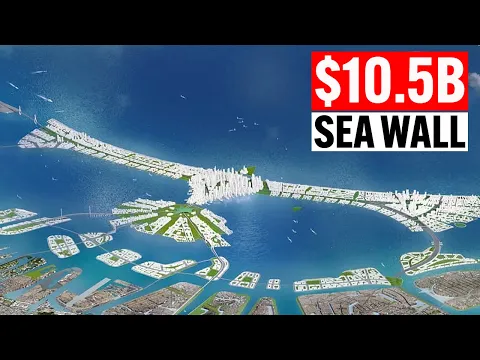
For comparison, the famous Delta Works, in the Netherlands and considered a world reference, covers a much smaller area in a country with more stable geology and a different urban density.
Why the billion-dollar investment is considered inevitable
The values between US$ 40 billion and US$ 80 billion place the project among the most expensive works on the planet. Still, official and independent studies indicate that doing nothing would cost much more.
Without containment, projections indicate:
- definite loss of entire urban areas
- forced displacement of millions of people
- permanent flooding of industrial zones
- paralysis of strategic ports
- collapse of sewage and drinking water networks
- accumulated economic losses of hundreds of billions of dollars
In some coastal areas, floods are no longer exceptional events, but occur daily, turning streets into channels and houses into partially submerged structures.
A race against time and against physics
The Great Sea Wall has become a symbol of a new global dilemma: how far engineering can contain natural processes accelerated by human action. Unlike dams or highways, this work does not create something new; it tries to prevent something from disappearing.
Even with the wall, the country will need to drastically reduce groundwater extraction, reform supply systems, and rethink urban growth. Otherwise, the soil will continue to sink behind the barrier, creating a new type of risk.
A global laboratory for extreme climate adaptation
Engineers, urban planners, and governments from around the world are closely monitoring the project. What is being tested there could serve as a model or a warning for other densely populated coastal regions in Asia, Africa, and Latin America.
More than just a project, the Great Sea Wall represents an unprecedented attempt to keep entire cities habitable in the face of irreversible physical changes.
It is not just a wall against the sea. It is a frontier between staying or disappearing.





-

-

-

-

-

10 people reacted to this.