






 Portuguese
  Spanish
  3 min of reading
  4 comments


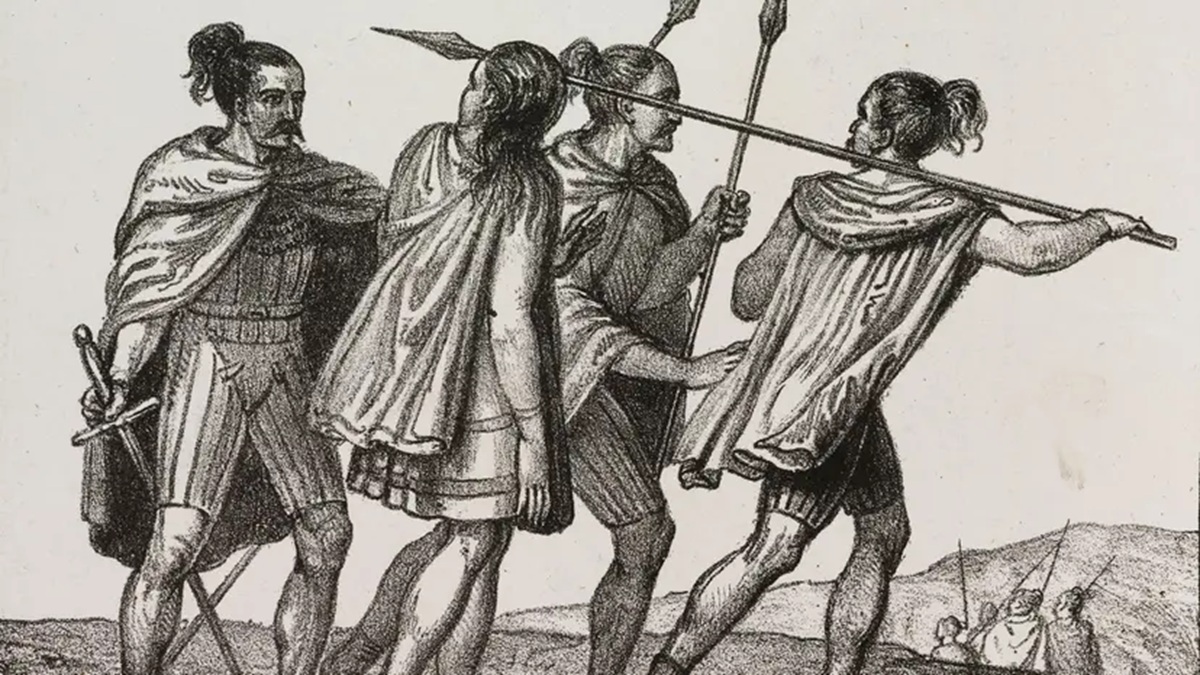


Study Reveals How Western Hunter-Gatherer Genes, Survivors of the Ice Age, Increase the Chances of Living to 100, With 38% More Probability for Italians With These Genetic Characteristics.
A recent study published in the journal GeroScience reveals that the longevity of Italian centenarians is directly linked to their genetic ancestry, with descendants of Western hunter-gatherers, survivors of the Ice Age, showing 38% more chances of living over 100 years.
The Role of Hunter-Gatherers in Longevity
Researchers investigated the distant past of ancestral populations to understand the longevity of people who live over 100 years.
The analysis revealed that Italian centenarians share a common genetic trait: they all descend from the first inhabitants of Europe, the Western hunter-gatherers, who survived the adversities of the Ice Age.
-
Space technology used to search for water on Mars is now hunting for invisible leaks under the streets of São Paulo, using satellites, AI, and chlorine signals to help Sabesp recover up to 6.7 billion liters of water.

-
Japan sends ship to extract mud rich in rare earths at nearly 6,000 meters deep in the Pacific, attempts to lift 350 tons per day from the seabed, and transforms sediments near Minamitori Island into a strategic weapon to reduce dependence on China.
-
Venus Aerospace promises a rotating detonation hypersonic engine that takes the Stargazer to Mach 9 and crosses oceans in 1 hour, but the flight that made history barely surpassed the speed of sound.

-
Brazilian student creates a cheap formula that makes plants grow up to 90% faster and wins an award in a global scientific competition.





Hunter-Gatherer Genes and Longevity
The study, which analyzed 333 Italian centenarians and 103 genomes of ancestral Europeans, suggests that human longevity may be rooted in genes transmitted by these ancestral groups.
The researchers observed that the greater the presence of hunter-gatherer DNA, the higher the likelihood of a person reaching 100 years.
This increase in longevity was especially notable among women, with the probability of reaching centenarians increasing by 38% for each small increase in ancestral DNA.
Genetic Evolution Facing Adversities
Contrary to what one might expect, the traditional Italian diet is not responsible for this longevity.
The research indicates that genetic factors, not dietary habits, play a crucial role. The study focused on how the genes of hunter-gatherers integrated into the genetic heritage of modern Italians.
These groups faced extreme conditions after the Ice Age, which led to the strengthening of defense mechanisms and energy production in the human body, passing this adaptation on to future generations.
Advances in Paleogenomics
Paleogenomic analysis, which compares ancient DNA with modern genomes, allowed scientists to deepen the study of the relationship between ancestral populations and longevity.
The results confirmed that defensive mechanisms evolved to allow survival during periods of scarcity and extreme difficulty, favoring prolonged life.
These robust genes, legacies from our ancestors, continue to influence the health and longevity of Italians.
The Impact of Adversities on Longevity
Researchers emphasize that, although lifestyle and diet may influence longevity, the main factors come from evolutionary mechanisms that faced adversities in the distant past.
This not only strengthened the body’s resistance but also provided a genetic legacy that enabled longer life in specific populations.
The study shows how the hardships of the past, such as survival after the Ice Age, shaped the genes of European populations, especially in Italy.
This genetic impact helped create a people with a greater capacity to withstand difficulties and consequently live longer. Ultimately, longevity is more deeply rooted in genetic evolution than in dietary or environmental choices.


Tá errado ..
o Japão sempre teve o maior número de centenários .
Sou descendente italiano,dois tios faleceram com noventa e oito anos, minha mãe está com noventa e cinco anos forte que só,eu tenho setenta e oito anos graças a Deus praticando atividade física com muita energia.
Na família da minha mãe italiana formada de 12 filhos todos esses tios ultrapassaram os 90 anos numa boa . Vida rural . Origem de Milão.