





 Portuguese
  English
  Spanish
  4 min of reading
  0 comments


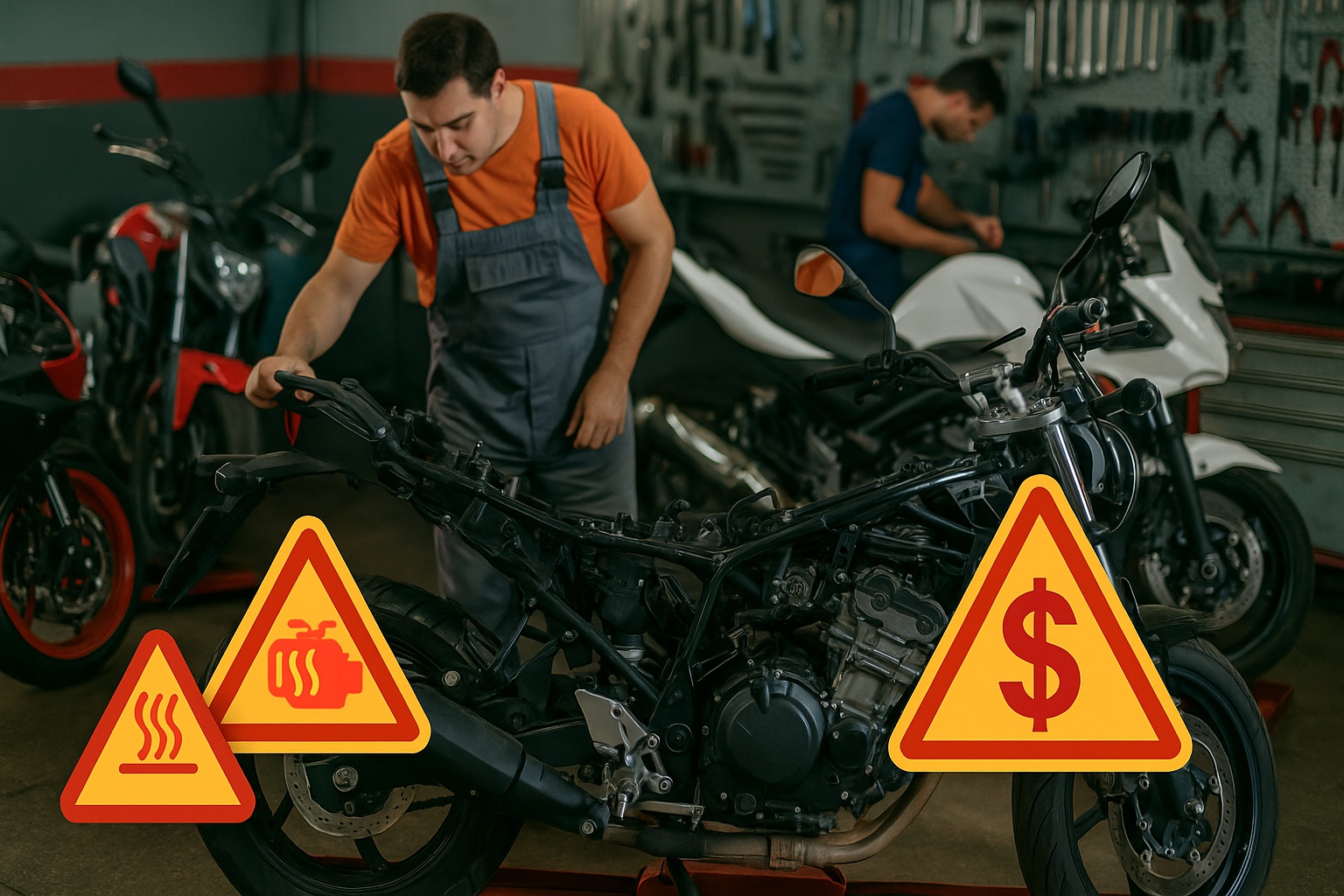
Honda, Yamaha, and Suzuki Are Among the Brands That Appear Most in Workshops in Brazil in 2025, According to Mechanics and Consumers, With Risk of Engine Failure and Cost of Up to R$ 12 Thousand.
The motorcycle market in Brazil is experiencing rapid growth. According to Fenabrave, over 700 thousand units were registered in the first half of 2025, consolidating the country as one of the world’s largest consumers of motorcycles. However, along with the increase in sales, the number of consumer complaints and workshop records has also risen. Reports from consumer protection entities, such as Procon-SP, combined with surveys from independent workshops, show that certain brands accumulate more cases of engine failures and serious defects.
What Does “Engine Failure” Mean and Why Is It So Serious?
The term “engine failure” terrifies any motorcyclist. It occurs when there is extreme overheating, lubrication failure, or accelerated wear of internal parts.
The result is a complete stoppage of the motorcycle and the need to rebuild or replace the entire engine.
The cost is not cheap: for medium and high displacement models, the expense can exceed R$ 12 thousand, an amount close to the price of a new entry-level motorcycle.
-
New CNH rule allows the use of a private car in the exam, but insurers raise an alert about coverage in case of an accident

-
Chevrolet Tornado Van 2026 emerges as a compact van cheaper than many popular cars in Brazil, with a 1.5 engine, 6-speed manual transmission, 650 kg load capacity, 3.3 m³ of usable space, and fuel consumption of up to 18.1 km/l for about R$ 87,000 in tax-free conversion; an urban utility vehicle that Brazilians don’t have, but Mexico does.

-
Forget the basic popular car: used sedans like Passat CC, Kia Cerato, Nissan Altima, Mitsubishi Lancer, and Volvo S60 show that it’s still possible to buy more performance, comfort, and technology for less than many new compacts.

-
Used Honda Civic: 3 versions of the Japanese sedan with naturally aspirated engines of up to 155 hp, fuel consumption of up to 13.8 km/l, robust automatic transmission, and a reputation for reliable mechanics still dominate the used car market in Brazil.



The 3 Motorcycle Brands That Generate the Most Complaints in 2025
Honda
Despite being the market leader, Honda also tops the complaints volume — a direct reflection of the number of motorcycles circulating in Brazil.
According to consulted workshops, models such as CG 160, Bros, and CB 300 are the ones that most often present complaints related to valve problems, overheating, and lubrication system failures.
- Main Reported Problems: overheating on long trips, excessive engine noise, and above-normal oil consumption.
- Average Repair Cost: between R$ 5 thousand and R$ 12 thousand, depending on the model.
Yamaha
Yamaha ranks second in the surveys. Models such as Fazer 250, Lander, and MT-03 have been mentioned in several workshops for incidents of electrical failures and premature engine wear.
- Main Reported Problems: electronic injection failures, starting difficulties, and cracks in internal components.
- Average Repair Cost: from R$ 4 thousand to R$ 10 thousand.
Despite this, mechanics point out that a good part of the problems is related to irregular maintenance by the owners, as many motorcyclists neglect basic inspections.
Suzuki
With a smaller share in the Brazilian market, Suzuki stands out negatively in medium displacement models, such as Yes, V-Strom, and GSX.
The most common complaints involve transmission failure, cooling system malfunctions, and engines that fail before reaching 40 thousand km.
- Main Reported Problems: transmission locking, overheating, and low availability of original parts.
- Average Repair Cost: above R$ 12 thousand for higher displacement models.
Why Do These Brands Appear More in Workshops?
Consulted experts point out several factors:
- Sales Volume: the more motorcycles that are on the road, the higher the number of reported cases.
- Usage Profile: popular motorcycles suffer from intense use in delivery apps, which accelerates wear.
- Irregular Maintenance: many consumers ignore mandatory inspections and use inappropriate oil.
- Parts Network: delays in replacing original parts increase costs and worsen mechanical issues.
The Impact on the Motorcyclist’s Wallet
Having an engine failure is one of the biggest nightmares for those who depend on their motorcycles daily.
In addition to the expense that can exceed R$ 12 thousand, there is also the disruption of work routine — especially for app delivery drivers, who rely on their motorcycles for survival.
According to estimates from motorcycle courier unions, just 10 days without income can result in a loss of more than R$ 2,000 in lost deliveries.
How to Prevent Your Motorcycle From Having an Engine Failure
Consulted independent mechanics recommend some simple precautions that make a difference:
- Regular Oil Changes within the timeframe indicated by the manufacturer.
- Use of Original Parts in maintenance and inspections.
- Attention to the Dashboard: oil and overheating lights should not be ignored.
- Preventive Inspections: even out of warranty, maintaining annual inspections is essential.
- Avoid Overloading: carrying weight beyond the limit accelerates wear.
What the Manufacturers Say
Manufacturers, when questioned by consumer protection entities, often argue that the reported problems represent a small portion compared to the volume of sales.
In addition, they emphasize that many cases are linked to inadequate use or irregular maintenance.
The three listed brands — Honda, Yamaha, and Suzuki — lead the records in workshops and Procon in 2025.
This does not mean that all motorcycles from these manufacturers have defects, but it shows that the risk of engine failure exists and can lead to significant losses.
For consumers, the best defense is preventive maintenance and choosing models with a reliable durability history.







Be the first to react!