






 Portuguese
  Spanish


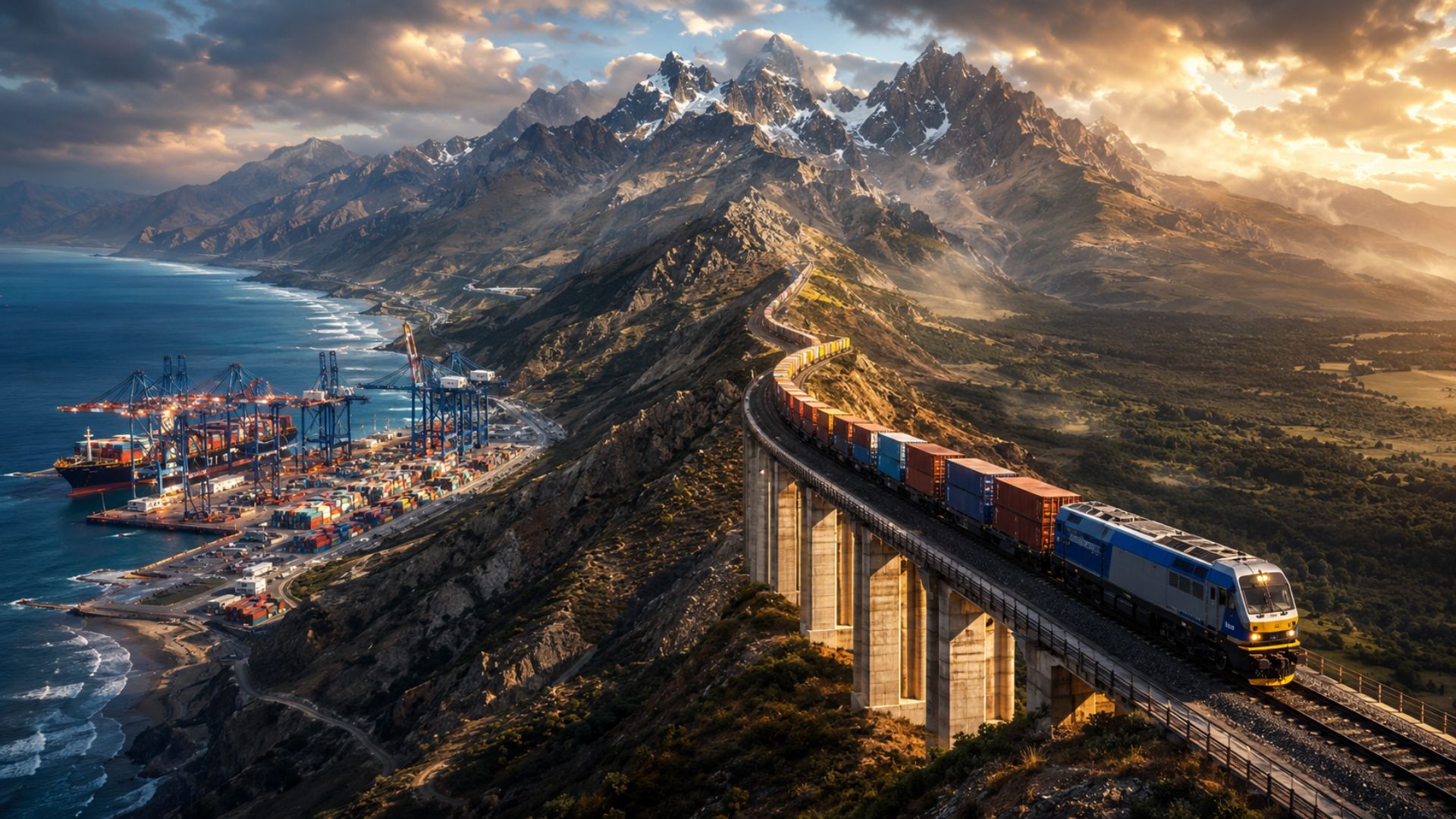

The federal government launched a new concession policy with the goal of holding eight railway auctions in 2026, covering more than 9,000 kilometers of tracks with the potential to attract R$ 140 billion in investments. According to the Times Brasil, three giant Chinese state-owned companies have already formalized interest in the concessions, mainly in commodity flow corridors. Among the projects is the bioceanic railway, which will connect the Brazilian coast to the port of Chancay in Peru, crossing the South American continent from coast to coast. The model combines public and private resources with differentiated financing via BNDES.
Brazil is opening the largest portfolio of railway auctions in its history, and the world is paying attention. The Ministry of Transport presented to investors in New York a package of eight concessions covering more than 9,000 kilometers of tracks, with the potential to attract R$ 140 billion in investments and move up to R$ 60 billion in the production chain. Three giant Chinese state-owned companies have already formalized interest in the projects, mainly targeting strategic commodity flow corridors that connect grain, mineral, and protein-producing regions to export ports.
Among the most ambitious projects in the package is the bioceanic railway, which promises to connect the Atlantic coast of Brazil to the port of Chancay in Peru, controlled by Chinese capital, crossing the South American continent from coast to coast. The Ferrogrão, another extensive railway with 933 kilometers, which would transport agricultural production from the Midwest to the port of Miritituba in Pará, is also part of the portfolio, although it has been halted by the Supreme Federal Court due to environmental issues. The financial modeling relies on public and private resources, with BNDES offering financing with extended terms and grace periods.
What are the eight railway auctions planned for 2026
The railway concession package includes eight projects covering strategic corridors in different regions of Brazil. The construction cost of a freight railway varies between R$ 25 and R$ 60 million per kilometer, a value significantly higher than that of a highway, which costs between R$ 8 and R$ 15 million per kilometer, explaining the magnitude of the necessary investments.
-
Microsoft Lays Off 4,800 Employees, Cuts 20% of Xbox Staff Amid AI Pressure on Major Tech Firm

-
Brazil’s ANP Opens 86 New Oil Blocks in the Equatorial Margin, Expanding the Amazon River Mouth Frontier

-
Warren Buffett’s Lesson: How Discipline, Extra Income, and Small Investments Can Transform Your Financial Future
-
Brazilian Startup Turns Coffee Grounds into Plant-Based Leather, Cutting Water Use by Over 50 Times for High-Impact Sustainable Fashion




The Ministry of Transport has been working to reduce the planning time for projects, which historically takes two and a half to three and a half years to materialize. Minister George Santoro stated that the goal is to compress this period to a maximum of one year, using contractual drafts already consolidated in previous concessions. The Railway Law, approved in 2021, created the simplified authorization regime that debureaucratizes the process and allows new operators to enter the market.
Why China Wants Brazil’s Railways
The Chinese interest in Brazilian railway concessions has a strategic and commercial explanation. China dominates the technology of railway infrastructure construction, from tracks and gauges to rolling stock, and has abundant capital for long-term investments that require intensive input and extended return periods.
The main target is commodity export corridors. China is the world’s largest buyer of soybeans, iron ore, and animal proteins from Brazil, and controlling the logistics of transporting these products means reducing costs, ensuring supply, and expanding influence over the production chain. The bioceanic railway, which would link Brazil to the port of Chancay in Peru, would create a direct export route to the Pacific and the Asian market, significantly shortening the maritime route compared to the current route through the Atlantic and the Panama Canal.
The Bioceanic Railway that Crosses the Continent


The bioceanic railway is the most ambitious project in the portfolio and involves international cooperation with neighboring countries. The route plans to connect the Brazilian Atlantic coast with the Peruvian port of Chancay, passing through Bolivia or Peru, over an extension that can exceed 4,000 kilometers depending on the final route.
The project faces challenges beyond engineering. The railway crosses multiple Brazilian states and at least one neighboring country, requiring international agreements, environmental licenses in different jurisdictions, and expropriations in extensive areas. Infrastructure specialist lawyer Augusto Dal Pozzo highlighted that integration between federative entities is complex because it involves the Union, states, and municipalities, as well as environmental and indigenous issues that can halt projects, as happened with Ferrogrão in the STF.
The role of BNDES in railway financing
BNDES has designed a specific financial product for railways, with extended terms and grace periods that reflect the long maturation period of these investments. The bank plays a dual role: it structures projects by hiring specialized consultancies and offers financing with interest rates lower than market rates to encourage private investor participation.
BNDES’s analysis is rigorous: the bank only finances projects that demonstrate proven economic and financial viability and guarantee clauses that protect public resources. The Ministry of Transport also took the railway portfolio to New York to increase competition with American and European investors, seeking to reduce the concentration of Chinese interest and diversify capital sources.
The challenges that can stall the railways
The ambition of R$ 140 billion in railway concessions faces structural obstacles that Brazil has faced for decades. The issue of different gauges, with a broad gauge of 1.60 meters for cargo and a metric gauge of 1 meter for passengers, complicates the integration of the existing railway network and requires specific technical solutions for each project.
Environmental licensing is another recurring bottleneck. Railways cross hundreds of kilometers of territories with environmental restrictions, indigenous lands, and quilombola communities, and expropriations involve delicate processes with rural landowners in multiple states. The regulatory independence of ANTT helps mitigate political risk, but Brazil’s history of delays in major infrastructure projects keeps investors cautious until the first auctions of the R$ 140 billion in railways actually take place.
Do you think Brazil will manage to auction eight railways in a single year, or will the R$ 140 billion package remain on paper? What concerns you the most: Chinese interest, environmental licensing, or the gauge issue? Tell us in the comments.


