Portuguese
  Spanish


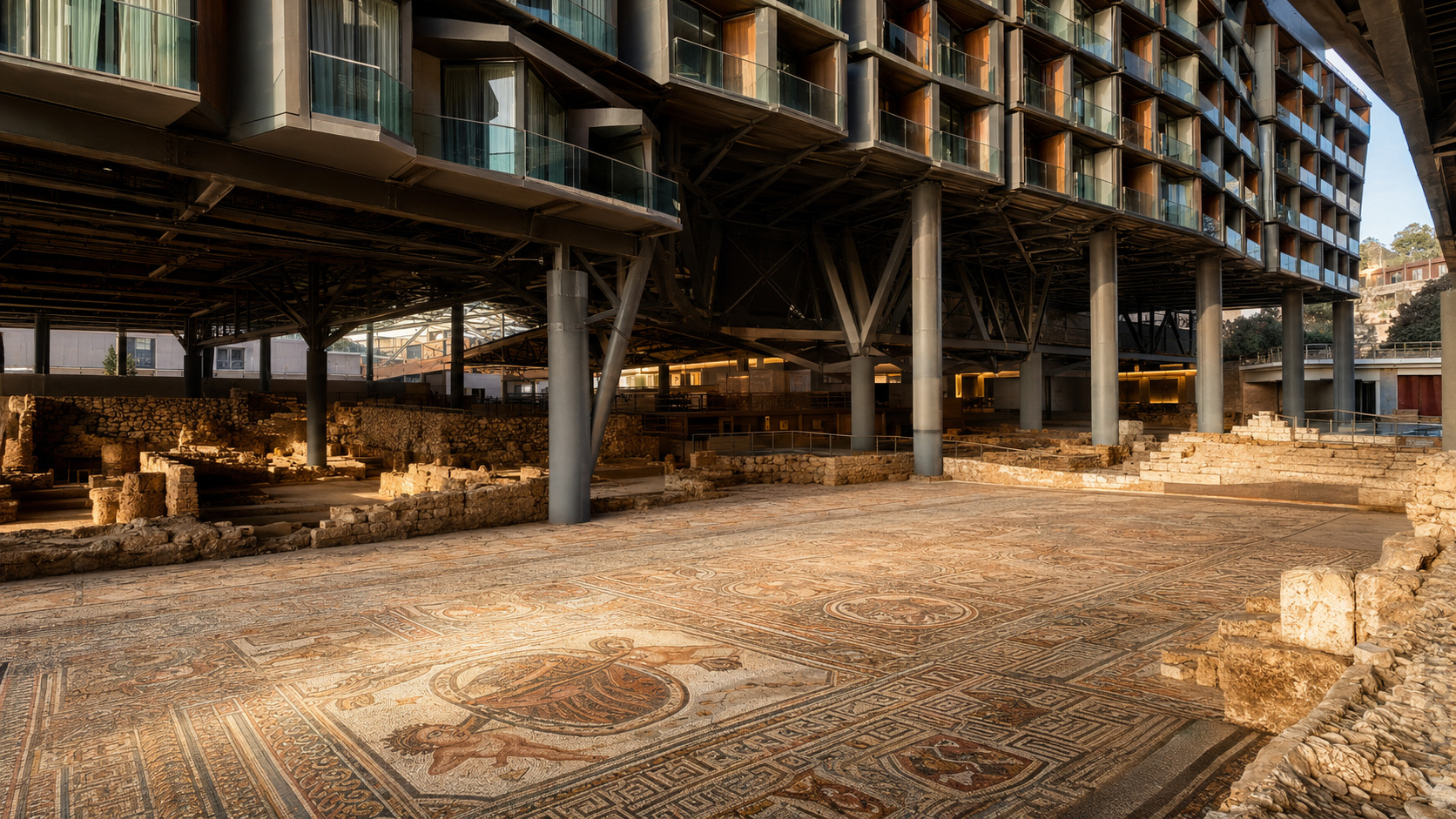

Excavations changed the entire engineering of the hotel in Turkey. The project dropped from 400 to about 200 rooms and gained a steel structure over an archaeological museum. The construction preserved a mosaic of more than a thousand m², took more than 10 years, and cost over US$ 120 million.
A hotel with 400 rooms began to be built in Antakya, Turkey, when the excavation of the land revealed ruins of 2,300 years. Instead of the free soil expected for the foundations, mosaics, ancient walls, and thousands of archaeological objects appeared.
The information was published by Architectural Digest, an international architecture and design magazine. The discoveries occurred in 2009, in the area occupied by the ancient city of Antioch.
The plan to build a large concrete hotel became unfeasible. The solution was to reduce the number of accommodations to about 200 rooms and raise the building over a steel structure, preserving the ruins at the lower part.
-
Four runways, 270 airplanes, and a capacity for 110 million passengers per year: the $12.5 billion mega-airport designed by Zaha Hadid’s office is starting to take shape in Ethiopia, an “airport city” where up to 80% of travelers will be just passing through.

-
Giant 1,631-ton HS2 railway bridge was rotated 90º and pushed night after night over a busy avenue in Birmingham, UK, advancing up to 24 meters at a time and completed four days ahead of schedule to bring high-speed trains to Curzon Street.

-
São Paulo plans the largest road tunnel in Brazil, over 6 km in the Serra do Mar, as part of an R$ 8 billion project that promises to increase the capacity for trucks and buses between the plateau, the coast, and the Port of Santos by 145%.
-
World Cup sticker paper can take 100 years to decompose in nature, but a Brazilian company has found a solution for the liner paper.


Original project planned for 400 concrete rooms
The Asfuroğlu Group intended to build an urban hotel with 400 rooms. The project depended on foundations distributed across the land, but the first excavations showed that much of the area hid ancient constructions.


Architectural Digest, an international architecture and design magazine, published the account of Sabiha Asfuroğlu Abbasoğlu, executive director of the group’s tourism and hospitality division. She explained that the original model became impossible after the discoveries.
The change did not only involve reducing the size of the building. The entire distribution of the foundations, rooms, and common spaces had to be redone to keep the hotel away from the archaeological remains.
Excavation revealed 35,000 objects from 13 civilizations
The construction area was transformed into a large archaeological research site. For 18 months, a team of 200 professionals worked on the removal, identification, and conservation of the materials.
The group included 35 archaeologists and 5 restorers. The work revealed about 35,000 objects related to 13 civilizations, with pieces dating back to the 3rd century BC.
Among the discoveries were walls, bathing areas, mosaics, and a fully preserved marble statue of Eros. The find showed that the land held different parts of ancient Antioch.
Mosaic of over a thousand m² remained on the site
One of the most important finds was a mosaic over a thousand m². The piece covered a large part of the excavation and could not be treated as a common object, removed and taken to another building.
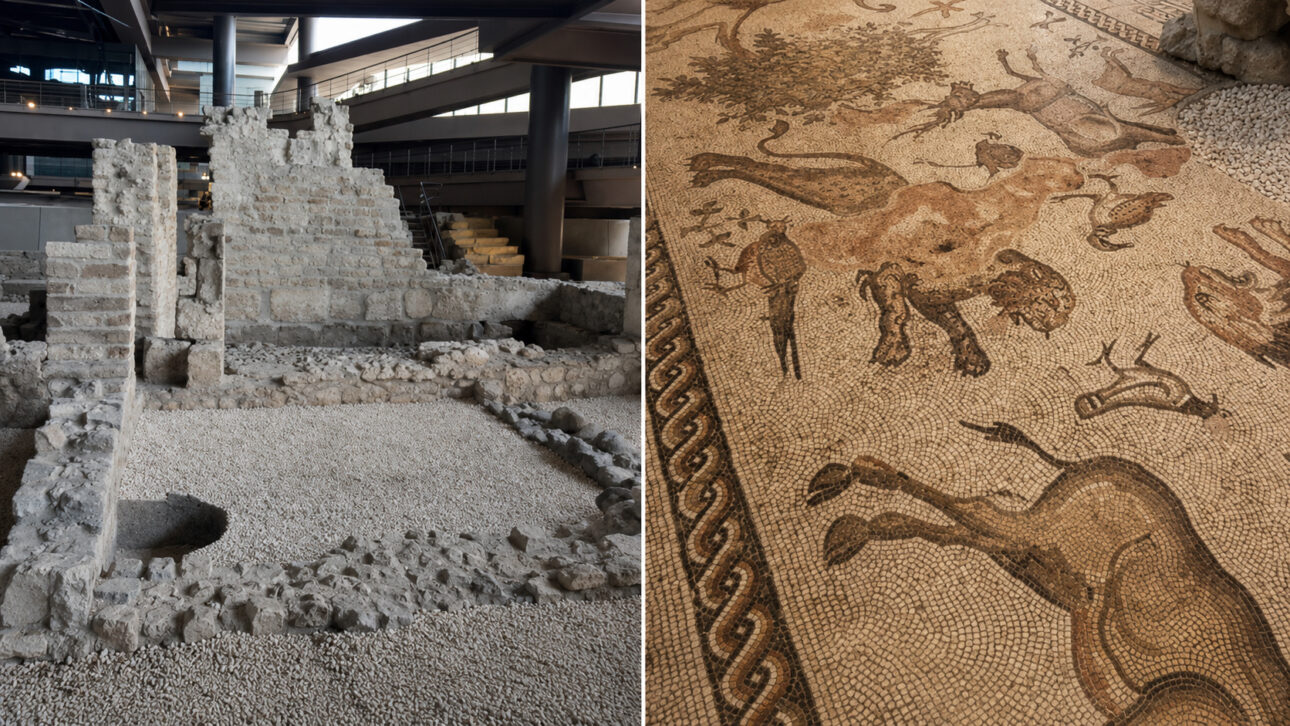
The surface remained in the location where it was found. This decision increased the challenge because the hotel needed to occupy the area without placing weight directly on the mosaic.
The engineers had to find safe points to support the building. Thus, the foundations were positioned where there were no significant archaeological remains.
Steel structure supported about 200 rooms
The Turkish architecture firm Emre Arolat Architects was tasked with redesigning the hotel. The solution was to create a large steel structure supported at specific points on the site.
In practice, the weight of the building was concentrated on the pillars installed away from the finds. The rooms and common spaces were placed above this structure, leaving the ruins free at the bottom.
The hotel seems to float over the site, but all the weight is directed through the pillars to the areas considered safe. This system allowed for about 200 rooms to be suspended over the archaeological site.
Ready modules reduced work over the ruins
The rooms were produced in modules outside the main excavation area. Then, the units were transported and installed on the steel structure.
This choice reduced the amount of materials, equipment, and workers circulating directly over the remains. It also decreased the need to assemble each room at the discovery site.
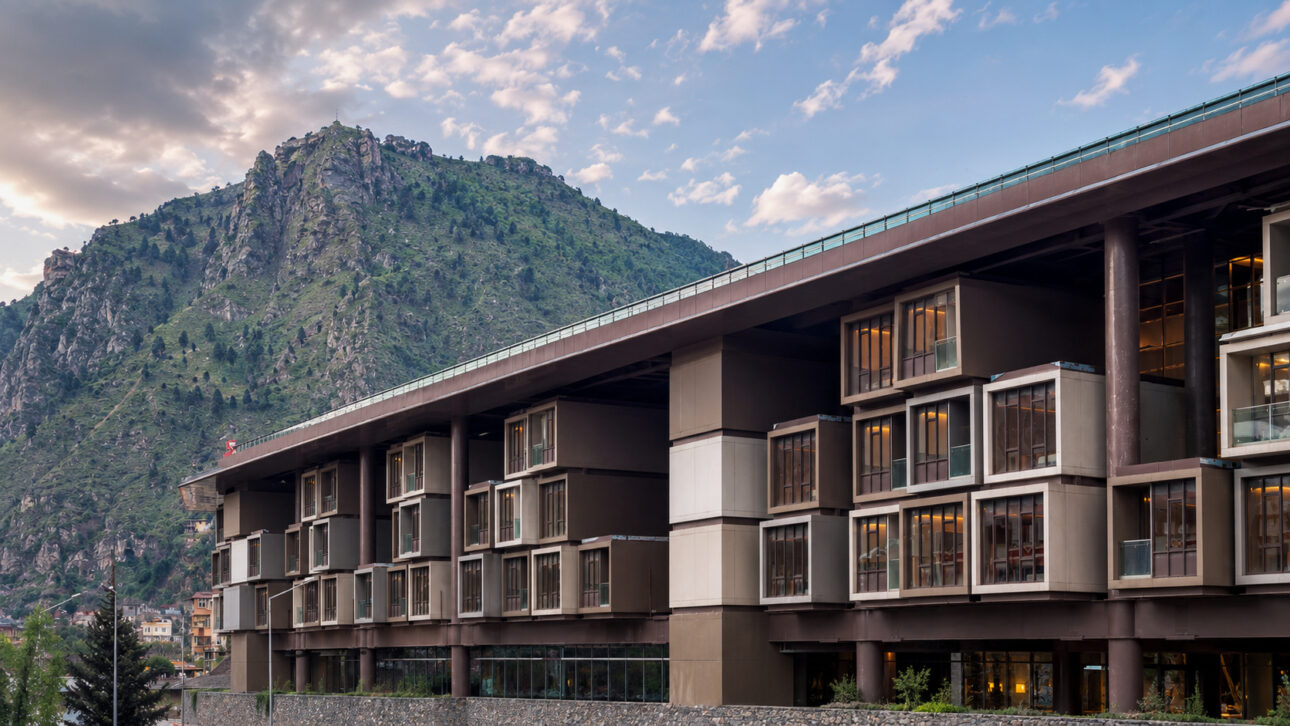
Reception, restaurant, bar, and other common areas were also positioned above the ruins. The modular construction allowed these parts to fit into the building with less interference with the archaeological site.
Museum now occupies the lower part of the hotel
The preserved ruins gave rise to the Necmi Asfuroğlu Archaeological Museum, a public space installed below the hotel. Visitors can observe mosaics, walls, and other parts of the ancient city without stepping directly on them.
Walkways were placed over the excavated area. They allow close observation of the findings, while the rooms and common spaces remain on the upper levels.
The site now combines hotel, museum, and archaeological park. The discovery ceased to be just an obstacle for the foundations and became a permanent part of the construction.
Project cost over US$ 120 million
The complete project cost the Asfuroğlu Group over US$ 120 million. The amount refers to the entire development, including the redesigned hotel and the construction carried out over the archaeological area.
The discoveries began in 2009, and the hotel opened in 2020. It took more than 10 years between excavations, preservation of objects, new engineering calculations, and assembly of the steel structure.
The original plan for 400 rooms was replaced by a smaller but much more complex building. The construction needed to reconcile tourism, engineering, and preservation without covering the mosaic or removing the main ruins.
The result was a hotel with about 200 suspended rooms and a museum installed at the bottom. A complete project change allowed the modern building and a part of ancient Antioch to coexist on the same site.
If a project encountered such important ruins in Brazil, would you advocate for adapting the project or transforming the entire site into a museum? Leave your opinion and share the publication.