Portuguese
  Spanish



The Cruise Industry Bets on Ever-More Monumental Vessels to Meet Growing Demand for Complete Experiences, but Naval Gigantism Raises Important Environmental Questions.
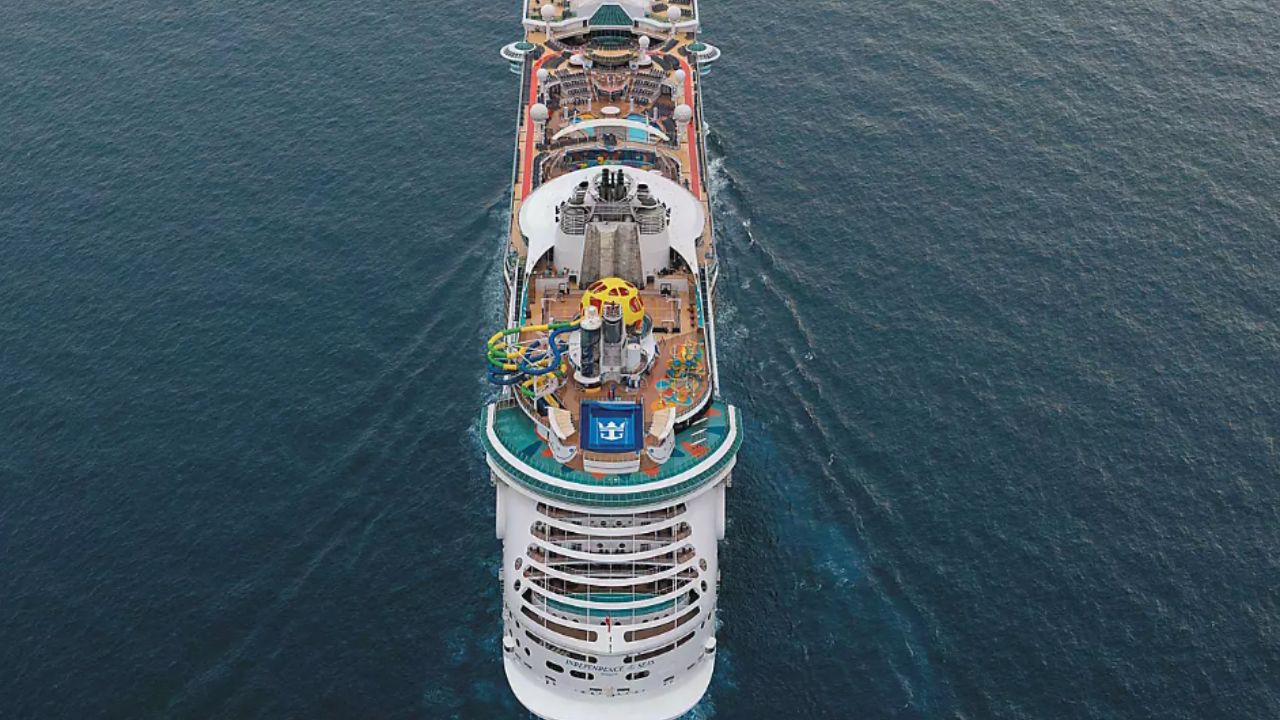
The image of a cruise ship that resembled a giant birthday cake, with its colorful water slides and pools, went viral and captured the popular imagination. If the launch of the “Icon of the Seas” in January 2024 seemed like a peak, it was just the beginning. The maxim “bigger is better” continues to guide the leading companies in the sector, which are launching a succession of large cruise ships to indicate that the future of sea travel is, indeed, colossal.
The Race of Cruise Companies
The race to build the next big cruise ship shows no signs of slowing down. Companies like Royal Caribbean, MSC Cruises, Carnival Cruise Line, and Norwegian Cruise Line continue to invest heavily in vessels that push the limits of engineering and capacity. What we are witnessing is the realization of orders placed even before the pandemic, now hitting the oceans to meet a demand hungry for novelties.
The logic is clear: the more passengers on board, the greater the revenue potential. This strategy seems to work, with a global order book extending to 2036, anticipating the delivery of 77 new ships.
-
The U.S. Navy Conducts Submarine Tests in Idaho Lake to Detect Underwater Noises Hidden by the Ocean

-
Nuclear Submarine USS Alexandria Retired After 35 Years, Having Completed Over 1 Million Miles in Missions

-
MODEC Introduces New Hull Design for FPSO Gato do Mato to Produce Up to 120,000 Barrels of Oil Per Day in Brazil’s Pre-Salt Region
-
This Massive 12-Meter, 21-Ton Underwater Drone Can Operate Autonomously for Up to Five Days


2024 Launches and the Promise of Even Larger Ships
Just this year, a new fleet of giants began to sail. In April, the Norwegian Aqua started operations with capacity for 3,600 passengers. In the same month, MSC Cruises launched the MSC World America, its second-largest ship, capable of accommodating 6,762 passengers. Carnival is planning its most gigantic class for 2029, with ships for almost 8,000 guests.
And Royal Caribbean is not far behind. In August, the Star of the Seas, sibling of the Icon of the Seas, will begin its voyages with capacity for 7,600 passengers and 20 decks filled with attractions. The company already has two more ships of the same class ordered for 2026 and 2027, showing that the era of large cruise ships is far from over.
Why Do Passengers Prefer Mega Ships?

The answer lies in the changing paradigm of the industry. “The era of guests taking a cruise just to reach a destination is over,” says Suzanne Salas of MSC Cruises. Nowadays, the ship itself is the destination. Passengers seek innovation, restaurants, bars, and cutting-edge entertainment, and mega ships offer all of this in abundance.
For many, the onboard experience is as important, if not more, than the ports of call. The ship becomes a destination in itself, with so many activities that it’s hard to enjoy everything in a single week. The demand reflects this preference: the Cruise Lines International Association (CLIA) projects over 37 million cruise passengers for 2025.
Managing Thousands at Sea
How to ensure a pleasant experience on a ship with over 6,000 people? The key lies in the “flow.” Cruise companies design these giants so that passengers can move around comfortably, creating distinct spaces for each one to personalize their journey.
Concepts like “neighborhoods,” adopted by Royal Caribbean, and “districts,” by MSC, help make the ship more manageable. This allows passengers to find their favorite spots and feel like they are having a unique experience, even when surrounded by thousands of others.
Environmental Concerns and the Sustainable Future
Despite the allure, large cruise ships raise serious red flags. Environmentalists describe them as “floating cities,” pointing to increased fuel consumption, greenhouse gas emissions, and sewage discharges with each new launch.
Although modern ships use LNG (Liquefied Natural Gas) and can connect to shore power to reduce emissions in ports, experts argue that these measures are not enough. Renewable methanol would be a cleaner option to meet the net-zero emissions target by 2050.
Moreover, there is the impact of overtourism, with thousands of tourists disembarking all at once in destinations that are not always prepared to welcome them. The travel industry faces the challenge of protecting the sites and communities that make these destinations so special, seeking a balance between growth and sustainability.
With information from CNN Portugal.