Portuguese
  Spanish


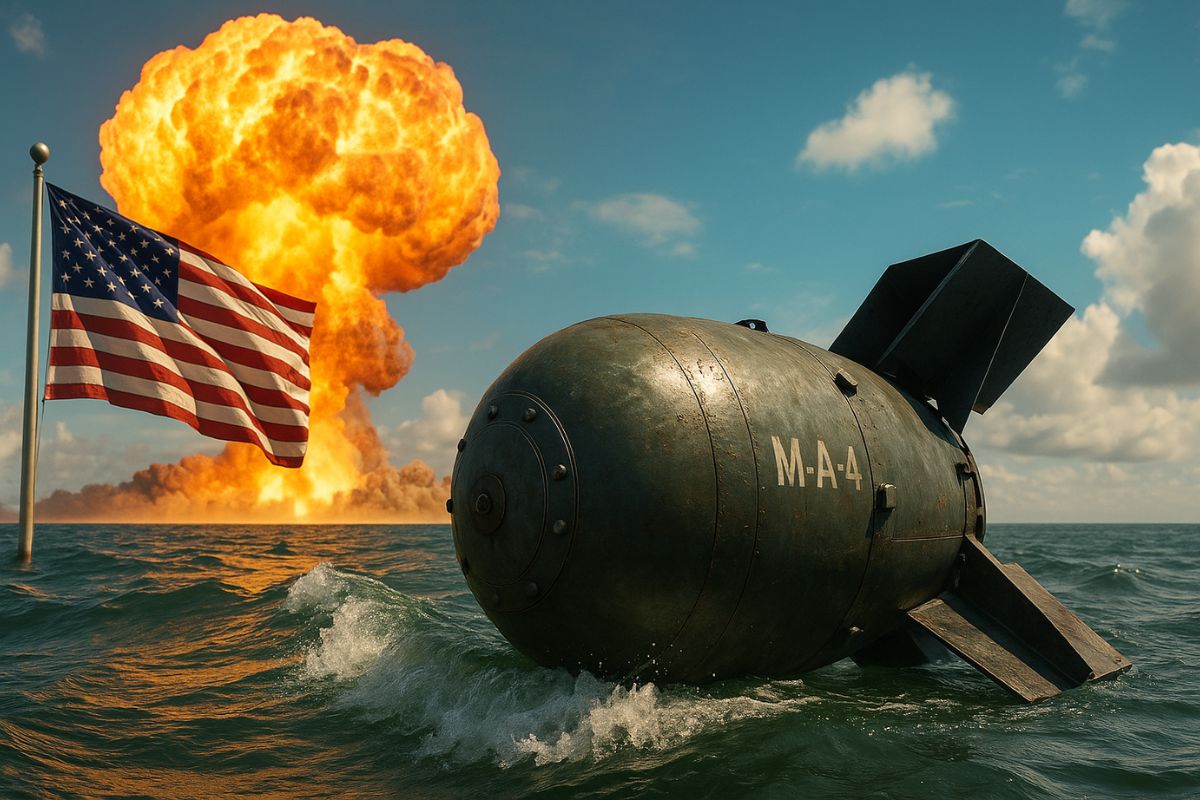


Artifact of 3.4 Tons Was Dropped into the Ocean in 1958 After a Plane Crash and Remains Missing More Than Six Decades Later
The story of the missing nuclear bomb is one of the most intriguing episodes of the Cold War. In 1958, an air accident led U.S. military personnel to dispose of a 3.4-ton thermonuclear bomb in the sea, which has never been found. More than sixty years later, the artifact remains submerged in an unknown location, sparking debates about nuclear security and environmental risks.
Despite intensive search operations at the time and subsequent reassessments, the weapon, known as the “Tybee bomb,” remains buried under layers of sand. U.S. authorities claim that the risk of explosion is minimal, but the mystery surrounding its whereabouts continues to fuel speculation to this day.
The Accident That Gave Rise to the Mystery
On the night of February 5, 1958, during a military training exercise, a B-47 Stratojet bomber collided with an F-86 Sabre fighter jet near Tybee Island, Georgia.
-
How to Prevent Brown Recluse Spider Bites: Common Hiding Spots and Free Tips to Reduce Risks

-
Natto: The Unusual Japanese Superfood Gaining Popularity on Social Media and Driving Record Exports
-
Brazilian Mayor Goes Undercover as Homeless for 24 Hours to Assess Public Services

-
15-Year-Old Entrepreneur Malu Lira Publishes 20 Children’s Books on Financial Education, Earns $500,000, and Expands Her Project to the Amazon Rainforest




The B-47 was carrying the Mark 15 nuclear bomb, designed as a high-yield thermonuclear artifact.
Given the risk of it crashing over populated areas, the bomber’s pilot decided to eject the bomb into the ocean, in the Wassaw Sound area.
Shortly thereafter, the crew managed to land the damaged aircraft safely.
The decision avoided an immediate disaster, but initiated a mystery that would span generations.
The Nuclear Bomb That Disappeared
The artifact dropped into the sea weighed approximately 3.4 tons. Initially, the Air Force declared that the bomb was “incomplete” and did not contain the plutonium core necessary for a nuclear detonation.
However, declassified documents years later raised doubts about this version, indicating that the weapon could, indeed, be complete.
For ten weeks, the Navy and the Air Force mobilized ships, divers, and detectors to locate the bomb.
The searched area exceeded 30 km², but no trace was found.
It is estimated that the artifact is buried under meters of marine sediments, making its recovery extremely difficult.
Risk Assessments and False Alarms
Over the years, anomalous readings of radioactivity on the Georgia coast fueled suspicions that the bomb might be leaking radioactive material.
However, authorities attributed these incidents to natural sources and ruled out imminent danger.
In 2004, the U.S. Air Force reanalyzed the case and concluded that the environmental or explosion risk is considered low, reiterating that there was no need for further searches.
Still, the mystery has never ceased to raise concerns among local residents and nuclear security experts.
Other Similar Cases in the Cold War
The disappearance of the Tybee bomb was not an isolated case.
During the Cold War, other accidents resulted in the loss of nuclear weapons:
In 1961, in North Carolina, two bombers collided, and a nuclear bomb remained buried in a swamp.
In 1965, an American fighter jet crashed into the Sea of Japan with a nuclear bomb, which was never recovered.
In 1968, in Greenland, a B-52 crashed carrying four bombs, scattering radioactive material on the ice.
These episodes, known in military jargon as “Broken Arrows,” highlight the risks involved in the transportation and handling of nuclear armaments.
The case of the missing nuclear bomb off the coast of Georgia serves as a reminder of how the arms race of the Cold War left unresolved legacies.
More than six decades later, the weapon remains lost at the bottom of the ocean, protected by the silence of the waters and political inertia.
And you, do you believe that authorities should resume the search to locate the bomb, or do you think the risk is too small to justify the operation? Share your opinion in the comments.