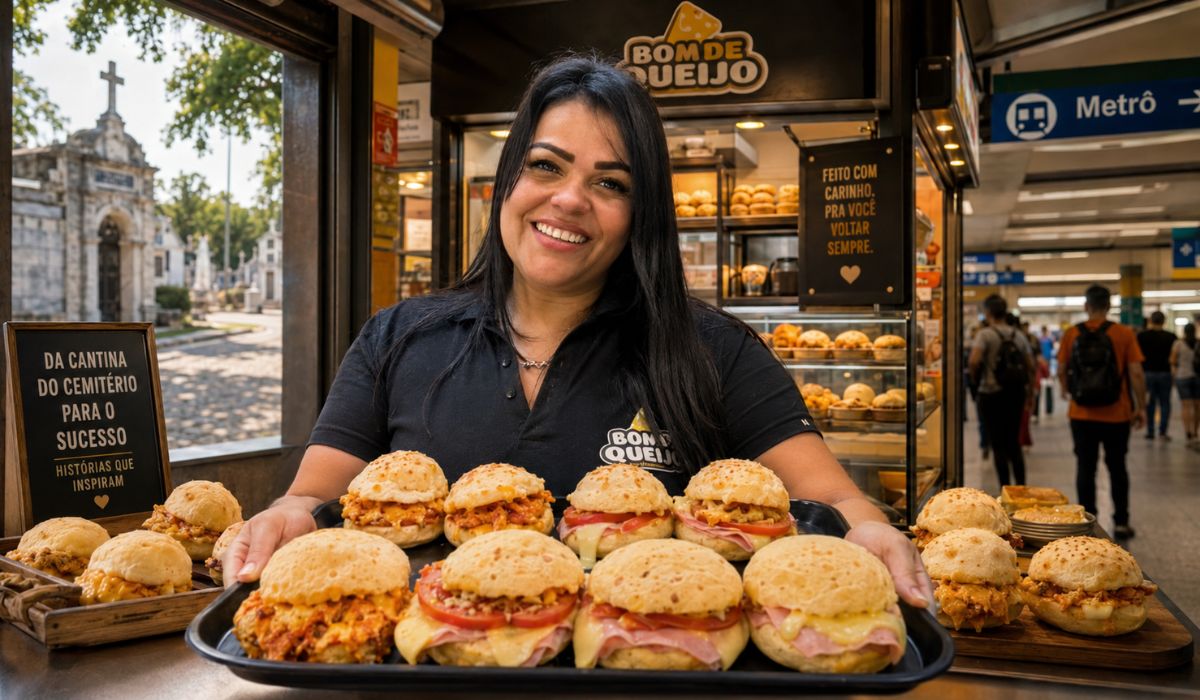

From a cafeteria in a cemetery in Rio to a franchise network, Bomdiqueijo grew with stuffed cheese bread, compact operation, and numbers that started to attract attention in the food market.
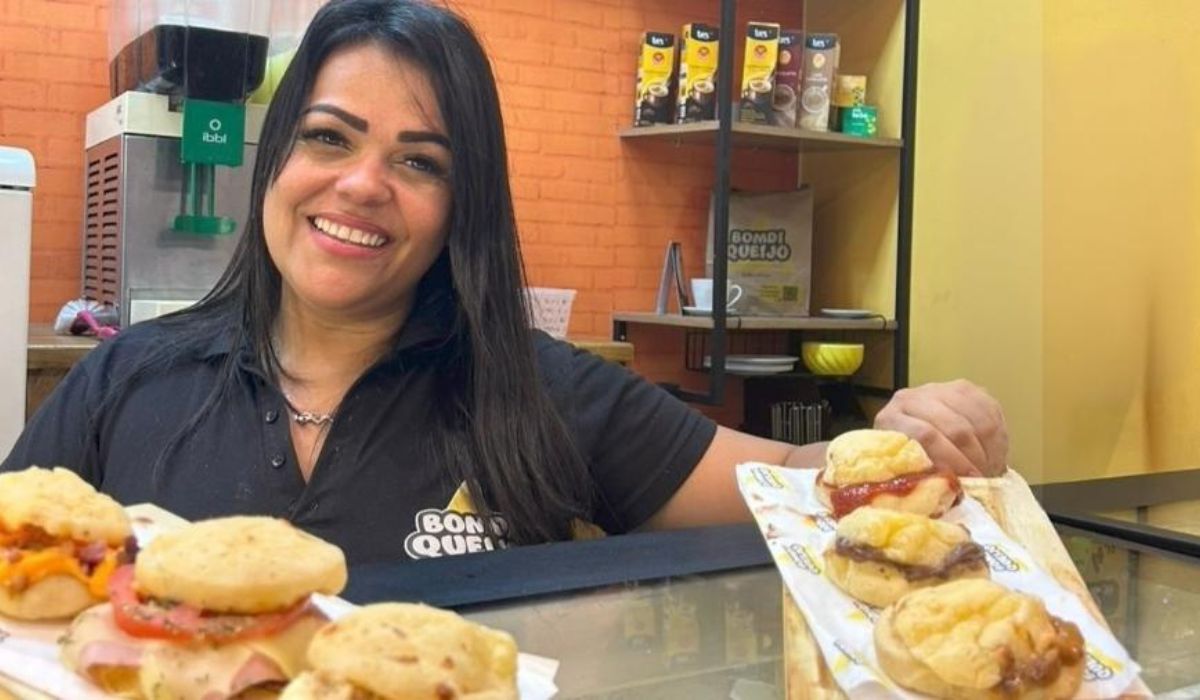
Andréia Freitas, 49 years old, transformed a stuffed cheese bread sold in a cafeteria at São João Batista Cemetery, in Rio de Janeiro, into a franchise network that grossed R$ 4.9 million in 2024.
The brand, called Bomdiqueijo, began operating in compact formats, such as kiosks and stores, after the product gained demand among people who circulated through the cemetery and also among customers who went to the location just to consume the snack, according to a report by UOL.
The business started in the cafeteria maintained by Andréia’s father.
-
Rare fox feared “extinct” found alive on Caribbean island after over two decades without official sightings

-
21-Year-Old Brazilian Student Turns Homemade Popsicle Hobby into $100,000-a-Month Business

-
Australia Dumps Hundreds of Thousands of Tons of Gravel into Rivers to Restore Natural Barriers and Reverse 150 Years of Erosion

-
Bird-Inspired Robot Glides on Air Currents up to 10 m/s, Balances Itself, and Aims to Save Energy in Industrial Inspections and Meteorological Balloons


She took over the spot in 2016 and, due to the demand for stuffed cheese bread, began to evaluate the possibility of taking the product to other locations.
According to the brand, the franchise model requires an initial investment starting at R$ 169 thousand, an average reported profit of 23%, and an average monthly revenue of R$ 70 thousand in the kiosk format.
Cheese bread in the cemetery became a franchise business
The cafeteria operated in São João Batista Cemetery, in Botafogo, in the southern zone of Rio de Janeiro.
The spot was part of the family’s routine and served people passing by the location.
When Andréia took over the operation, the stuffed cheese bread started to gain space among the items sold.
The demand for the product increased over time.
First, among the cemetery’s own visitors.
Then, among consumers who started to seek out the cafeteria without direct relation to funerals or burials.
One of the comments reported by Andréia became associated with the business’s history: “I came to the funeral, but thinking about the cheese bread,” said a customer, according to UOL.
Based on this public response, Andréia took the product to a location with higher circulation.
In 2021, she opened the first kiosk in the subway and created Bomdiqueijo.
In an interview with UOL, the entrepreneur stated that she developed the business plan presented to the subway on her own.
“I made a business plan by myself and sent it to the subway, which approved it. I invested R$ 120,000,” she declared.
Bomdiqueijo bet on a focused menu
Bomdiqueijo adopted a menu concentrated on stuffed cheese bread, with sweet and savory versions.
The brand’s commercial proposal began to rely on a main item, instead of an extensive menu.
According to the data published by UOL, prices range from R$ 9.99 to R$ 12.99.
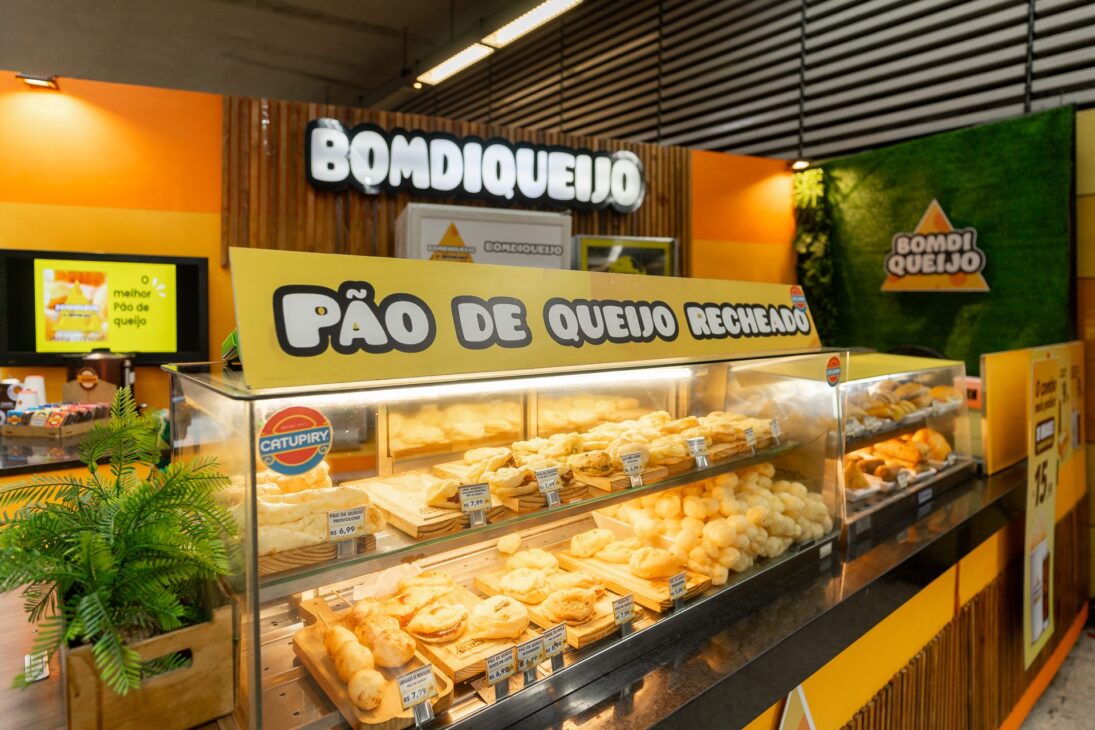
This type of operation allows for a smaller structure than that of restaurants with a full kitchen.
In the franchise material, Bomdiqueijo states that the kiosk requires a minimum area of 8 to 10 m².
The company also presents models for street stores and shopping mall stores, with different investments depending on the chosen format.
The standardization of the product appears as one of the central points of the model.
As sales revolve around a specific line, training, service, and unit assembly can follow more uniform processes.
This characteristic is presented by the brand in its communication aimed at franchisees.
Bomdiqueijo’s revenue and franchise cost
The numbers released by the company show the scale achieved after leaving the original point at the cemetery.
In 2024, Bomdiqueijo reported revenue of R$ 4.9 million.
Still according to the data published by UOL, the average monthly revenue ranges from R$ 70,000 in the kiosk to R$ 80,000 in street or shopping mall stores.
The estimated cost to open a unit is between R$ 169,000 and R$ 249,000, depending on the chosen format.
On the franchise website, the company states an investment starting at R$ 169,000 for kiosks, in addition to a franchise fee of R$ 49,000 and an average profit of 23%.
For those considering entering the business, the data released by the brand indicate a food operation in a compact space.
For the company, expansion depends on maintaining product standards, logistics, and monitoring of franchised units.
This concern was mentioned by Andréia herself when talking about the growth rate.
Network expansion follows a gradual pace
The businesswoman states that she does not intend to accelerate the opening of units without support structure.
In an interview with UOL, Andréia said that the strategy is to advance progressively.
“Our plan is to grow in a spiral. I prefer it to be more solid and sustainable rather than growing without brakes,” she declared.
The statement relates to the format chosen by the brand.
Bomdiqueijo works with smaller units and depends on people circulation, especially in places like subways, busy streets, and shopping malls.
Even so, growth requires regular supply, team training, and franchisee monitoring.
The first kiosk was opened in May 2021 at Jardim Oceânico station, in Barra da Tijuca, Rio de Janeiro, according to the Franchise Map.
The publication reported that the brand was born as a “pão de queijaria” and began planning expansion to other regions, focusing on franchises.
Uncommon origin became part of the brand’s history
The origin of Bomdiqueijo is mentioned by the company’s own coverage because the product began to be sold in an environment not commonly associated with the creation of food networks.
The stuffed cheese bread gained an audience inside the cemetery canteen before being taken to commercial points with higher consumer flow.
The case brings together frequent elements in stories of small businesses that scale up: a product with recurring demand, an initial point of low commercial reach, and the decision to test the operation in another environment.
In Andréia’s case, the test occurred in the subway, after presenting a business plan and an initial investment of R$ 120 thousand, as she reported to UOL.
The brand also began to use specialization as a commercial feature.
Instead of offering various types of snacks, it concentrated the menu on stuffed cheese bread.
This choice appears in franchise information and in the company’s institutional communication, which presents the business as an operation focused on a central product.
With the network’s advancement, the numbers started to be used by Bomdiqueijo to attract franchisees.
The company reports an average monthly revenue of R$ 70,000 at the kiosk, an initial investment starting at R$ 169,000, and an estimated return starting from 11 months.
This data is presented in the brand’s own commercial materials and should be analyzed by the interested party according to location, operational costs, and franchise agreement.
Andréia Freitas’ journey also shows how observing demand can change the course of a family business.
The product, which started as a cafeteria item, began to generate its own visits and was later structured as a network.
The transformation did not occur due to a change in the food category, but by formalizing an operational model around it.
Currently, Bomdiqueijo associates its history with the cafeteria of the São João Batista Cemetery and the franchise formats promoted to the market.
The origin functions as a narrative element of the brand, while the revenue, investment, and profitability data appear as central information for those interested in the business.