






 Portuguese
  Spanish


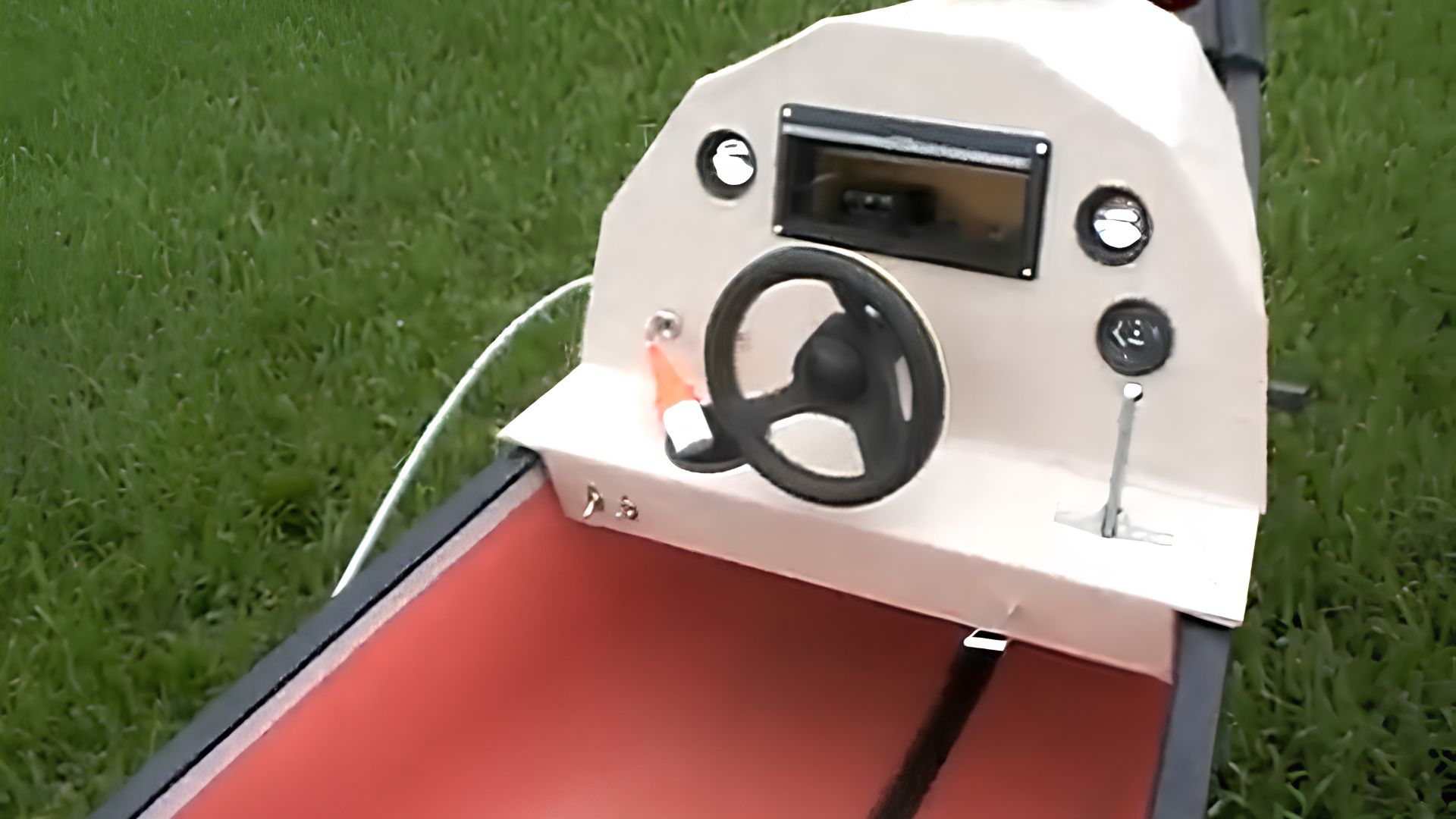


Maker transformed a simple canoe into a motorized vessel using a lawnmower engine and repurposed parts.
On January 4, 2011, a simple recreational canoe became one of the most curious homemade adaptations ever highlighted by Hackaday, appearing equipped with a lawnmower engine, steering wheel, accelerator, and even a sound system. The publication “Giving A Canoe Lawnmower Power” described the project as a canoe powered by a lawnmower engine, with the driver seated at the front to help with balance while the engine was attached to the stern, in a configuration that seemed to mix a homemade boat, a garage experiment, and a water kart.
The most striking point lies precisely in the improbable combination of common parts. Instead of using a conventional outboard motor, the project repurposed an engine originally associated with lawnmowers, added steering via a steering wheel and mechanical controls, as well as a sound system that reinforced the improvised look of the vessel. According to Hackaday, the biggest challenge cited was preventing the canoe from taking on water during engine startup, and there were even future plans to include electric start.
The case gained traction among creative engineering readers because it shows how far small inventors can go by repurposing common workshop components and transforming a basic vessel into a motorized water vehicle.
-
China Develops Custom 140-Ton Electric Mining Truck with 770 kWh Swappable Battery, Deploys 290 Units in Xinjiang’s Largest Zinc Mine

-
Meta to Launch Arena, a New Prediction App Targeting 3.56 Billion Users, Competing with Polymarket and Kalshi

-
Scientist Challenges Famous Human Evolution Theory, Argues Homo Sapiens Evolved Gradually Over Thousands of Years
-
15-Year-Old American Builds Ocean Generator with PVC Pipe and 3D-Printed Propeller for $12, Wins National Prize, Presents at White House, and Makes Forbes 30 Under 30 List




Project transformed a common canoe into a homemade motorized vessel
The basis of the invention was a conventional canoe used for light navigation. According to Hackaday, the creator decided to replace traditional manual propulsion with an improvised system based on a lawnmower engine.
The result was a compact vessel capable of moving without oars, using mechanical acceleration similar to that found in small motorized vehicles.


The most curious element of the project is precisely the engine. Lawnmower engines are often chosen in homemade inventions because:
- they are cheap;
- relatively compact;
- easy to find;
- simple to maintain;
- have enough torque for small mechanical experiments.
In the case of the canoe, the engine was adapted to function as an improvised aquatic propulsion system.
Steering system included steering wheel and mechanical controls
In addition to the engine, the creator added a steering wheel and accelerator to the project. This brought the driving experience closer to the logic of small land vehicles.
According to the Hackaday publication, the pilot was positioned further forward in the vessel to help balance the assembly.
Another detail that caught attention was the presence of an onboard sound system. Although simple, the feature helped reinforce the experimental and relaxed nature of the creation.

In the images released online, the canoe looks more like an improvised hybrid vehicle than a traditional vessel.
Maker culture drives improbable projects using scrap and repurposed parts
Projects like this have become increasingly common within the maker community. The central logic is to repurpose simple materials, scrap, old engines, and discarded parts to create functional machines. Lawnmower engines frequently appear in this universe because they offer a cheap solution for mechanical experiments.
Part of the repercussion came precisely from the project’s appearance. The assembly does not try to hide that it was built manually with repurposed parts.
Quite the opposite. The handcrafted aspect became part of the invention’s charm, giving the project the appearance of a garage experiment taken to the extreme.
Small homemade boats gained traction on social media
In recent years, videos of improvised boats, handcrafted speedboats, and scrap-built vessels have started gaining traction on platforms like YouTube, Reddit, and TikTok.
The reason is simple:
- unusual look;
- improvised engineering;
- low cost;
- mechanical creativity;
- the feeling of “this shouldn’t work”.
Makers transform common materials into functional machines
Modern maker culture blends mechanics, electronics, recycling, and experimentation. Instead of buying ready-made equipment, many creators prefer to build their own versions using:
- repurposed engines;
- wood;
- plastic drums;
- PVC pipes;
- automotive parts;
- household tools.
The motorized canoe fits exactly this profile.
Small engines remain popular in experimental projects
Compact engines from gardening equipment are still widely used in DIY projects because they offer a good balance of power, weight, and mechanical simplicity. In addition to lawnmowers, makers frequently reuse engines from:
- chainsaws;
- brush cutters;
- mini bikes;
- generators;
- old scooters.
Internet transformed improvised engineering into global entertainment
Much of the success of these inventions comes from how the internet has come to value seemingly absurd projects that actually work.
Short videos, onboard cameras, and social media have helped turn small inventors into viral phenomena.
The public often reacts precisely to the contrast between the extreme simplicity of the materials and the unexpected functional result.







