Portuguese
  Spanish


Deep drilling in British granite reveals extreme heat and simultaneously paves the way for continuous power generation and strategic lithium extraction in an unprecedented project in Cornwall, combining stable renewable electricity with essential mineral production for batteries.
After decades of planning and testing, Geothermal Engineering Ltd has brought the UK’s first geothermal power plant into operation in United Downs, Cornwall, also commencing commercial production of lithium carbonate from the same fluids extracted from underground.
Electricity generation began on February 26, 2026, as a result of drilling that exceeded 5 kilometers in depth into granite formations in southwest England, considered one of the country’s most promising regions for deep geothermal energy.
Directly from this underground reservoir, water returns to the surface at temperatures exceeding 190°C, an essential condition for enabling both energy production and integrated mineral extraction within the same industrial system.
-
Brazilian Innovator Transforms 1962 Mercury Comet with Nissan Leaf Electric Motor, Achieving 125 km Range for Under $6,000

-
China Tests Giant 582-Ton Magnets to Contain Plasma Hotter Than the Sun’s Core, Aiming to Cut Superconductor Costs and Generate First Electricity from “Artificial Sun” by 2030
-
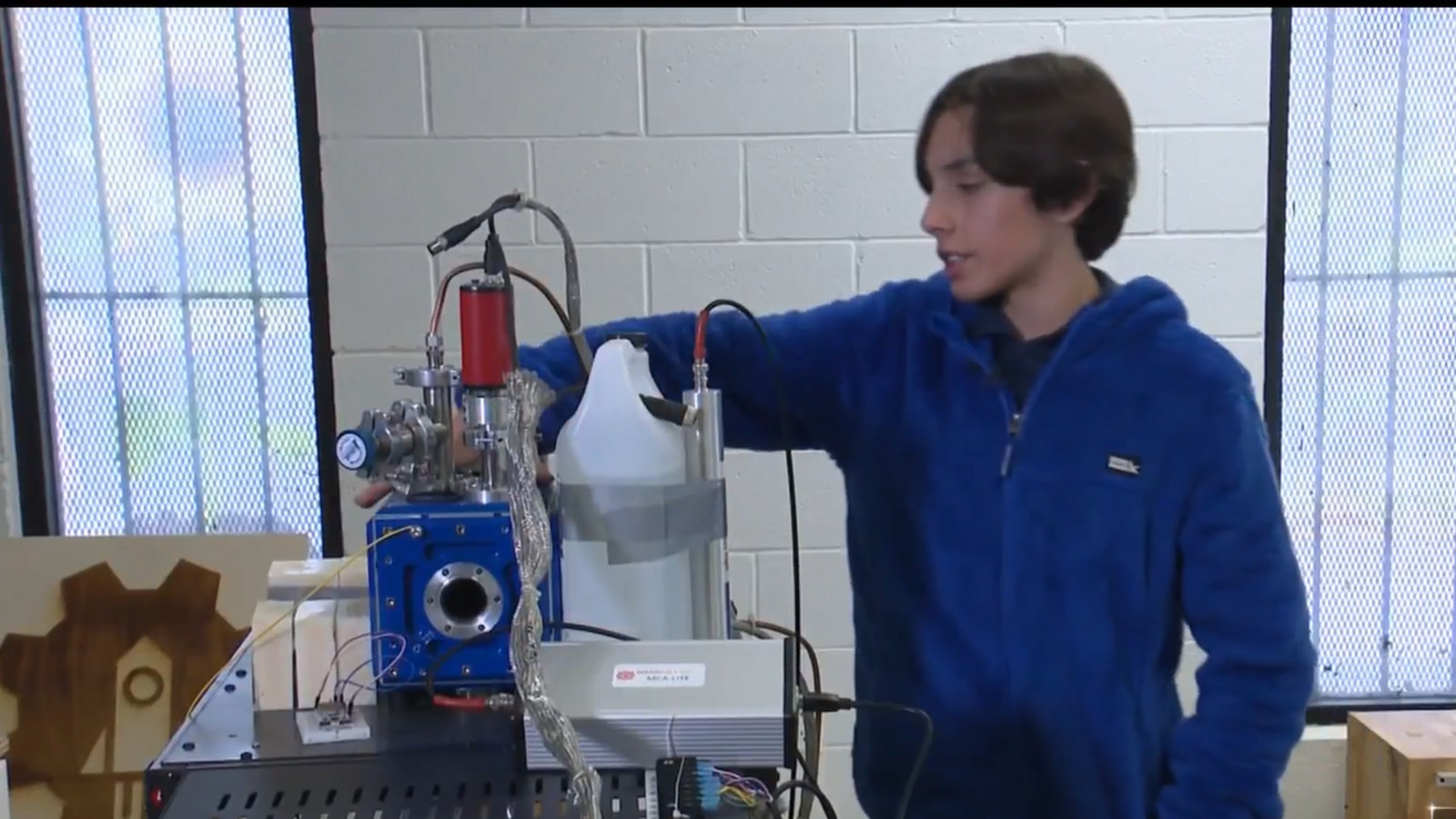
Seventh Grader Builds Nuclear Fusion Machine at Home, Aiming for Guinness World Record

-
Ancient Ritual Circle, Hidden for 5,000 Years, Discovered in Scotland’s Machrie Moor Using Sensors, Revealing a “Phantom Stonehenge”



Geothermal energy in the United Kingdom advances with continuous generation
With a long-term contract signed with Octopus Energy, the plant is designed to provide at least 3 megawatts of continuous power, an estimated capacity to supply around 10,000 homes, according to data released by the company responsible for the project.
Unlike intermittent sources such as solar and wind, the operation runs continuously, ensuring a stable supply 24 hours a day, regardless of weather conditions or seasonal variations.
Lithium extraction from geothermal brine
In addition to electricity generation, the project stands out for integrating the recovery of strategic minerals, utilizing the same hot water flow circulating in the geothermal system to extract lithium dissolved in the underground brine.
Before being reinjected underground, the fluid undergoes a separation process that allows for mineral recovery, expanding the economic potential of the operation without the need for new independent extraction fronts.
According to Geothermal Engineering Ltd, the concentration exceeds 340 parts per million of lithium carbonate equivalent, a level considered high within the standards for this type of exploration.
Initially, the announced capacity is 100 tons of lithium carbonate annually, a volume that can grow significantly as new projects are developed in the same region.
The company projects an expansion to over 18,000 tons per year in the next decade, although this progress depends on factors such as investment, licensing, and technological evolution of future units.
Cornwall and the geological potential for deep geothermal energy
Historically marked by tin and copper mining, Cornwall possesses geological characteristics that favor geothermal exploration, including the presence of hot granite, natural faults, and a thermal flow above the average observed in British territory.
In this context, water circulates through deep fractures heated by the Earth’s crust, returns to the surface at high temperatures, and transfers heat to a binary system capable of converting this thermal energy into electricity.
For this, a secondary fluid with a lower boiling point is used, which vaporizes upon receiving heat and drives the turbines responsible for continuous electricity generation.
After fulfilling this dual function, both energetic and mineral, the geothermal fluid is reinjected into the reservoir, maintaining the system’s balance and reducing environmental impacts on the surface.
Energy and industrial milestone for the United Kingdom
Although the country has a tradition in underground engineering and mineral exploration, geothermal electricity generation remained in an experimental stage for decades, a scenario that is beginning to change with the commissioning of United Downs.
Over nearly twenty years of development, the project has consolidated a model that combines technological innovation with the utilization of natural resources that were already known but little explored until now.
In this context, lithium plays a strategic role, as it is essential for electric vehicle batteries and storage systems, areas considered central to the energy and industrial transition.
Furthermore, the ability to provide firm and predictable energy strengthens the relevance of geothermal energy within an electricity system increasingly dependent on intermittent renewable sources.
Integrated mining and reduced surface impact
By utilizing fluids already extracted for electricity generation, lithium production associated with geothermal energy tends to occupy less surface space compared to traditional mining methods or brine evaporation.
Nevertheless, economic viability remains conditioned by technical factors, such as fluid chemical composition, extraction process efficiency, and operational costs throughout the production cycle.
Within this model, the integration between energy and mining allows for the dilution of infrastructure investments, as wells, pipelines, and industrial plants simultaneously serve two distinct production chains.
Despite this potential, large-scale expansion still depends on the drilling of new wells, regulatory approval, and the stability of the global lithium market, which directly influences the project’s economic attractiveness.
Cornwall’s new role in the energy transition
With the plant in operation, Cornwall takes on a strategic position in the British energy transition, reclaiming its mineral vocation under a new logic associated with electrification and sustainability.
At the same time, the project demonstrates how deep geological formations can be transformed into relevant assets when combined with advanced drilling technology and integrated industrial solutions.
In this scenario, the same well that accesses heat in the depths also enables the recovery of essential inputs for batteries, directly connecting renewable energy and the critical materials supply chain.
Still at an initial scale, United Downs sets a concrete benchmark for the country by demonstrating that it is possible to produce geothermal electricity and lithium in an integrated manner within a single industrial undertaking.