






 Portuguese
  Spanish


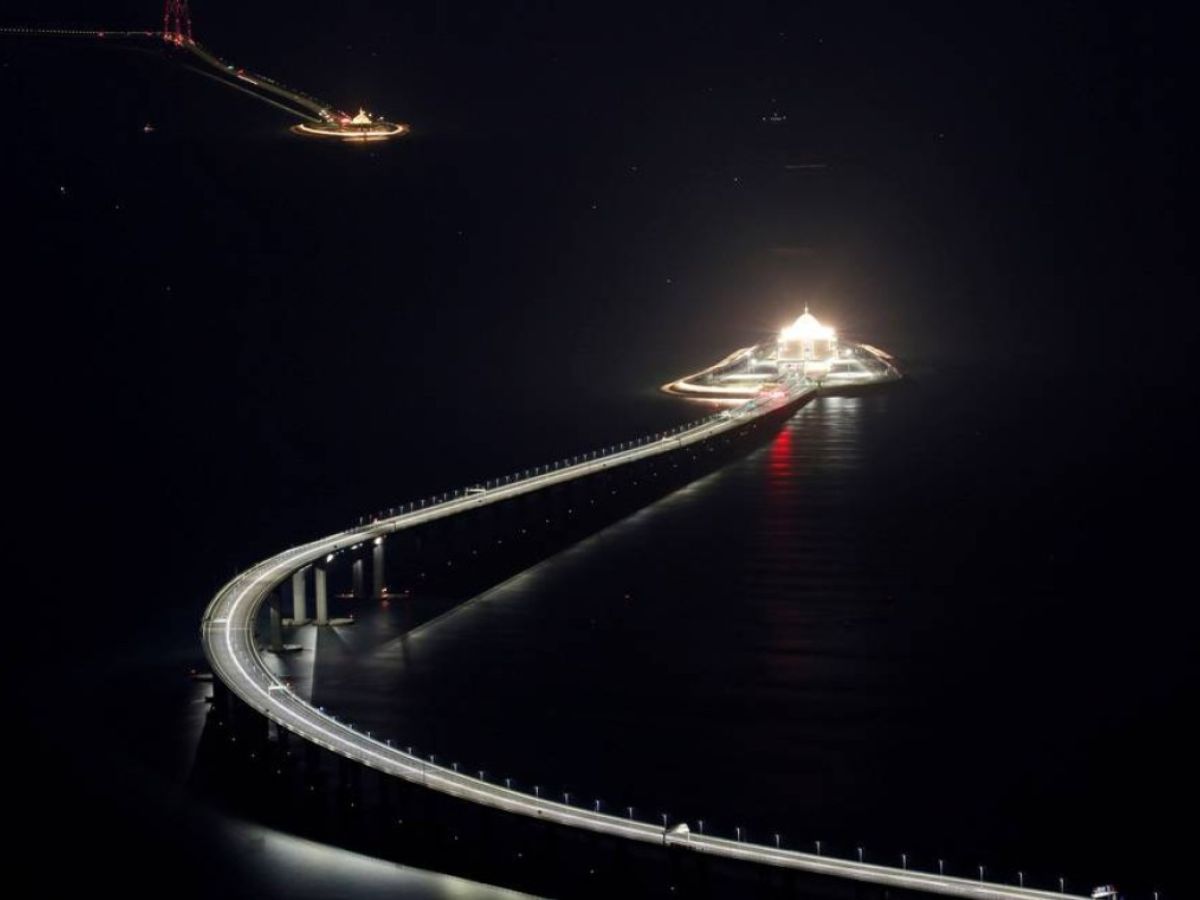


At 55 Km, the HZMB Is the Largest Bridge-Tunnel in the World, Connecting Hong Kong, Zhuhai, and Macau. Discover Its Construction, Technology, and Impact on the Greater Bay.
The Hong Kong-Zhuhai-Macau Bridge (HZMB) represents one of the most significant civil engineering feats of the 21st century. Recognized as the largest bridge-tunnel in the world, this megastructure of 55 kilometers redefines connectivity in the Pearl River Delta region of China.
Understand the design, construction, and operation of this engineering marvel. The HZMB is not just a physical link but a catalyst for economic and social integration in the emerging Guangdong-Hong Kong-Macau Greater Bay Area.
The Vision and Dimensions of the Largest Bridge-Tunnel in the World and Its Regional Importance
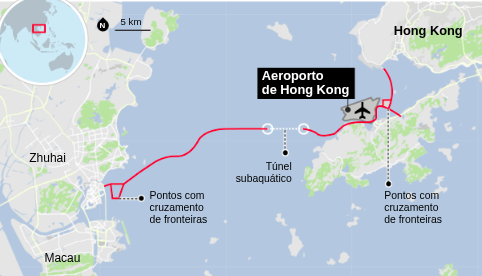
The main purpose of the HZMB is to connect Hong Kong, Zhuhai (Mainland China), and Macau, reducing the land travel time between them from four hours to about 40-45 minutes. With a total length of 55 kilometers, the backbone of the system is the Main Bridge, which is 29.6 km long.
-
How to Prevent Brown Recluse Spider Bites: Common Hiding Spots and Free Tips to Reduce Risks

-
Natto: The Unusual Japanese Superfood Gaining Popularity on Social Media and Driving Record Exports
-
Brazilian Mayor Goes Undercover as Homeless for 24 Hours to Assess Public Services

-
15-Year-Old Entrepreneur Malu Lira Publishes 20 Children’s Books on Financial Education, Earns $500,000, and Expands Her Project to the Amazon Rainforest




This Main Bridge includes a 22.9 km sea viaduct, with three cable-stayed bridges (Jiuzhou, Jianghai, and Qingzhou), and a 6.7 km underwater tunnel, the longest of its kind for road traffic. Four artificial islands and extensive connecting roads, such as the Hong Kong Link Road (12 km), complete the complex, designed for a lifespan of 120 years.
Construction Techniques and Challenges Overcome in the Largest Bridge-Tunnel in the World
The construction of the HZMB, inaugurated in 2018 after nine years of work, required innovations. Prefabrication and modular construction were widely used, from the roof segments of the Passenger Clearance Building in Hong Kong to the tunnel elements. The creation of the artificial island of the Hong Kong Port utilized the technique of land reclamation without dredging, minimizing environmental impact, especially on the habitat of Chinese white dolphins.
The underwater tunnel was constructed with 33 prefabricated concrete elements immersed in the seabed. Challenges included complex geological conditions with soft marine clay, the need to protect the ecosystem, height restrictions due to the proximity of Hong Kong airport, and the logistics of construction in open seas, subject to typhoons.
The Largest Bridge-Tunnel in the World and the Transformation of the Greater Bay Area (GBA)
The HZMB is crucial to China’s strategy to transform the Guangdong-Hong Kong-Macau Greater Bay Area (GBA) into a global hub. The bridge enables the concept of a “One-Hour Life Circle” in the Pearl River Delta, facilitating the mobility of people and goods.
The impact on trade and logistics is significant, with companies reporting increased exports and reduced transportation costs. Tourism, especially to Macau, also benefits from the direct connection with Hong Kong. The real estate market in Macau and Zhuhai has seen appreciation, and the bridge offers a housing alternative for those working in Hong Kong. Projections indicate total economic benefits of 74 billion RMB in 20 years.
Traffic, Tolls, and Sustainability of the HZMB
The HZMB operates 24/7. Most of the crossing uses right-hand driving (Mainland China standard), with interconnection viaducts for a safe transition to the systems of Hong Kong and Macau (left-hand driving). Use by private vehicles requires specific licenses and complex cross-border insurance. Schemes like the “Northbound Travel for Hong Kong Vehicles” facilitate access.
Tolls vary by vehicle type (e.g., RMB150 for private cars). There are Shuttle Buses operating 24h between the ports. Traffic volume has been steadily increasing; in 2024, the Zhuhai port recorded over 5.55 million vehicle trips. Sustainability measures include sewage treatment and the use of natural light at the Hong Kong Port, and plans for renewable energy on the artificial islands.
What Can the Megastructure Teach Us About the Future of Global Infrastructure?
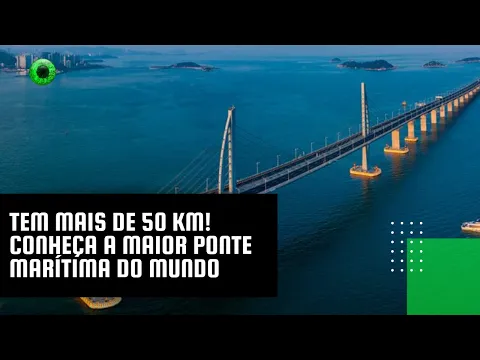

The largest bridge-tunnel in the world is an instrument of geopolitical integration and a case study for future megaprojects. It demonstrates the importance of integrating engineering with environmental considerations, the need for intergovernmental collaboration, and the benefits of modular construction.
The HZMB has the potential to reconfigure transportation and residency patterns in the GBA, fostering economic specialization among its cities. Compared to other significant international crossings like the Øresund Bridge, the HZMB stands out for its explicit role in development strategies for megaregions, serving as a symbol of the ability to transform ambitious visions into reality.








Adorei a reportagem, muito interessante