Portuguese
  Spanish


Paula and Leonardo Afonso, from Curitiba, turned the pain with their son Bernardo into Papapá, and the new brand Once Upon a Time wants to compete head-on with the giants of snacks, juice, and filled cookies in a market of nearly R$ 60 billion
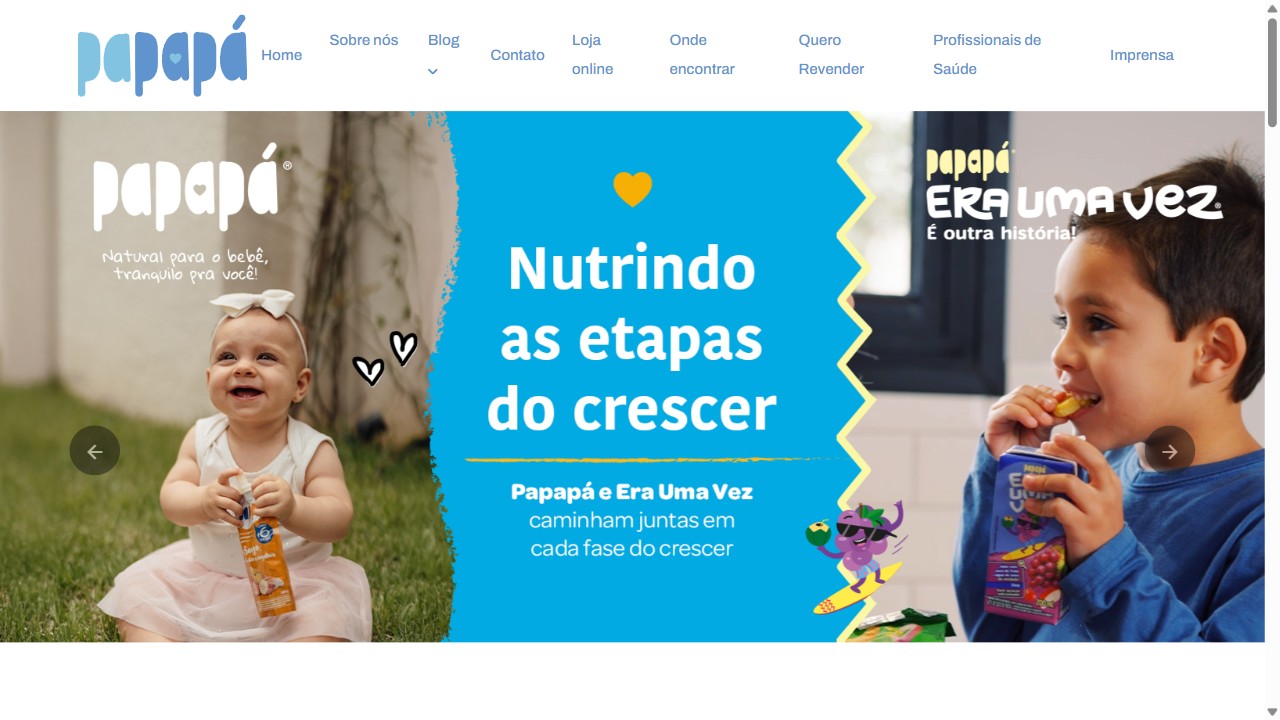
Papapá, a company founded by the Paraná couple Paula and Leonardo Afonso, built a business selling natural baby food and snacks, claims to dominate 93% of this category, and now launches Once Upon a Time, a brand of chocolate milk, filled cookies, juice, and healthy snacks for children who have outgrown the baby stage, according to Exame, in a report from July 5. The projection is to double in size by 2026 and earn around R$ 360 million, compared to R$ 180 million last year.
The target is huge: the categories of cookies, snacks, juice, and chocolate milk total nearly R$ 60 billion in Brazil, but have been losing sales volume as the healthiness theme gains scale and mothers start to avoid them at the time of purchase, according to Exame. And the story of this invasion began on the other side of the world.
The idea was born in Australia, on a trip back to Brazil
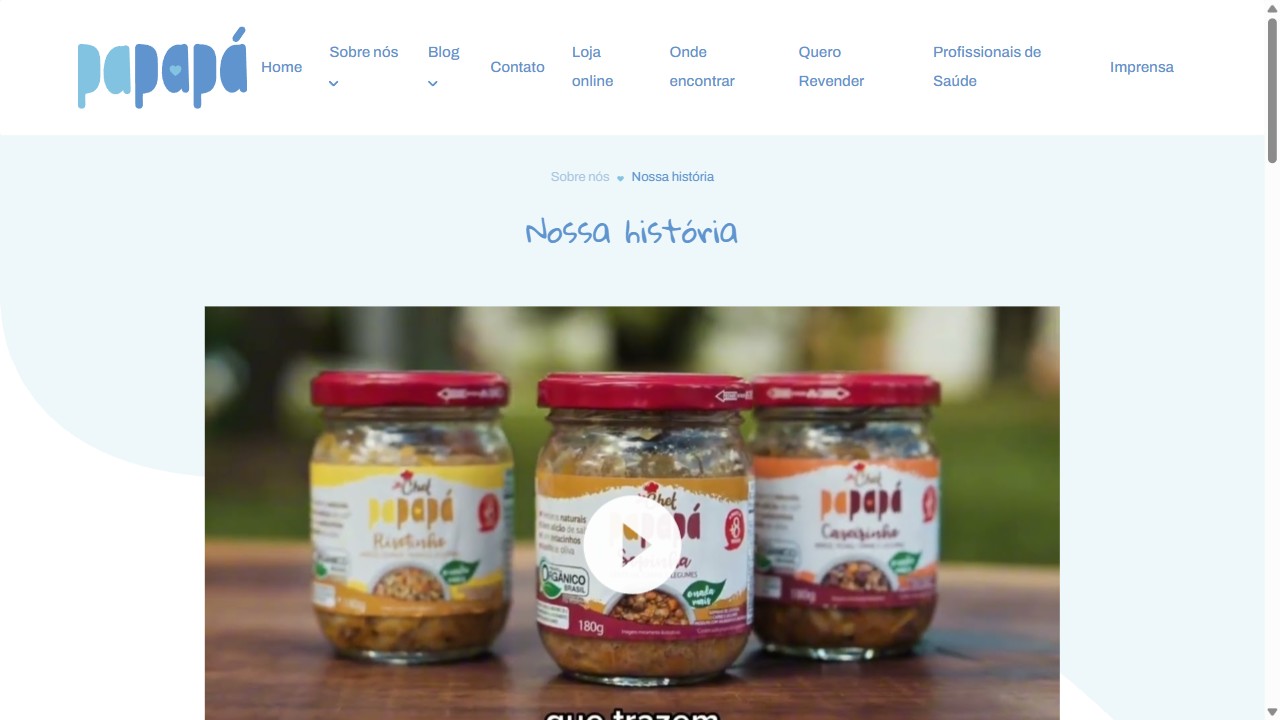
The origin of the company is told by Papapá itself on its official website. Paula and Leonardo were living in Australia when their first son, Bernardo, started food introduction, they found natural and practical options there to feed the baby and, during a trip to Brazil, realized it was difficult to find products here with the same care, quality, and practicality, according to Papapá on its institutional page. It was from this need experienced at home that the children’s food brand was born, now based in Curitiba, Paraná.
-
A Marine Corps veteran transformed a retired $5,000 school bus into a tiny home to live with her children, sold it for $50,000, and has already built dozens of other conversions on wheels.

-
At 15, he was earning R$ 8,000 per month with a Minecraft server, created a digital bank for teenagers, and now, at 28, runs an “influencer factory” of artificial intelligence that amassed 1.2 billion views in 9 months.

-
Mega-Sena of R$ 117 million becomes a police case after the winner turns off his cell phone, denies the prize, talks about only R$ 300,000, and then gives R$ 400,000 to his ex, who obtained in court the right to more than R$ 1.2 million of the winning share.

-
‘Suíça Baiana’ records 13.5 °C in July, leads the cold in the Northeast, leaves Irecê and Monteiro behind in the ranking, and shows why Vitória da Conquista has become a symbol of winter in the interior of Bahia.




The official launch came in 2021, after two years of research with Brazilian mothers and approval from Anvisa, the agency that regulates food in the country, according to Exame. The Paraná company built the business in a children’s food category that practically did not exist in Brazil before it: natural baby food.
From R$ 12 million to R$ 180 million in three years
The growth curve is one of the rarest in retail. Papapá earned R$ 12 million in 2022, grew 360% in 2023, and closed 2025 at around R$ 180 million, according to Exame. The plan now is to double everything again in a single year with the help of the new brand.
The trigger for change, once again, was Bernardo himself. The boy who inspired Papapá stopped being a baby, became a child, and brought a problem the company wasn’t solving. “From the moment the baby becomes a child, from two, three, four years old, the child gains autonomy. They even become part of the mother’s shopping journey,” says Leonardo to Exame. It’s the child who chooses with their eyes, grabs the product from the shelf, and starts negotiating with the mother.
The problem: children reject what comes with a healthy label
The founder’s diagnosis is straightforward. The options for healthy food in the children’s market lose the negotiation before it even starts because children don’t care about saturated fat or sugar and even reject what’s labeled as healthy: if the mother warns it won’t be tasty, the product loses before the first bite, according to Exame, which published the founder’s assessment.
“When you go to children, they don’t care about the amount of saturated fat, about the amount of sugar,” he states in the interview. The separation of brands was also intentional: Papapá is recognized as a baby specialist, and a filled cookie wouldn’t fit that image. “The child grows. ‘Mom, stop treating me like a baby, my little sister here is the baby, I’m not a baby anymore,'” says Leonardo.
The development standard: “looks like junk and tastes like junk, without being junk”
The phrase that sums up the new line is from the founder himself. The development of the products took almost 2 years because the standard was to beat the leader of each category in taste: the chocolate milk from Era Uma Vez is sweetened with green apple juice and contains no sugar, and the filled cookie has a fruit-based filling and does without hydrogenated fat, associated with cardiovascular problems, according to Exame.
The declared concept is that the product needs to “look like junk and taste like junk, without being junk,” so that parents and children both say yes to the same item: the child for the tastiness, the parents for the composition. Each product was tested with children and only advanced when they preferred the company’s version to the market-leading reference, still according to Exame.
The price in the middle of the road and the gondola war
The account was designed to fit in the cart. Era Uma Vez is expected to cost 15% to 20% more than the leader in each category and 20% to 30% less than the current healthy alternative, according to Exame. The biggest obstacle, however, is on the shelf: retail groups healthy items in the same section, far from where the consumer looks, and the company’s goal is to place the chocolate milk next to the chocolate milks and the snack next to the snacks.
“You go to the healthy sector, you’ll find protein in various formats, creatine in various formats,” says Leonardo in the report, noting that the mother does not look for her child’s product there. To reinforce the commercial structure in this fight with categories dominated by a few industries, Papapá hired an executive who was vice president of PepsiCo in recent months, according to Exame.
The market changed its habits, and even slimming pens entered the equation
The bet relies on a behavior change that hit retail quickly. In an interview with Exame, Leonardo says that channels like wholesale were impacted by the drop in consumption of certain categories, a movement he associates even with the popularization of slimming pens, and that cookies, snacks, juice, and chocolate milk stopped growing because mothers reduced the purchase frequency of everything that doesn’t seem like healthy food.
“What brought us here is not what will take us there,” says the founder, quoting a phrase he often hears from retail. His understanding is that the company has a value proposition for each link in the chain: retail, mothers, children, and health professionals.
The goal: triple the new line in 6 months, with Oba and Pão de Açúcar in line
The schedule is already running. The first products of Era Uma Vez began arriving in stores in June, the company expects greater presence from August in networks like Oba and Pão de Açúcar, in São Paulo, and plans to triple the revenue of the new line in 6 months, according to Exame. On the official website, Papapá presents the novelty with the slogan that sums up the turnaround: “Papapá Era Uma Vez. It’s another story.”
Here is the observation from this editorial, duly noted: the couple who created a category from scratch in Brazil now attempts the most difficult move in the food sector, convincing the child that the healthy option is the tastiest “junk” on the shelf.
From the lack of baby food on a trip to Brazil to the goal of R$ 360 million, the story of Paula and Leonardo shows that the pain of parents can be worth a billion-dollar market.
Tell us in the comments: would your child agree to swap their usual filled cookie for a healthy version, or in your house does the child always win this battle?