Portuguese
  Spanish


Study revisited by Popular Mechanics shows how the El Niño from 1876 to 1878 combined with droughts, agricultural collapses, and storage failures to fuel global famine. The episode, associated with about 50 million deaths, is used as a warning for climate risks in warming in the current century.
The El Niño from 1876 to 1878 went down in history as one of the most devastating climate events of the modern era. Amid severe droughts, crop failures, and lack of stocks, famine hit regions of Asia, South America, and Africa, leaving about 50 million dead.
According to Popular Mechanics, in a report by Darren Orf, published on June 17, 2026, research cited in the text revisits that period to understand how the climate phenomenon combined with human decisions, economic fragility, and lack of preparedness. The analysis treats the episode as a warning for a warming planet.
El Niño did not act alone in the global tragedy
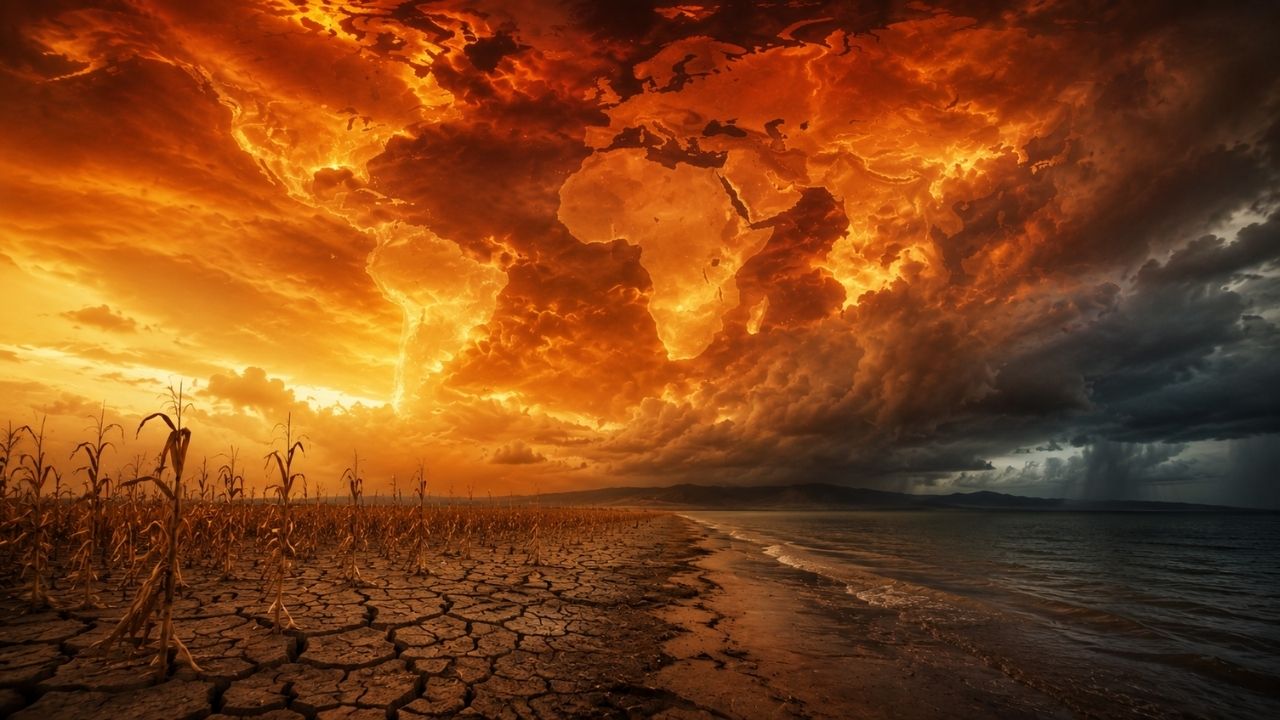
El Niño is usually associated with the abnormal warming of Pacific waters and the alteration of trade winds, affecting rains, temperatures, and droughts in various regions of the planet. Between 1876 and 1878, this mechanism helped create extreme climate conditions in already vulnerable areas.
-
EcoFlow’s Portable Fridge Offers 43 Hours Off-Grid, Reaches -25°C, App-Controlled, Solar-Powered for Camping and RV Adventures

-
Vietnamese Inventor Overcomes Debt and Develops Agricultural Robot Sold in 15 Countries
-
3,000 Sheep Maintain 900 MW Solar Farm Transforming Texas Fields into Energy for Data Centers

-
Distant Galaxy Shaped Like a Giant Jellyfish Sheds Gas, Forming New Stars as It Moves Through Hot Cosmic Gas



But the studies cited by Popular Mechanics indicate that the catastrophe cannot be explained solely by the oceanic phenomenon. Acute droughts were the climate trigger, but political and economic factors amplified the disaster, especially where water and grain storage systems had been neglected or destroyed.
Three continents felt the weight of famine
The famine from 1876 to 1878 affected regions of Asia, South America, and Africa, creating a simultaneous crisis in tropical areas. The combination of extreme weather, compromised harvests, and low response capacity turned agricultural failures into mass mortality.
The number associated with the period is brutal: about 50 million people died in just three years. Therefore, researchers consider the episode one of the greatest environmental calamities of the last 150 years, even though it is less remembered than wars and pandemics of the 20th century.
Pacific, Indian, and Atlantic created a rare combination
Research published in the Journal of Climate indicates that the event of 1877 and 1878 resulted from a more complex climatic configuration. Before the strong El Niño, there were years of cold conditions in the tropical Pacific, as well as an extremely intense Indian Ocean dipole.
At the same time, abnormally high surface temperatures in the Atlantic helped create a risky scenario. The tragedy was born from the meeting of various climatic systems and a society poorly prepared to respond to simultaneous food production collapses.
Comparison with other super El Niños changes the perspective
A 2020 study cited by Popular Mechanics pointed out that the statistical intensity of the 1877-78 El Niño was not significantly greater than that of three other strong events: 1982-83, 1997-98, and 2015-16. This changes the way we look at the disaster.
The conclusion is uncomfortable: the problem was not just in the strength of the phenomenon, but in the vulnerability of the world at that time. When extreme weather meets lack of stocks, fragile infrastructure, and insufficient political responses, the impact can escalate far beyond drought.
Today’s world monitors ENSO better, but the risk continues
Today, modern agriculture more accurately tracks ENSO changes, the acronym for El Niño-Southern Oscillation. Climate forecasts, ocean monitoring, and alert systems allow anticipation of some impacts on rainfall, crops, and temperatures.
Even so, the scientists cited in the report do not consider the risk as overcome. Global warming may intensify extremes and increase pressure on regions already exposed to drought, water insecurity, and food instability. The past does not repeat itself in the same way, but it helps reveal where the system fails.
Lessons from 1876 still weigh on the present
The case shows that climate disasters do not depend solely on nature. The way governments, markets, and communities store food, distribute water, and protect vulnerable populations can determine whether a crop failure becomes a localized crisis or a large-scale tragedy.
Popular Mechanics cites specialists who see the Great Famine as a worst-case scenario to guide future preparation. In other words, the El Niño from 1876 to 1878 serves as an extreme historical test for thinking about food security on a warmer planet.
What this climate alert puts up for debate
The history of the devastating El Niño from 1876 to 1878 shows that natural phenomena can become human catastrophes when they encounter unpreparedness, inequality, and fragile systems. The event killed millions but also left a question that remains relevant: how to reduce the impact of extremes before they turn into collapse?
Do you believe the world is more prepared to face a super El Niño today, or could global warming expose new vulnerabilities in food, water, and infrastructure? Leave your opinion in the comments and join the discussion.