Portuguese
  Spanish


The Italian Bending Spoons, named in homage to the movie Matrix, thrives on resurrecting apps the world abandoned, and its debut on Nasdaq turned founder Luca Ferrari and three partners into billionaires
Brands that once dominated the internet and fell into oblivion, like AOL, Vimeo, and Evernote, are often sold for a pittance, but Bending Spoons, an Italian tech company based in Milan, has turned this digital graveyard into a billion-dollar business, according to Exame. On July 1st, the company debuted on Nasdaq under the code BSP, the shares rose 40% on the first day, and the market value reached about US$ 25 billion, close to R$ 130 billion at the debut rate, with the offering raising US$ 1.68 billion and turning founder Luca Ferrari and three partners into billionaires.
The numbers of the operation impressed the market: there were 57.97 million shares priced at US$ 29 each, above the expected range of US$ 26 to US$ 28, for a company whose apps total 500 million active monthly users, of which 9 million are paying subscribers, according to SpaceMoney, which covered the debut. And it all started with a failure.
The “liberating” failure that left 40 thousand dollars in the cash register
The story begins far from Milan. In 2013, in Copenhagen, Denmark, Luca Ferrari, Matteo Danieli, and Francesco Patarnello, who met while studying engineering, created during a trip through Indonesia a diary app called Evertale, which raised US$ 1 million and went bankrupt in less than 3 years, according to Exame. Ferrari described the failure as liberating: US$ 40 thousand remained, two standout employees, and the desire to try again.
-
Almost 4 in 10 Brazilians have already experienced fraud or attempted fraud, and the company that “sells trust” for 30 years uses biometrics and 3D proof of life to expose deepfakes, aiming for R$ 350 million in 2026.

-
Brazil’s North-South Railway to Auction Two Grain Terminals in Central Tocantins

-
Trump’s 25% Tariff Threatens Brazilian Products: WEG, Portobello, and Schaefer Lobby in the U.S. to Protect Exports and Jobs from Chinese Competition

-
Former Mastercard VP Launches “Tinder” for Small Businesses, Aiming for 6,000 Deals Worth $420 Million by 2027


Even the name of the new company became a declaration of intentions. The suggestion came from Danieli, inspired by the movie Matrix: Bending Spoons, something like “bending spoons,” referring to the central idea of the film that the mind can bend the apparent rules of reality, still according to Exame. In the following years, the company began to quietly buy mobile apps, building what Ferrari called a perfect operating machine.
The model: buy what the market threw away, and never resell

The mechanism is unlike anything in the market. Bending Spoons buys mature internet businesses, almost always with debt, cuts costs, rewrites the technology, and accelerates growth, but unlike a private equity fund, it does not resell: it keeps the businesses and lives off the profit they generate, according to Exame. The company looks for companies that still hold a core of quality, a brand, a customer base, or good parts of the product, and rebuilds everything else.
SpaceMoney records the stated goal in regulatory documents: to transform “established businesses back into startup mode.” After the purchase, the holding reduces the workforce of the acquired companies and hands over the operation to programmers responsible for modernizing the platforms.
The bet that put the company on the map: Evernote
The name Bending Spoons gained fame in Silicon Valley in 2023. The company bought Evernote, a note-taking app that had once been a global craze and fell into crisis after successive changes in leadership, and the acquisition sparked controversy: the new owners laid off hundreds of employees, including the entire team in the United States, increased prices, and removed popular features among old users, according to Exame.
Even so, Ferrari points to Evernote as the company’s main acquisition. In the interview recorded by Exame, the founder describes the app as a business now almost entirely new, with technological foundations practically rewritten and new user registrations on the rise after years of decline. The case became the calling card of the method: taking a product everyone thought was dead and proving there were still customers willing to pay for it.
AOL, Vimeo, WeTransfer: the portfolio of relics that Brazilians still use today
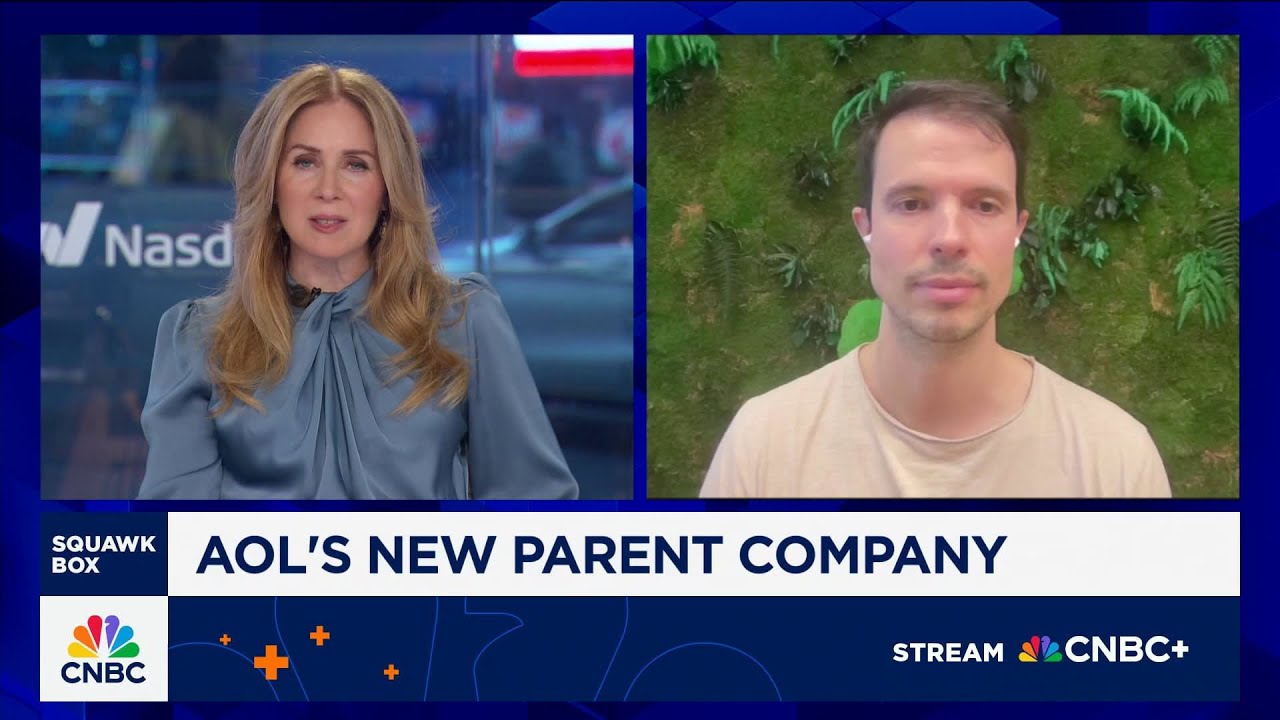
After Evernote, the shopping list accelerated. Eventbrite, AOL, Vimeo, WeTransfer, and other well-known brands followed in succession, totaling more than 50 acquired businesses, according to Exame. AOL, an icon of the dial-up internet era, was bought from Apollo Global in January 2026 for an undisclosed amount, estimated at at least $1.5 billion, and still operates email services and sells security software, according to SpaceMoney.
These are products that remain in the daily routine of millions of Brazilians: WeTransfer for heavy work files, Vimeo for professional videos, Evernote for notes. The difference is that now everyone pays bills to the same Italian owner.
The “Spooners”: 800 thousand candidates for less than 300 positions
The human engine of the operation is a lean army. About 700 young people called “Spooners” are hired to replace the dismissed teams and inject life into the acquired businesses, and the selection is brutal: last year, less than 300 were hired among 800 thousand candidates, with revenue per Spooner reaching $2.57 million, according to Exame.
The company pays well to attract recent graduates who might otherwise head to investment funds. Ferrari himself acknowledges, in the interview published by Exame, that relying on a small group of highly motivated employees to drive transformations might end up limiting the company’s ambitions. It’s a risky management bet: each Spooner carries on their shoulders a slice of revenue that traditional companies distribute among dozens of people.
The account that needs to close: R$ 130 billion in value, profit of $22 million
Not everything is spoon-bending. Bending Spoons accumulates $4.4 billion in long-term debt incurred to finance acquisitions, and in the last fiscal year, revenue totaled $2.6 billion with a net profit of just $22.4 million, while the first quarter of 2026 brought revenue of $601 million and profit of $27.5 million, according to SpaceMoney. The multiple of 7 times the revenue surpasses giants like Meta, which pressures the company to justify the valuation.
The criticisms don’t stop at the debt: acquisitions often involve mass layoffs, and the company is criticized for low financial transparency, which makes it difficult to analyze how acquired businesses perform after being absorbed, according to Exame. The lack of data openness even led banks to refuse loans, one of the factors that weighed on the decision to go public, as creditors prefer to lend to listed and more regulated companies. SpaceMoney adds the central challenge of the thesis: the ability to convert free users into recurring revenue will be crucial to improving profitability and reducing leverage.
The list of 100 targets and the new currency of exchange
The shopping machine does not intend to slow down. Ferrari keeps a list of about 100 acquisition targets at any given time and, as a publicly traded company, now has more flexibility to use its own shares in new purchases, according to Exame, which also notes that more than three-quarters of acquisitions were closed in the last 3 years. It is this mechanism that the company now needs to prove works under the scrutiny of the stock market.
Here is the observation from this editorial team, duly noted: while the tech world competes to launch the next novelty, the Italians got rich by doing the opposite, buying the past of the internet on sale and charging a subscription for it.
From the failed app in Indonesia to the Nasdaq bell, the story of Bending Spoons shows that sometimes the best business is not to invent anything, but to see value where everyone else has already given up.
Tell us in the comments: which old app would you pay to see resurrected, or do you think what has died on the internet should stay dead?