





 Portuguese
  English
  Spanish
  5 min of reading
  0 comments



Bold plan, official documents, and an ancient temple at the center of an operation that exposed failures of the colonial system and anticipated modern debates on art trafficking and cultural heritage.
In November 1923, André and Clara Malraux landed in French Indochina with a defined plan made back in Paris, based on the use of official credentials to present themselves as researchers and reach Banteay Srei, a 10th-century Khmer temple, from where they intended to remove valuable sculptures.
In practice, the operation ended abruptly on the night of December 24, when French authorities intercepted the cargo in Phnom Penh before it could continue to Saigon and, subsequently, to Europe, ending a carefully planned attempt at the commercial exploitation of antiquities.
Although the episode was initially treated as an isolated crime, its repercussions went beyond the police field, as it evidenced weaknesses in colonial control over cultural heritage and ultimately became a lasting landmark in André Malraux’s public trajectory.
-
Elderly individuals over 60 years old need to issue another document in addition to the Identity Card under the risk of a severe fine, 7 points on the driver’s license, and vehicle removal.

-
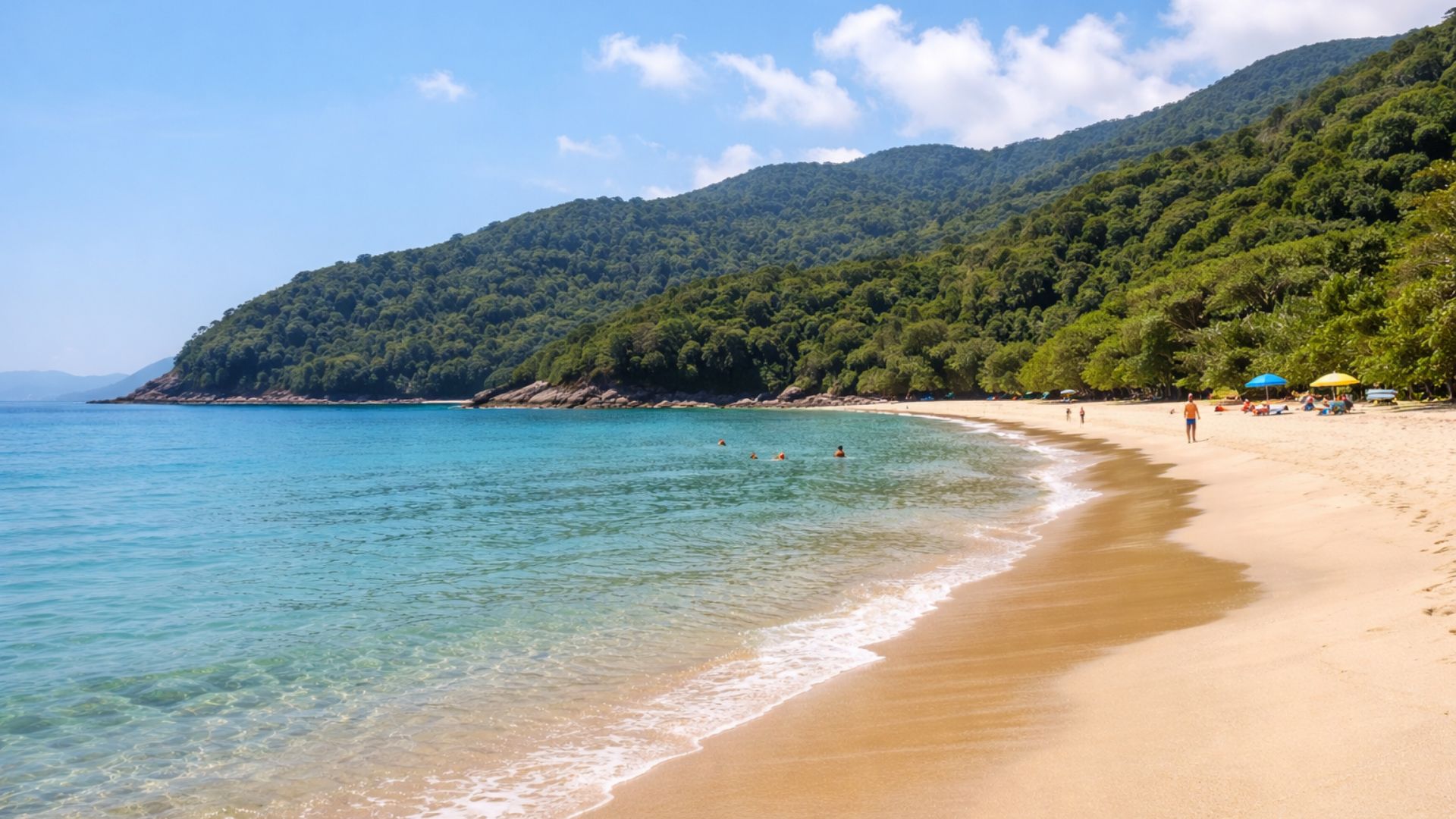
São Paulo boasts clean beaches with 7 surprising destinations along the coast, including areas of environmental protection, controlled access, and waters with high natural renewal.
-
Scientists analyzed the DNA of 1,200 living people and believe they have found the exact place where humanity was born 200,000 years ago: a giant lake in northern Botswana that is now a desert.

-
Starting in April 2026, all motorcyclists with a formal employment contract in Brazil will be entitled to receive an additional 30% in salary for hazardous work, and those who do not comply may be fined by the Ministry of Labor.

Origins of the plan and use of official documents
Shortly after arriving in Hanoi, the two sought out the École Française d’Extrême-Orient and informed the interim director, Léonard Aurousseau, that they would conduct an expedition focused on the ancient Royal Road of the Khmer Empire, using technical discourse to legitimize their presence.

To support this version, they presented a laissez-passer obtained from the Colonial Office in Paris and detailed supposed academic objectives, claiming they would make records and drawings of ancient structures, which helped to reduce initial suspicions from the local administration.
Furthermore, the couple was already familiar with the surveys of archaeologist Henri Parmentier and bet on the possibility of exploiting administrative gaps, believing that poorly cataloged temples or those without recent restoration could be treated as areas without effective protection.
Built in the year 967, Banteay Srei stood out for its ornamental richness in pink sandstone and, even before current international recognition, already drew attention for its artistic complexity, making it a strategic target within the logic adopted by those involved.
Looting at the Khmer temple in Banteay Srei
After traveling to the Siem Reap region, André and Clara set out accompanied by Louis Chevasson, along with local guides and porters, facing a difficult route through dense vegetation, marked by adverse conditions that did not hinder the expedition’s progress.
Upon reaching the complex, they focused their efforts on the sculpted structures of the small temple towers, using chisels and hammers to remove entire blocks of stone, demonstrating a deliberate action far removed from any conventional archaeological practice.
Subsequent reports attributed to Clara Malraux describe the moment when the stone gave way and the sculpted facade completely detached, evidencing the direct impact of the intervention and reinforcing the destructive nature of the removal of the pieces.
Subsequently, the material was organized into seven crates identified as “chemical products”, a strategy adopted to conceal the origin of the cargo during transport and reduce the risk of inspection along the planned route.
According to reconstructions of the case, the set included five female figures, two votive plaques, and four sculpted friezes, items that could fetch around 500,000 francs in the international market, an amount considered sufficient to support the couple for several years.

To avoid immediate checks, the group chose to follow the Tonlé Sap lake and from there intended to reach Saigon, a step considered essential to insert the pieces into the European commercial circuit without raising additional suspicions.
Capture on Christmas Eve in Phnom Penh
The movement, however, caught the attention of George Groslier, responsible for the preservation of Cambodian heritage, who reacted quickly upon learning of the removal of the sculptures and decided to act before the cargo left the territory.
Upon boarding the still-moored ship, Groslier opened the crates, identified the contents, and ordered the captain to keep the suspects on site, alerting the authorities to ensure a formal approach as soon as the vessel reached the capital.
On the night of December 24, 1923, inspectors from the French police conducted a search on the steamer, found the pieces removed from the temple, and confirmed the attempt at illegal transport, an episode that quickly gained prominence in the local press.
In the journalistic coverage of the time, the case was described as an act of audacious looting, a term that contributed to amplifying the repercussions and consolidating the gravity of the action in the eyes of colonial public opinion.
Although Clara participated in the expedition, she was not brought to trial, while André Malraux and Louis Chevasson were formally prosecuted by the authorities responsible for the case.
Trial and repercussions of the case

The trial began in July 1924 at the criminal court in Phnom Penh, bringing together defense arguments that sought to characterize the temple as abandoned, a thesis that was ultimately rejected in the face of the evidence presented throughout the process.
As a result, André Malraux was sentenced to three years in prison, while Chevasson received an 18-month sentence, a decision that initially indicated a stricter response from the colonial system given the seriousness of the incident.
However, in October of the same year, the Saigon Court of Appeal reviewed the case, reduced the sentences, and the French government suspended the enforcement of the penalties, allowing the convicts to return to Europe without serving actual prison time.
The decision provoked a strong reaction among defenders of Khmer heritage, especially Groslier, who began referring to Malraux as “le petit voleur”, an expression that summarized the dissatisfaction with what was considered a lenient outcome.
Impact on André Malraux’s trajectory
Shortly after, already in Saigon, Malraux began a new phase of activity by founding the newspaper L’Indochine, aligned with movements critical of the French presence and focused on defending emerging political agendas in the region.
In this context, he became close to the Young Annam Movement and began to act more directly against the colonial system, a change often associated with the experience lived during the judicial process in Indochina.
Over the years, he established himself as an internationally renowned intellectual, author of La Condition humaine and an active participant in the French Resistance during World War II, expanding his relevance in the political and cultural landscape.
From 1959, he took over the Ministry of Cultural Affairs of France, remaining in office for a decade and playing a central role in formulating public policies aimed at cultural valorization.
Even with the institutional recognition achieved later, the 1923 episode remained associated with his trajectory, being constantly revisited as one of the emblematic cases of disputes involving cultural heritage and legacies of the colonial period.





Seja o primeiro a reagir!