






 Portuguese
  Spanish


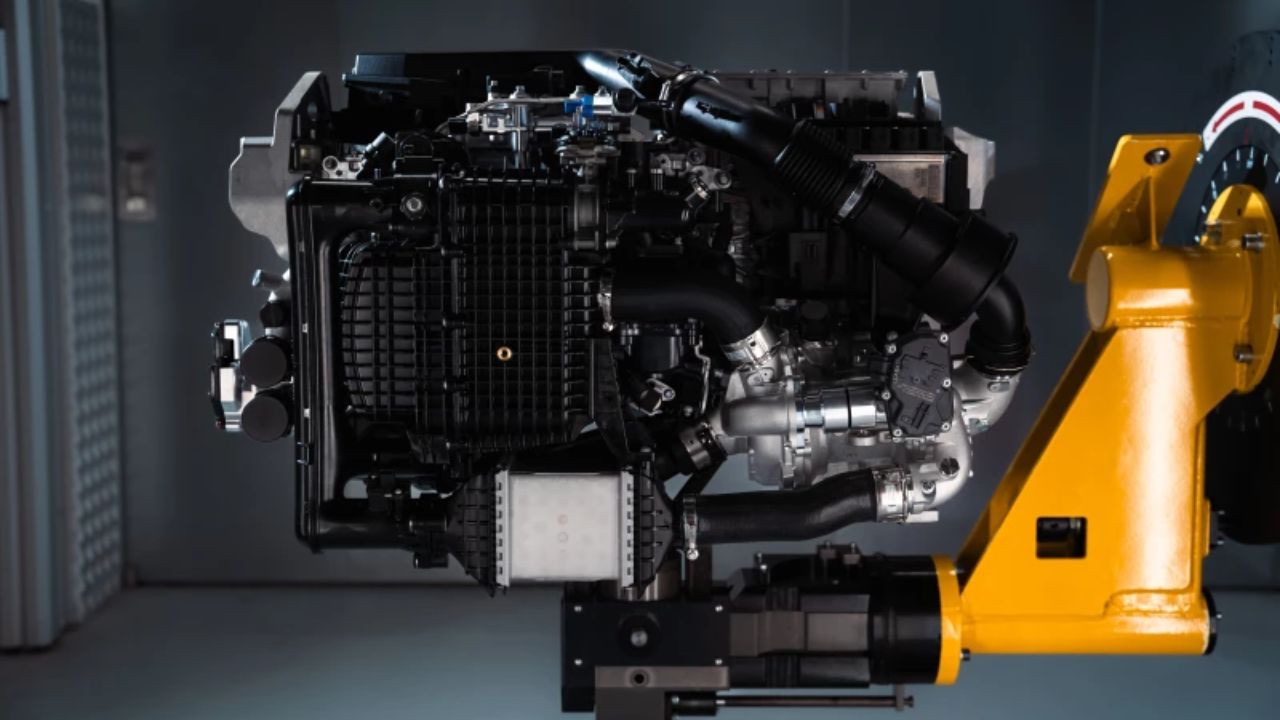

With a 25% Smaller System, In-House Development, and Mass Production Scheduled for 2028, BMW Prepares for a Major Technological Leap in Partnership with Toyota.
BMW is accelerating its plans for hydrogen mobility. The company is already testing prototypes of its third-generation fuel cell system (HFC) and is preparing to start mass production by 2028 at its modern factory in Steyr, Austria.
Countdown to 2028: The Steyr Factory at the Center of Production
The future of hydrogen propulsion for BMW has a defined date and location. The Steyr factory is the heart of preparations for mass production. Currently, prototypes of the innovative third-generation fuel cell system are in the final testing phase, with large-scale production confirmed to start in 2028.
Strategic Partnership: The Collaboration Between BMW and Toyota Deepens
The alliance between BMW and Toyota is entering a new phase. Fuel cells, a vital component, continue to be supplied by Toyota. However, the dynamics of the partnership have changed: while the first generation was a Toyota project and the second a joint effort, the new third-generation system is entirely developed by BMW, with the exception of the cells. This collaboration will extend to propulsion units for various vehicles, optimizing costs for both brands.
-
China Develops Custom 140-Ton Electric Mining Truck with 770 kWh Swappable Battery, Deploys 290 Units in Xinjiang’s Largest Zinc Mine

-
Meta to Launch Arena, a New Prediction App Targeting 3.56 Billion Users, Competing with Polymarket and Kalshi

-
Scientist Challenges Famous Human Evolution Theory, Argues Homo Sapiens Evolved Gradually Over Thousands of Years
-
15-Year-Old American Builds Ocean Generator with PVC Pipe and 3D-Printed Propeller for $12, Wins National Prize, Presents at White House, and Makes Forbes 30 Under 30 List




Innovation and Efficiency: The Secrets of the Third Generation
The new technology from BMW stands out for its efficiency. The third-generation system is 25% smaller than its predecessor. Its design is intended to occupy the same space as a traditional combustion engine. This compactness allows for much simpler integration into vehicle architectures, whether new or existing. In addition, an improved operational strategy and newly developed drive technology promise a significant increase in efficiency.
From Prototype to Reality: Rigorous Testing Ensures Quality
Before hitting the streets, BMW technology undergoes a battery of tests. Comprehensive assessments of noise, vibration, and harshness (NVH) are being conducted, along with power tests to compare performance with other forms of propulsion. The prototypes, assembled in Munich, serve as the final proof of concept and safety, establishing the guidelines for mass production in Steyr.
Industrial Synergy: The Role of the Munich and Landshut Units
This project is a joint effort from several BMW Group factories. The components of the HFC system will be manufactured at the Steyr, Landshut, and Munich units. The Landshut plant, responsible for assembling the pilot fleet of the iX5 Hydrogen, will continue producing essential parts, such as housings and pressure plates, for the next generation of hydrogen vehicles from BMW.





