






 Portuguese
  Spanish


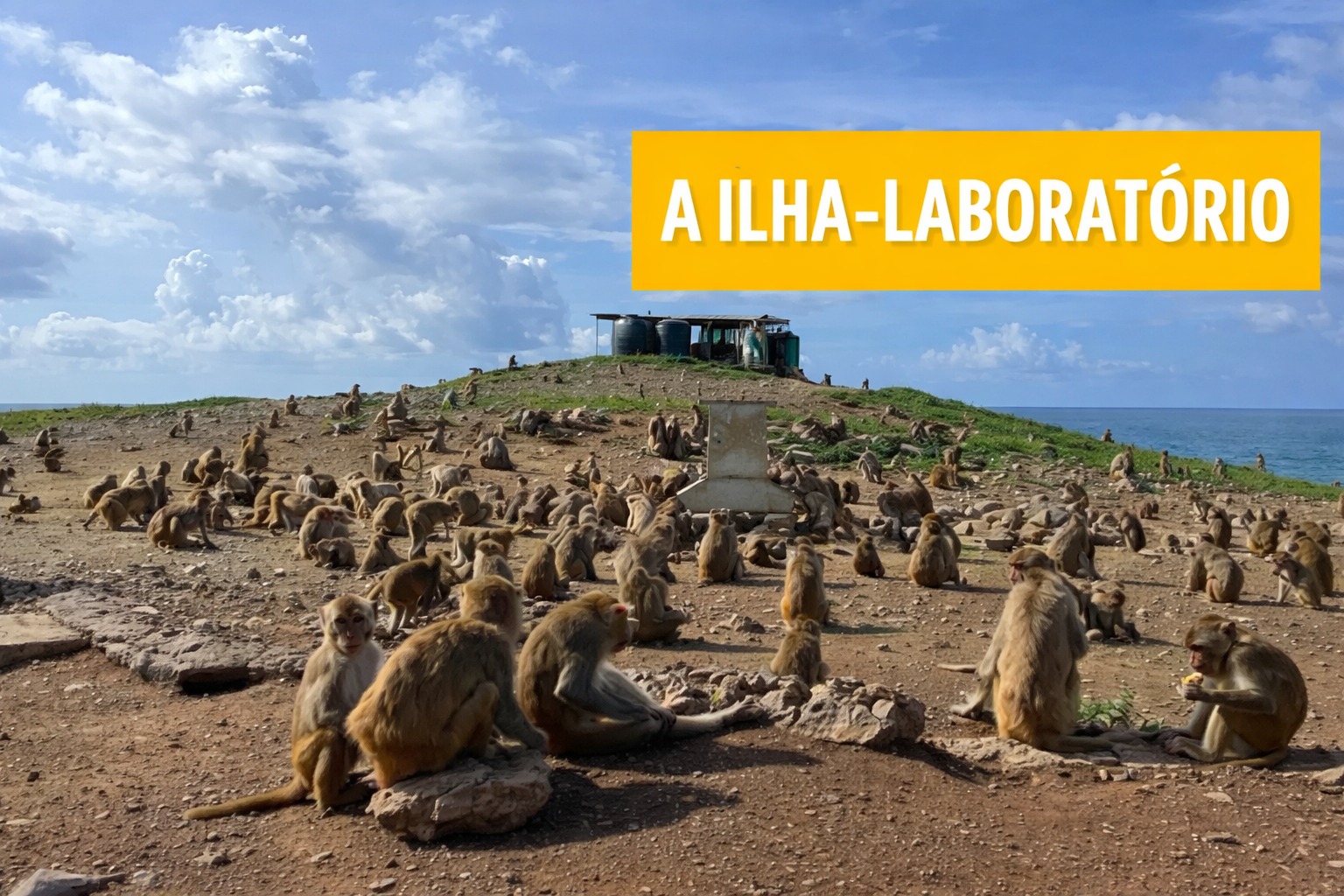


1.6 Km From Humacao, Cayo Santiago Has Maintained A Monitored Colony Of Rhesus Monkeys For Over Eight Decades, Supporting Longitudinal Studies On Behavior, Health, Genetics, And Environmental Impacts Relevant To Science
Located about 1.6 km off the eastern coast of Puerto Rico, near Humacao, Cayo Santiago has hosted a colony of rhesus monkeys for over eight decades, sustaining ongoing scientific research on behavior, health, and social organization, with direct impact on biomedical science.
Origin Of The Experimental Station
The island spans 15 hectares and has been functioning as an experimental station dedicated to the study of primates in a semi-open, monitored environment since 1938.
The project was conceived by primatologist Clarence Carpenter, a pioneer in the study of animal behavior, with institutional support from Columbia University.
-
A fossil kept for years in a small museum in Montreal concealed 450-million-year-old soft tissue, a discovery that has only happened once before in history.

-
Three teenagers transform cut cardboard into Japanese origami-style packaging that promises to retire styrofoam and bubble wrap, win a $12,500 prize, and target giants like Amazon, FedEx, and Home Depot after a robot motor arrived broken.

-
The large jar blender has a rival: Oster Ultra Power bets on 1,000 W, six stainless steel blades, and two portable cups with leak-proof lids.

-
Tesla injected an additional $250 million into the German factory, doubled the battery cell target, and opened its own production line for startups.




At its founding, just over 400 rhesus monkeys were imported from India after a journey of about 22,000 km to the Caribbean.
The goal was to maintain a stable population of non-human primates close to the scientific centers of the United States, reducing logistical barriers to research.

Population And Genetic Continuity On The Island
Since then, over 14,000 monkeys have lived on Cayo Santiago, forming one of the longest population series ever observed.
Currently, the colony includes approximately 1,800 individuals, organized into 12 social groups, all direct descendants of the original group.
This genetic and demographic continuity has allowed for rare longitudinal studies, with comparisons between generations over successive decades.
Management And Sanitary Protocols
Scientific management is conducted by the Caribbean Primate Research Center, the CPRC, which is responsible for administration and protocols.
The center is funded by the United States National Science Foundation and the University of Puerto Rico, according to institutional data.
Access to the island is strictly controlled, restricted to trained researchers and caregivers, following rigorous sanitary standards.
These rules aim to prevent risks associated with the Herpes B virus, harmless to the monkeys but potentially fatal to humans.
Focus Of Behavioral Research On The Island
The research primarily focuses on social behavior, observing feeding routines, reproduction, hierarchy, alliances, and conflicts.
Institutions such as Harvard University, Columbia University, and Imperial College London participate in studies regularly conducted on the island.
Each animal is individually identified, allowing for the comparison of behavioral data with accumulated genetic, clinical, and nutritional information.
This continuous monitoring supports analyses of aging, stress resilience, and social structure on an unprecedented scale.
Scientific Contributions And Controversies
Over the decades, studies have contributed to research on oral health, hormonal production, and response to infectious diseases.
Monkeys from Cayo Santiago have been used in research that aided in the development of vaccines against polio and COVID-19.
There have also been studies related to dengue and Zika, conducted in laboratories in the United States with materials sourced from the colony.
The organization Peta criticizes the use of primates in biomedical experiments and denounces the sale of animals for research.
The CPRC asserts that all activities comply with United States legislation and international ethical standards, highlighting the scientific relevance of the data.
Impact Of The Hurricane And Current Scenario
The island’s geography changed drastically in 2017 when Hurricane María destroyed about 60% of the local vegetation.
The cyclone eliminated the isthmus connecting parts of the island, dividing the territory into two islets and damaging essential structures.
Despite this, the majority of the monkeys survived, with estimates indicating around 50 deaths following the weather event.
Researchers observed an increase in social cooperation and resource sharing, as well as accelerated biological aging.
Today, Cayo Santiago remains a living observatory of the environmental, social, and biological effects on an intensively monitored population.
With information from Terra.


Wow, somebody proofread to this article before publishing. Good grief.
I don’t see how this kind of “study” can have any relevance on anything at all. It’s not their natural environment, not even close, and did anyone else notice how run down everything was? If not run down then barren and desolate. They wouldn’t live like that in an ACTUAL natural environment. Monkeys don’t live on the ground out in the open like that. Just seems really evil. Something like that would be considered a form of torture if they were human. Sure, they’re provided food from receptacles. It’d be too openly cruel if they really had to forage on a little lump of land that had no natural resources of it’s own.
We spend untold millions of dollars on feeding and housing rapists, pedophiles and murderers; let’s put a bunch of them on an island and REALLY get to see how humans truly react in a situation like that.
This way PETA won’t have anything to protest and maybe we’ll thin out the human herd a bit.
Sounds rather like the slave trade. I’m sure it’s fascinating but seems unethical