






 Portuguese
  Spanish


John Sims doubted the warning from the previous owner, dug his own backyard, and found a fiberglass nuclear shelter, built in 1961 and closed for more than five decades. Now, the firefighter restores the Cold War bunker to use it as an underground refuge at a pleasant 22 °C all year round.
Buying a house and getting a piece of the Cold War as a bonus: that’s what happened to John Sims, a resident of Tucson, Arizona (USA). Upon purchasing the property from a friend, he was warned that there might be a nuclear shelter buried in the backyard and he didn’t rest until he unearthed the mystery. According to American newspapers Arizona Daily Star (tucson.com) and The Eagle, the bunker had been sealed since 1961.
The so-called “secret” was an old bomb shelter, one of those built during the nuclear tension between the United States and the Soviet Union. Construction records indicated that the structure had been erected in 1961, but no one knew if it had survived more than half a century underground. Sims decided to find out in the most direct way possible: by digging.
A “secret” revealed in the house purchase
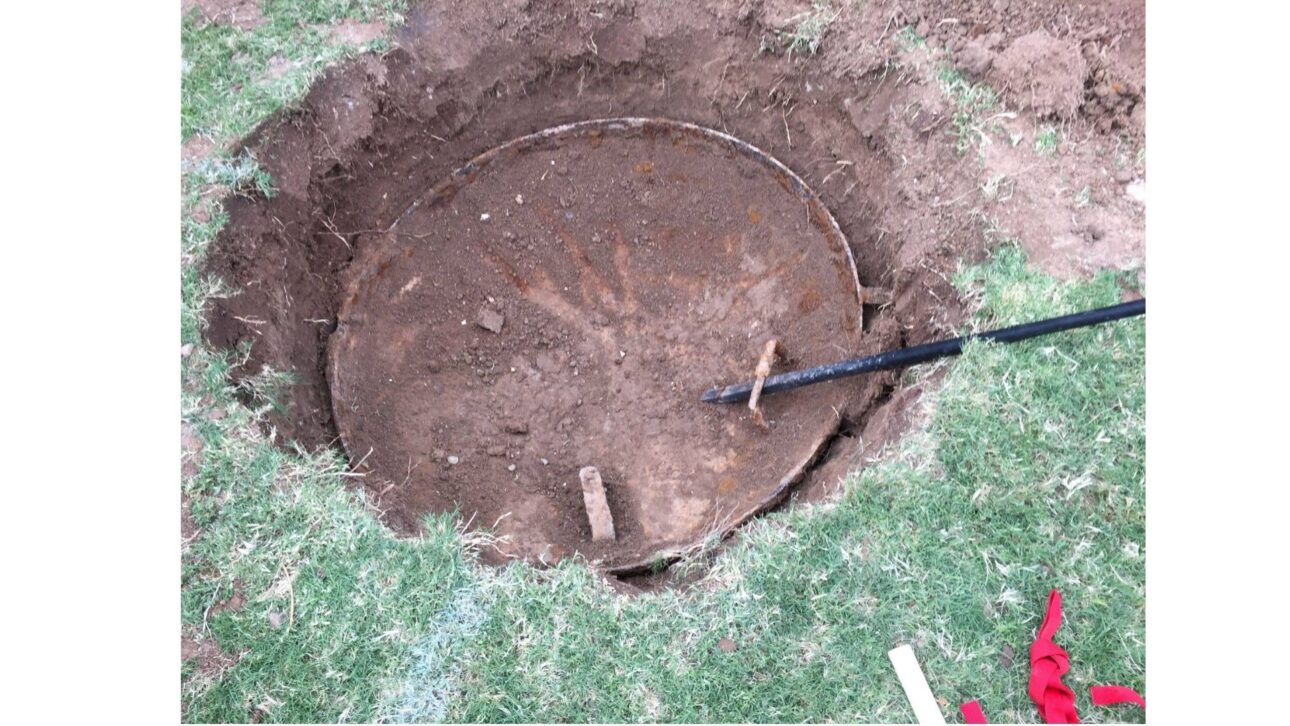
image: Reddit
It all started in 2015 when Sims bought, at the beginning of that year, the house from a friend in a central neighborhood of Tucson. During the negotiation came the warning: there might be a nuclear shelter hidden in the backyard, a relic of the Cold War.
-
Spanish owner lost an ancient pine tree during a storm, chose a 500-year-old olive tree and mobilized a crane and platform truck to move the 6-ton tree and transform the mountain chalet with living history and monumental landscaping.

-
Mysterious object seen in images attributed to NASA on Columbia reappears in g1 video, shows structure near the edge of the Earth in 1996 and reignites doubts about space records without clear identification in space.
-
An engineer who designed tools for Ford and Mercedes saw a pink box of sweets and transformed cardboard into pyramids to replace bubble wrap and Styrofoam in deliveries.

-
Daughter left San Francisco to take over from her father a nearly 90-year-old family farm in California, saw 300 tons of grapes left on the ground without a buyer, and entered a struggle to prevent the wine crisis from burying the family’s history.


The property documents indicated that the structure was built in 1961 by the company Whitaker Pools, but whether it had survived 54 years buried was an enigma.
Sims’ reaction was immediate. “The first thing I did was ask if he had a shovel. I was going to dig that up right away”, he recounted.
Shortly after moving in, he faced the scorching Arizona summer, with temperatures nearing 40 °C, determined to find the underground hideout no matter the cost.
Dig, give up, and dig again
In the beginning, the effort yielded little. After digging a few shallow holes and finding nothing, Sims almost threw in the towel, fearing that the fallout shelter had collapsed or was right under a corner of the yard covered by bricks.
That’s when technology came in. He hired a consultant who, with metal detectors, indicated the right spot to dig.
Even so, the firefighter was about to give up once more until the shovel hit a metal lid almost a meter deep. The relief came with good humor: “I just hoped it wasn’t a septic tank”, he joked.
A firefighter who knew the risks
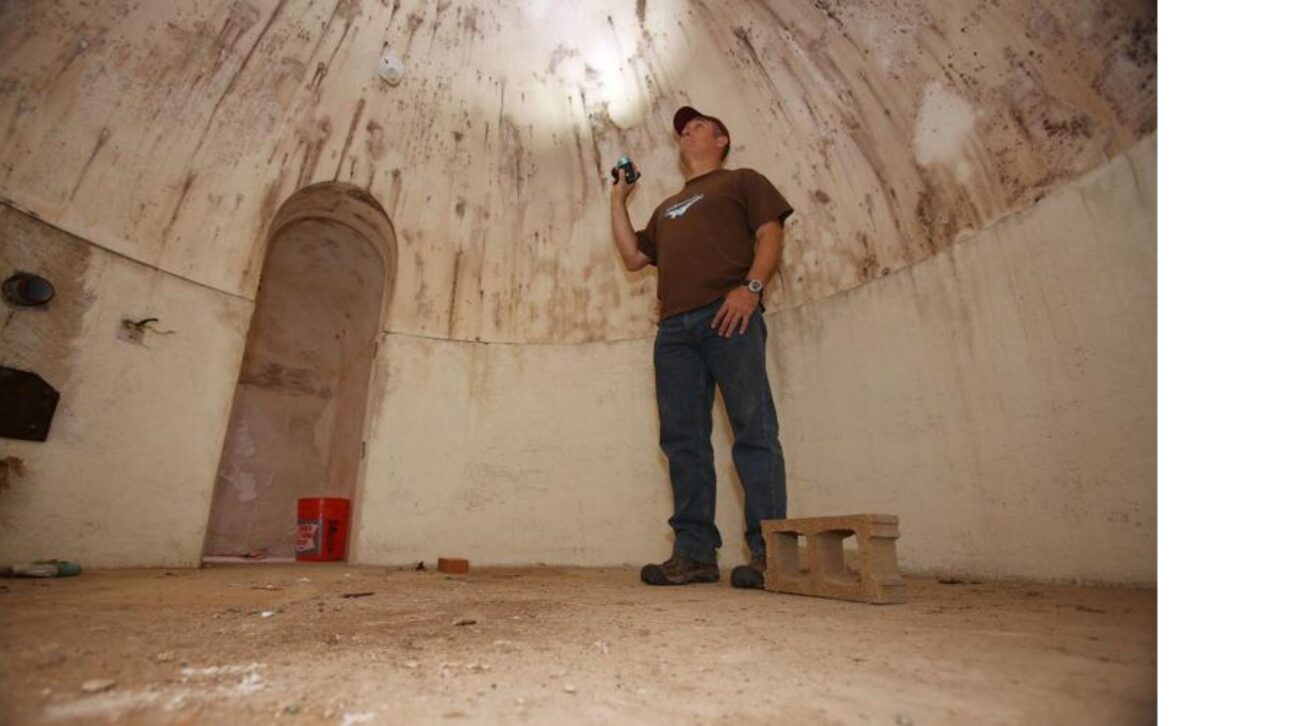
Captain of the Rural/Metro Fire Department, Sims had advanced training in confined space rescues and knew that haste could be costly.
He even managed to lift the heavy metal hatch, but waited an entire day before descending the spiral staircase, first testing the air for mold and leaving some people nearby, in case he got stuck.
The caution had an explanation. “I know too much about confined space, and I was home alone”, he justified. “Especially if the lid fell back, there would be no way to lift it from below.” For someone who works with emergencies, curiosity could not override safety.
What was down there
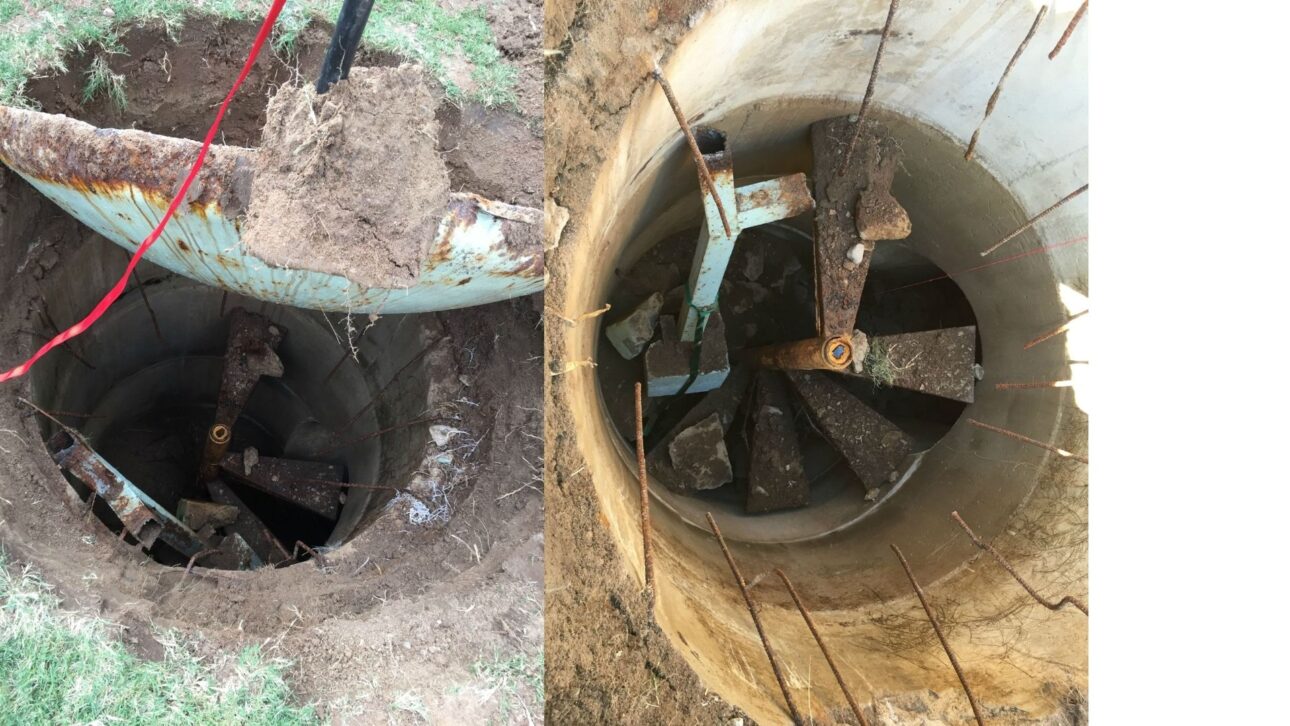
image: Reddit
The descent finally revealed the prize: a small fiberglass-domed fallout shelter, although filled with debris. It wasn’t exactly the intact treasure he imagined, but it confirmed the yard’s legend once and for all.
Deep down, Sims dreamed of a time capsule. “I really hoped to find a microcosm… full of civil defense boxes, radiation detectors, camp beds, those things”, he admitted. Instead, he came across an empty and dusty structure, waiting for a good renovation.
A refuge at 22 °C all year round
The priority became restoring the bunker. First, fix the spiral staircase; then, listen to engineers and contractors on how to safely recover the structure. Sims also went hunting for period objects, such as civil defense water gallons, to return the shelter to the 1960s atmosphere.
The plan is to transform the hideout into a private retreat. He intends to spend at least one night in the shelter once it’s ready and use it as an escape from the desert heat—after all, down there the temperature stays around 22 °C all year round, quite a contrast to the furnace that is Tucson’s summer.
Cold War bunkers hidden in Tucson
Sims’ shelter is not an isolated case. According to him, Whitaker Pools built several similar nuclear shelters in Tucson during the 1960s, driven by the panic climate of the time. “The Cuban Missile Crisis was a big push for them during that period”, he recalled.
For those who suspect they have a bunker in their own backyard, his advice is to start with the property’s documents and consult the Tucson city hall or Pima County.
But the firefighter issues a warning: “Jumping into holes in the ground is generally not a good idea”, he says, reminding that the toxic air in tunnels and caves can incapacitate a person. No wonder, his discovery became a fever: a post on Reddit garnered hundreds of comments and some hundreds of thousands of views.
And you, would you go down that hatch?
From a simple notice when buying the house to a living piece of the Cold War in the backyard, John Sims’ story proves that sometimes the past is literally buried beneath our feet—all it takes is a shovel and a lot of curiosity.
Would you have the courage to go down alone into a nuclear shelter sealed for over 50 years? And what would you do with such a bunker: a refuge, an office, a wine cellar? Tell us in the comments what you would store down there.


