Portuguese
  Spanish


Brazilian nanotechnology drives the restoration of the Amazon with innovative environmental technology, strengthening Amazonian reforestation and carbon capture.
The climate urgency demands responses that connect ecological conservation and advanced science. According to an article published by the Agribusiness Portal on July 9, 2026, it is in this scenario that the NanoRad’s project operates, combining Brazilian nanotechnology and biotechnology to accelerate the restoration of the Amazon.
Developed by the startup Krilltech with Shell Brazil and the National Institute of Amazonian Research (Inpa/MCTI), the solution enhances carbon capture and optimizes the health of native trees. The practical advancement of this proposal has earned international prestige for the country, becoming a fundamental reference for those planning large-scale Amazonian reforestation with the support of environmental technology.
The international recognition of NanoRad’s in Amazonian reforestation
The initiative operates in an integrated manner with the Biotechnological Innovation Center for the Recovery of Degraded Areas (Cibrad). This research network brings together scientists, entrepreneurs, and the private sector around the restoration of the Amazon in the 9 states of the Legal Amazon. Recently, the project received the silver medal at the Energy Summit Awards, validating the impact of Brazilian nanotechnology.
-
The battery that promises to change cell phones and electric cars still has a microscopic enemy: researchers discover how lithium dendrites pierce the solid electrolyte and are already testing ways to prevent cracks and short circuits.

-
An old ferry rusted for more than 10 years in New York, almost sank after the engine room was flooded, and now volunteers are rushing to clean the hull, remove wires, life jackets, and loose paint before sinking it in the Atlantic to become an artificial reef full of marine life.

-
SpaceX launch turned Falcon 9 into a giant jellyfish in the night sky, with a colorful plume illuminated by the Sun at high altitude, confusing observers and showing how a routine flight can become a rare spectacle of atmospheric physics over Earth.
-
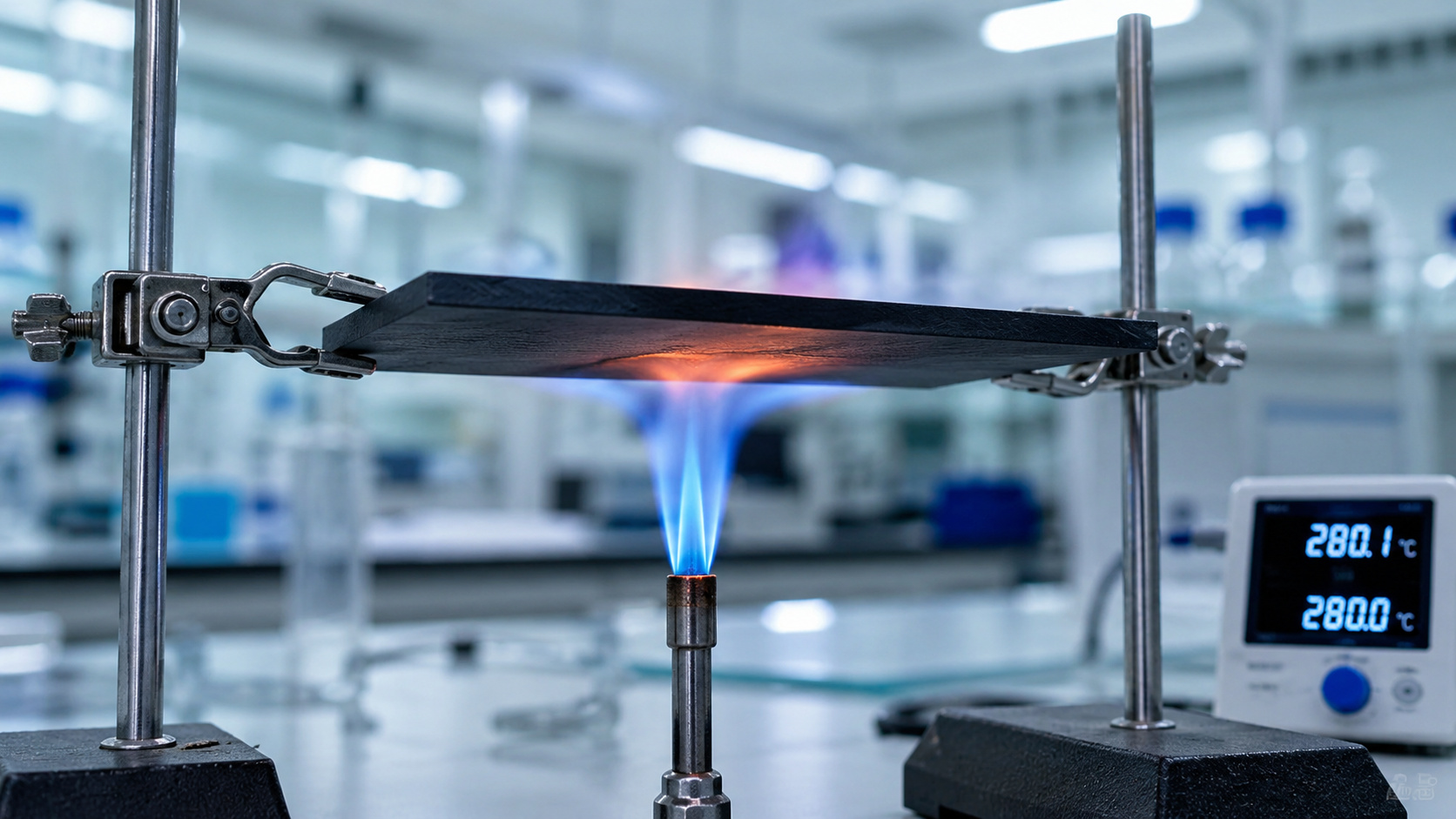
Advancement in science: a new plastic developed by researchers in the USA combines structural strength and thermal blocking in a single technology, opening new possibilities for construction, transportation, electronics, and sustainable solutions with a direct impact on global energy efficiency.


The Brazilian achievement gained global exposure during the Energy Summit, an event focused on innovation and energy transition that adopts methodologies inspired by the Massachusetts Institute of Technology (MIT). On June 22, the team received the silver medal at the award ceremony held in Rio de Janeiro.
This international recognition attests to the commercial and scientific value of Brazilian nanotechnology. The award proves that Amazonian reforestation achieves a faster execution speed when anchored in disruptive environmental technology, attracting the attention of international green investment funds.
Advanced science with nanotechnology in favor of forest regeneration
The recovery of degraded ecosystems in the biome faces severe challenges, such as the low fertility of sandy soil and the slow growth of local species. It is in this bottleneck that national environmental technology acts directly at the root of the problem to enable Amazonian reforestation.
Krilltech has developed formulations that deliver essential nutrients to the deepest structures of plants. This process optimizes photosynthetic activity and accelerates the maturation cycle of seedlings. The main benefits of Brazilian nanotechnology applied to the field include:
- Higher survival rate: Plants become resistant to climate variations and water stress.
- Accelerated growth: The initial development time is drastically reduced through the stimulation of Amazon restoration.
- Formation of robust ecosystems: Planned planting creates mature green areas in much shorter periods than conventional Amazon reforestation methods.
Cibrad and the expansion of Brazilian nanotechnology in the Legal Amazon
To expand the use of environmental technology, NanoRad’s was incorporated into Cibrad, inaugurated in April 2026. The center receives contributions from Shell Brazil resulting from the research, development, and innovation (R&D&I) clause of the National Agency of Petroleum, Natural Gas and Biofuels (ANP).
The center’s objective is to connect laboratory excellence with field demands, boosting Amazon restoration. The network operates in a decentralized manner, covering the following territories:
- States served: Acre, Amapá, Amazonas, Maranhão, Mato Grosso, Pará, Rondônia, Roraima, and Tocantins.
This broad coverage allows for mapping the behavior of different seedlings treated with Brazilian nanotechnology in different soils. This creates a viable scientific standard to boost large-scale Amazon reforestation.
Carbon sequestration and the future of the ecological market
The dynamic growth of trees provides an immediate positive impact on the atmosphere: the accelerated capture of greenhouse gases. The expanding tree canopies fix robust volumes of carbon dioxide in the leaves and soil due to environmental technology.
This ecological gain qualifies the Amazon restoration process for the strict global certification requirements. By ensuring strong forests in less time, the ecosystem combines sustainability with sustainable economic return, placing Amazon reforestation on the path of international carbon credit financing.
Strategic partnerships to strengthen the bioeconomy
The consolidation of NanoRad’s results from the continuous collaboration between laboratories, public agencies, and large companies. The technical cooperation involves Krilltech, Shell Brasil, researchers from Inpa, and operational support from Bioflore to structure forest plantations.
This union exemplifies how financial resources from the private industry can accelerate biological preservation. As Marcelo Rodrigues, executive director of Krilltech, explains, the integration between the innovation ecosystem and the business sector is the fundamental step to scale the restoration of the Amazon and establish an economy based on low pollutant emissions.
The horizon of Brazil as a global leader in sustainability
The NanoRad’s project redefines ecological practices by demonstrating that scientific efficiency is indispensable in nature preservation. The convergence between Brazilian nanotechnology and global conservation goals mitigates the logistical delays that historically limited the planting of tropical forests.
By extending practical trials throughout the Legal Amazon and achieving significant results, the country reaffirms the pioneering spirit of its cutting-edge science. The continuous development of new fronts of environmental technology protects the integrity of the biome and projects the Brazilian market into the definitive leadership of the global bioeconomy.