






 Portuguese
  Spanish


According to Fox News, the Canton of Solothurn announced on May 20, 2025, a discovery that no one expected — neither the engineers responsible for the works nor the archaeologists accompanying the site. A week before the announcement, a pedestrian passing near the highway bridge in Luterbach — a town of just over 3,400 inhabitants in the Wasseramt district, 22 miles north of Bern — noticed stones and brick fragments arranged unusually on the ground near the construction site.
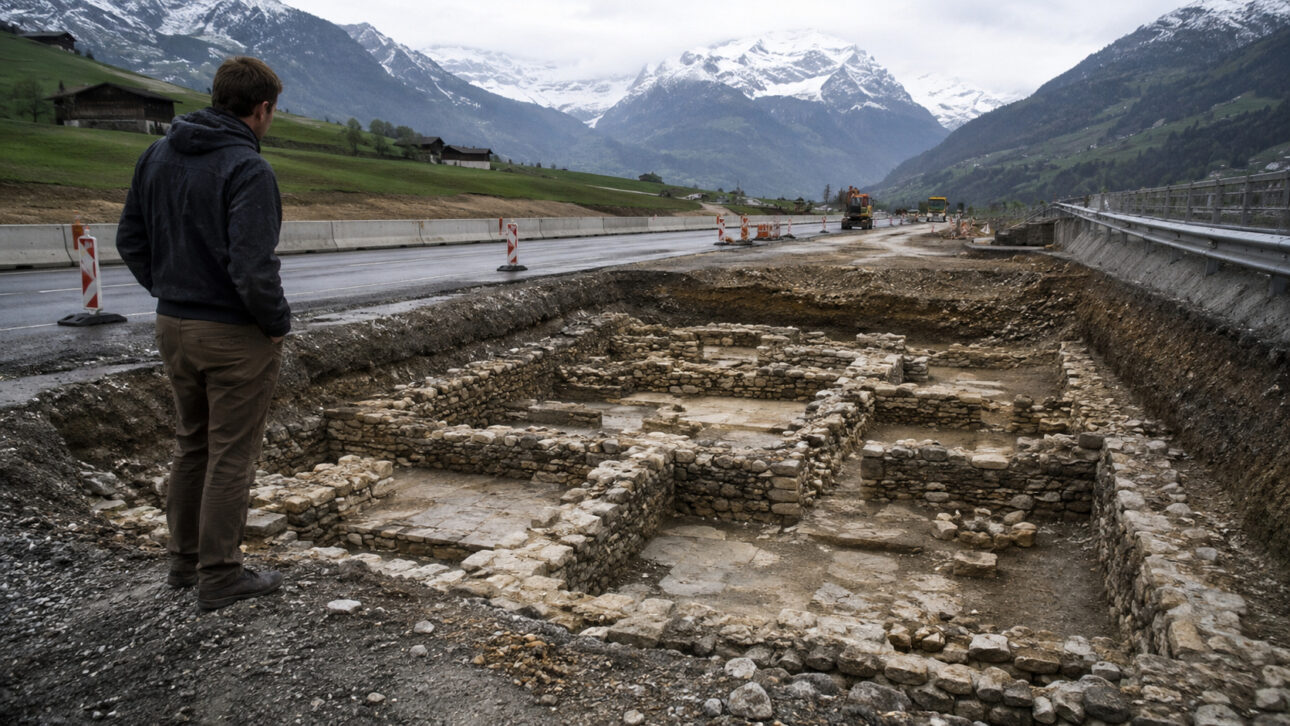
He was not an archaeologist. He was not there to make a discovery. He was passing by. But he recognized that the stones had something different and alerted the authorities. The canton went to see. And confirmed: beneath the ground was the foundation of a Roman building. “It quickly became clear: a Roman building is buried here,” said the official statement from the Canton of Solothurn. The foundation was shockingly close to the highway — the photographs released by the canton show the stones just a few centimeters from the asphalted surface where vehicles circulate daily.
The most revealing, however, was not the proximity. It was what the canton added about the history of those stones: “As early as the 1860s, an ancient structure made of pebble and granite stones was excavated at this site.” The same structure had been partially discovered 165 years earlier. But the exact location of the building had been lost in time — no map, no record precise enough to say exactly where to dig again. Until a pedestrian looked at the ground in the right place.
-
Brazilians in Portugal Face Increased Police Checks as Consulate Advises Carrying Documents; Long-term Resident and Tourist Report Heightened Scrutiny in Porto.

-
Russia Proposes Bold Energy Transition Plan at BRICS, Citing $8 Trillion Annual Cost for 2050 Global Target
-
$142 Million Bridge Funded by Brazil Only Used by Empty Trucks at Night, While 43,000 Vehicles Face 2-Hour Queues and Annual Losses Could Reach $600 Million at the Border.
-
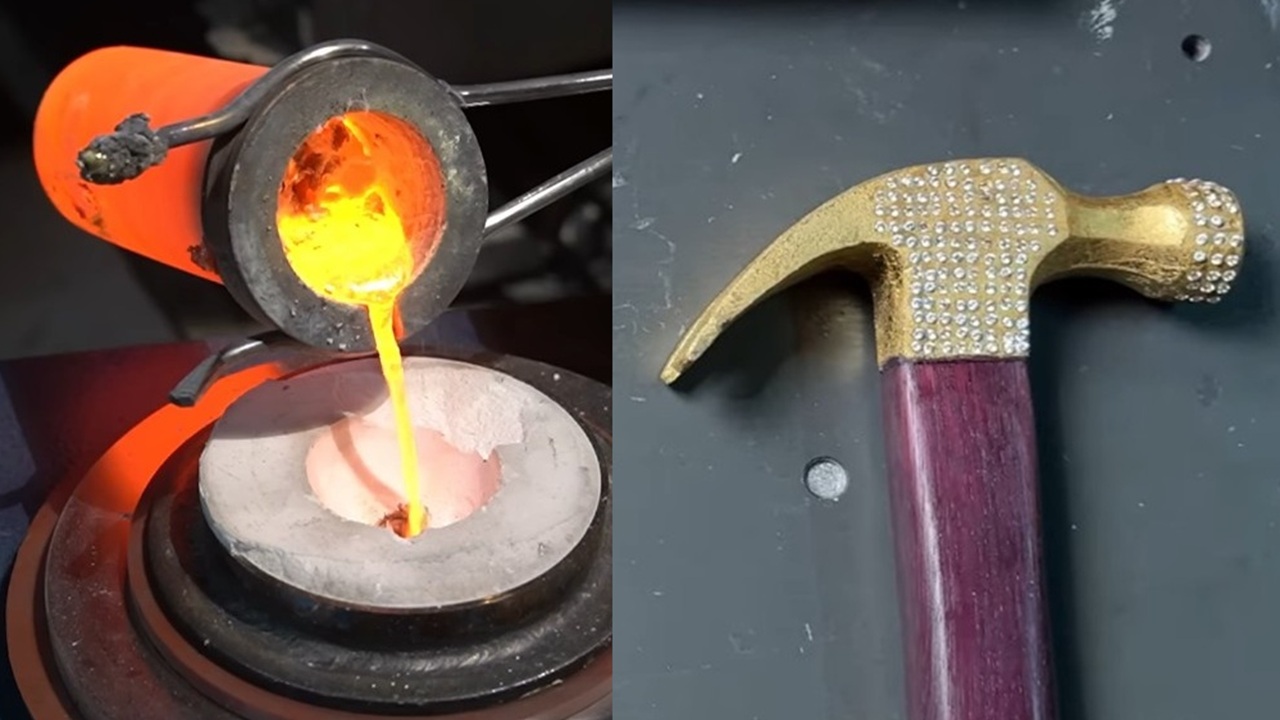
Man Crafts $10,000 Hammer with 24-Karat Gold and Diamonds


What it means to find what has already been found — and lost
The story of the 1860 excavation says something about how archaeological knowledge accumulates and disperses over the centuries — and about why rediscovering a lost site is no less significant than discovering a new site. According to Fox News, the canton was explicit: “The exact location of the ‘ancient structure’ remained unknown. Until now.” The 1860 excavation had documented the existence of a structure made of pebble and granite stones at the site.
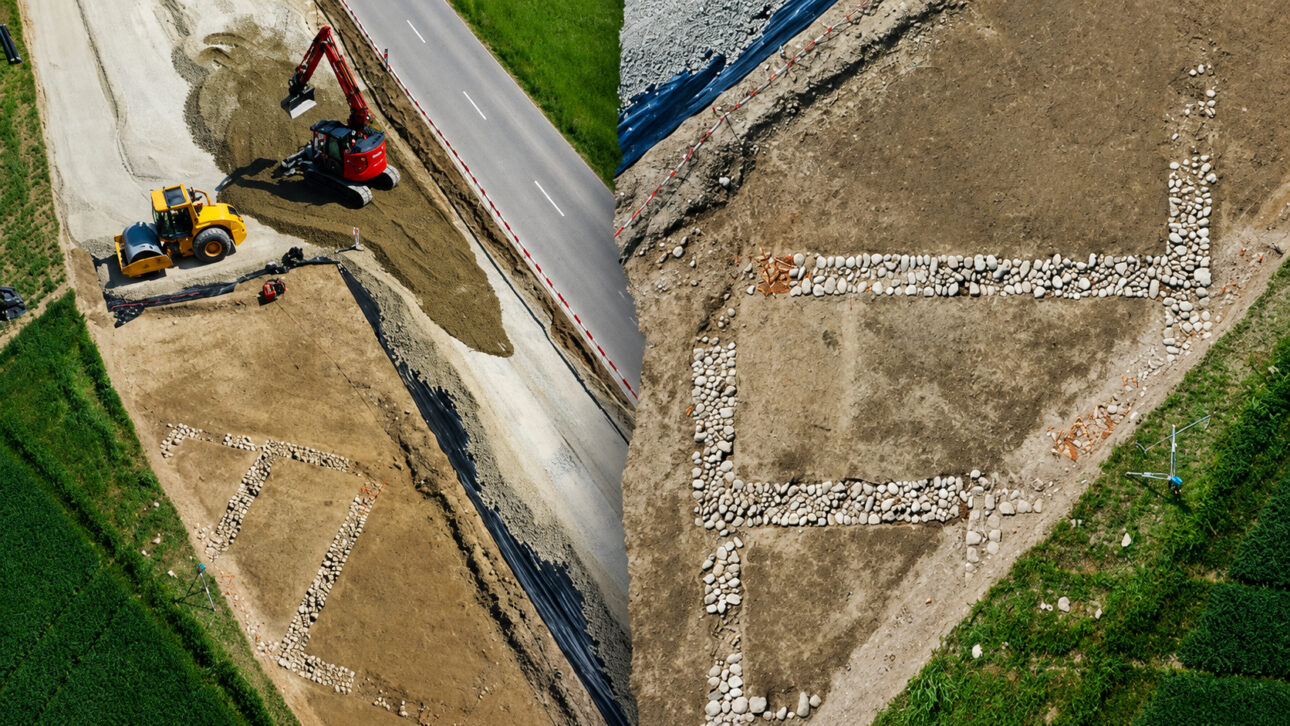
But the documentation standards of the 19th century did not include GPS coordinates, aerial photographs, or precise topographical surveys. What existed were textual descriptions and possibly hand-drawn sketches — enough to know there was something there, insufficient to find it with certainty 165 years later. It is a recurring problem in European archaeology: hundreds of sites were partially excavated in the 19th and early 20th centuries with techniques that would now be considered inadequate, producing imprecise records that leave subsequent generations of researchers knowing something exists but unable to locate it accurately.
Switzerland has a particularly dense layer of this problem — the territory was crossed by Roman routes, colonized by Roman settlements, and then rebuilt upon itself during two millennia of continuous urban history. The relationship between what is known to exist beneath the Swiss soil and what has been effectively located and documented with modern precision is one of the most active frontiers of European archaeology.
The highway that unknowingly passed over history
The location of the discovery — next to a highway bridge being replaced in the Luterbach works — reveals an irony that the Canton of Solothurn did not need to state but that the photographs of the site make evident. According to Fox News, the images show the Roman foundation centimeters from the asphalt. The structure that survived two thousand years of European history — wars, migrations, reconstructions, the Industrial Revolution, two world wars, decades of accelerated modernization of Swiss infrastructure — survived precisely because it was buried enough not to be destroyed, but shallow enough for an attentive pedestrian to notice it when the construction site exposed the soil.
The highway passing over was not built over the site out of neglect or ignorance — it was constructed at a time when the exact location of the building was lost. The engineers who designed the work had no way of knowing that what was centimeters from their asphalt was a Roman foundation from the first or second century of the Common Era.
The Canton of Solothurn reported that the Roman foundations would be covered again during the preparatory work for the replacement of the highway bridge — a decision that may seem frustrating but is standard practice when an archaeological site is found during infrastructure works and there is no time or resources for an immediate complete excavation. Covering preserves. Excavating without planning destroys.
What Luterbach has to do with the Roman presence in Switzerland
The discovery in Luterbach is not an isolated event — it is another piece in a mosaic of Roman presence that Swiss archaeology has been patiently reconstructing over the past decades. The canton described the discovery as “exciting” — a word that in official Swiss statements usually means something genuinely remarkable.
The geographical context explains why. Luterbach is located in the Canton of Solothurn, whose historical capital Solothurn was the Roman city of Salodurum — a Latinized name of a Celtic toponym meaning “river narrowing” or “wave portal,” referring to how the Aare River narrows in the region. Salodurum was one of the most important Roman settlements in central Switzerland, located on a strategic transport route connecting the Swiss plain to the Alpine passes and the Rhine.
The presence of a Roman building in Luterbach — just a few kilometers from Salodurum — is not surprising to those familiar with the density of Roman settlement in this region. What is surprising is that it was so close to the surface, so near a modern highway, and that its location had been lost for over a century despite a documented excavation in 1860.
The pedestrian who did what monitoring systems did not
There is a detail in the story of the Luterbach discovery that says something about how major urban archaeological discoveries often happen — and that no technological monitoring system could have guaranteed in this case. According to Fox News, infrastructure works in Switzerland typically include archaeological monitoring as part of the licensing process — especially in regions with a known history of Roman sites like the Canton of Solothurn.
But archaeological monitoring in infrastructure works has practical limitations: archaeologists cannot be at every point of a construction site at the same time, and identifying stone fragments on the ground of an active site requires the eye of someone who knows what to look for — or someone who happens to pass by the right place at the right time with enough attention to notice that those stones should not be there in that way.
The anonymous pedestrian in Luterbach did the latter. They had no archaeological training. They were not there as part of any monitoring program. They were passing by — and noticed that the stones looked different. The result was the relocation of a site lost for 165 years, the documentation of a Roman foundation that was centimeters away from being covered again by the works, and the record that the building first excavated in 1860 has dimensions still unknown — because the foundation extends beyond the limits of what was exposed by the works in 2025.


