Portuguese
  Spanish



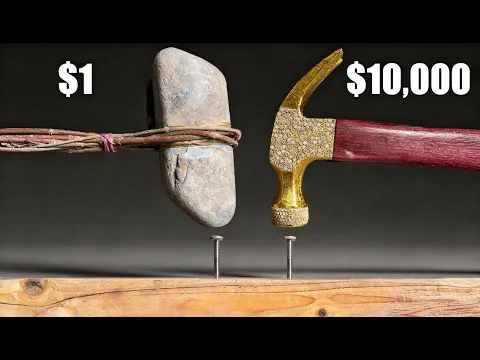
Published on October 18, 2025, by the Waterjet Channel, by Daniel Adair, the video shows the creation of four hammers made from scratch, ranging from an improvised version with stone, branch, and string to a luxurious piece with 24-carat gold, diamonds, purple wood handle, and about 100 hours of work.
The Waterjet Channel, led by Daniel Adair, published on October 18, 2025, a video in which he transforms an apparently simple idea into an extreme manufacturing challenge: create four hammers from scratch, each with very different values.
The list included a $1 hammer made with stone, branch, and string, a $100 one in steel, another $1,000 in titanium, and finally, a version valued at $10,000, coated with 24-carat gold and encrusted with diamonds.
Throughout the video, the project evolves from being just a comparison of tools and turns into a sequence of creativity, engineering, improvisation, and endurance tests.
-
Adventurer Solo Climbs 20-Meter Giant Fig Tree in Costa Rica, Camped in Canopy, Explains Tree’s Unique Growth Strategy

-
Underground Fire Burns for Over 100 Years in New Zealand Forest Without Wood, Smoke, or Human Intervention

-
Brazilian Town Known for Its Steady Winds Impresses with Cutting-Edge Hospitals, Clean Air, and Peaceful Living Just Three Hours from São Paulo
-
Animal Thought Extinct for 130 Years Reappears in Brazil, Exciting Scientists with Rare Comeback


The production involved waterjet cutting, forging, CNC machining, plaster mold casting, gold leaf application, manual diamond placement, and even an accident with molten metal that almost ended in a workshop fire.
$1 Hammer Started with Stone, Branch, and String
The first hammer was the simplest on the list. To prove it was possible to create a functional tool spending only $1, Daniel used a stone found in a construction area, a branch taken from the backyard, and part of a roll of string bought for $8.
Since he used only a fraction of the material, he considered the proportional cost within the proposed limit.
The manufacturing was rudimentary. He opened a channel in the stone and secured the improvised handle with small branches and string.
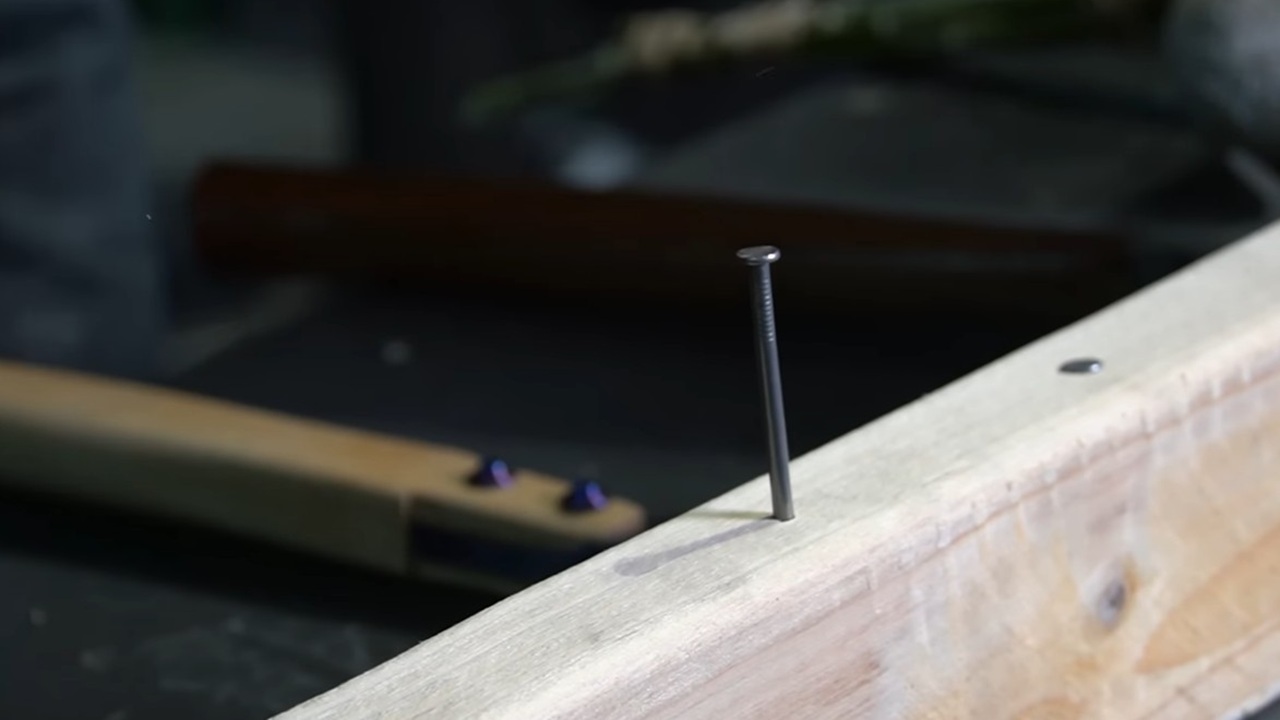
The process took about 45 minutes. Despite its precarious appearance, the hammer managed to fulfill the basic function during the tests, hammering a nail into wood. Daniel rated the performance 4 out of 10, but noted that considering the cost, the result could reach 9 out of 10.
Steel version required cutting, forging, and manual finishing
The second hammer, valued at $100, was made from a piece of steel taken from the workshop’s metal collection.
The raw material had a rounded shape, which made the initial cut with the water jet difficult. Even so, the machine managed to cut out the silhouette of the hammer head in a few minutes, although the process spread water and fragments over the camera and cell phone used in the recording.
After cutting, the piece was heated in a furnace and worked manually in an attempt at forging. Daniel used a half anvil, gloves, and simple tools to shape the hammer head. The stage had difficulties, including loss of temperature and gloves catching fire quickly during handling of the hot metal.
The handle was made with walnut wood purchased from a specialized store. The piece was also pre-cut with the water jet and then adjusted with a saw, grinder, and manual work.
The fitting was finished with a wooden wedge, a traditional technique used to secure the handle inside the metal head. In total, the steel hammer took about eight hours to complete.
Titanium hammer went through CNC and color change with heat
The $1,000 hammer was made with titanium and had a more technological process. Daniel designed the model in 3D software and received help to operate a CNC machine.
The piece started as a solid block of titanium, which was secured in the machine and mapped by a ruby-tipped probe.
The machining removed material in several stages, first leveling the surface and then slowly revealing the shape of the hammer head. To work on the other side of the piece, it was necessary to create “soft jaws,” aluminum pieces with the negative of the hammer, capable of holding the already machined shape without damaging it.
The handle was made of maple wood, also cut with the water jet and adjusted manually. Daniel attempted to color the titanium by electro-anodizing, using saltwater and controlled voltage, but the process did not work as expected and even left marks on the surface.
The solution was to use heat to change the color of the metal, creating bluish and purplish tones. According to him, the hammer took about 50 hours of work, including the help received in modeling and CNC operation.
Hammer of $10,000 almost caused an accident in the workshop
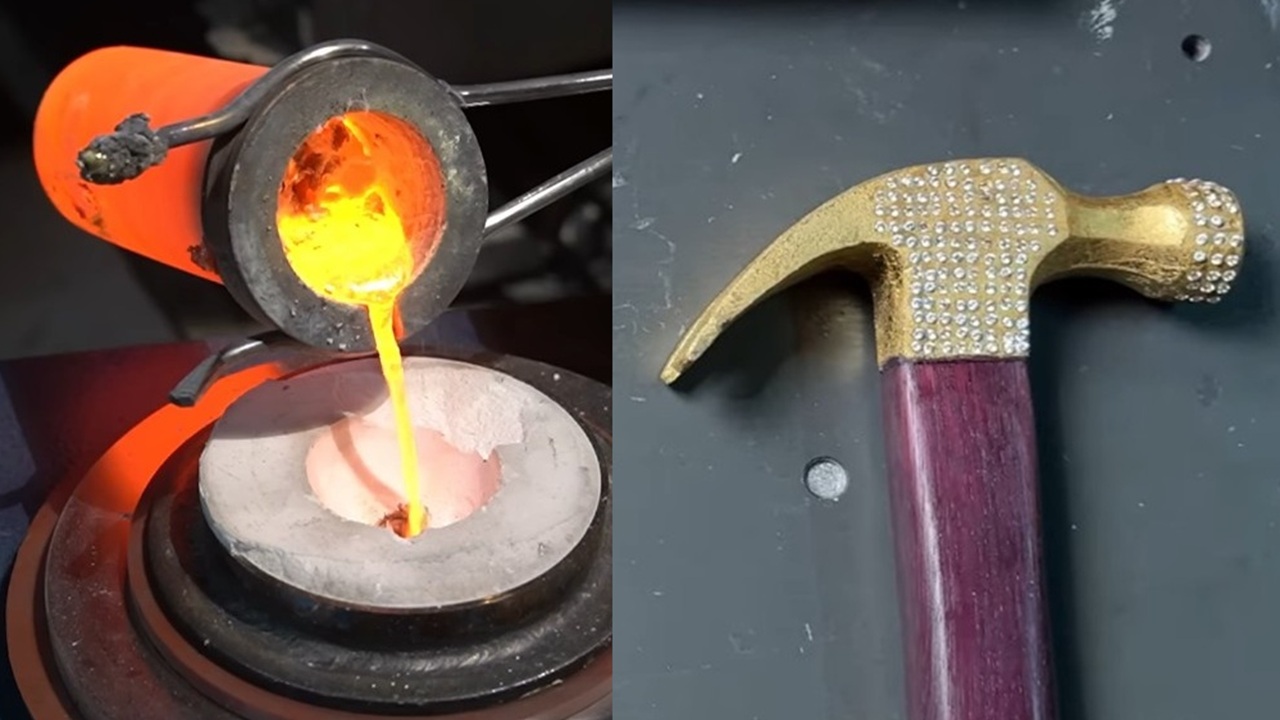
The most complex step was creating the $10,000 hammer. Initially, the idea was to use a large amount of gold, but calculations showed that an entire hammerhead would require about $300,000 in gold. Therefore, Daniel decided to cast the head in brass and make the piece expensive with a 24-karat gold leaf finish and diamond inlay.
The process began with a 3D scan of a common hammer. The model was printed in plastic and used to create a casting mold with special plaster. The piece needed to be heated slowly so that the plastic would be eliminated without damaging the mold.
The casting was the most tense moment. Daniel tried to melt brass using a single furnace to heat both the metal and the mold. Since both required different temperatures, he had to improvise. In the attempt to pour the metal, the brass was not liquid enough, the handling failed, and part of the melted material fell on the workshop floor.
The accident caused a fire and forced the team to fetch a fire extinguisher. No one was seriously injured, but the episode led Daniel to buy a specific metal furnace before continuing.
After new attempts, the casting finally worked with the aid of a vacuum to help the metal fill the mold.
The piece still came out with a flaw in one of the claws, corrected with epoxy. The handle was made of purpleheart, a wood known for its purple color. Then came the sanding, fitting, application of the gold leaf, and the manual placement of about 200 diamonds, a process that took approximately four hours just for this stage.
Tests showed that price does not mean practicality
In the end, the four hammers were tested for hammering and pulling nails. The stone hammer worked better than it seemed. The steel one was praised for its strength and received a score of 9 out of 10 for hammering. The titanium one was considered excellent, with a score of 10 out of 10 in this function.
However, when pulling nails, the limitations appeared. The claws of the hammers made in the workshop did not have the same conical shape as a commercial hammer, which made it difficult to fit the tool under nails completely buried in the wood. Even so, the steel received a score of 7 out of 10 in this task, and the titanium managed to remove the nail after some effort.
The golden hammer with diamonds was not used to pull nails because part of the claw was made with resin and could break.
Even so, it fulfilled its role as an extravagant piece, the result of about 100 hours of work, several failures, a scare with melted metal, and a curious demonstration of how far a handcrafted project can go when mixing engineering, humor, and exaggeration.