






 Portuguese
  Spanish




With a £20 Million Rocket Ready to Launch from the Shetland Islands, the United Kingdom is Betting Big on the Space Sector to Compete with Giants Like SpaceX and Launch Satellites Directly from Its Own Soil for the First Time in History!
The United Kingdom is about to write a new chapter in its space history. A British-manufactured rocket could launch as soon as this year, propelled by a £20 million investment from public coffers. This will be the first time a rocket developed in the country attempts to reach orbit from British soil.
The project, led by the Scottish company Orbex, aims to put small satellites into orbit and mark the UK as a new space launch center in Europe. But will this launch truly propel the UK to stardom in the space sector?
The £20 Million Investment and the British Space Race
The investment announcement was made by Technology Secretary Peter Kyle, ensuring the necessary resources for the rocket’s launch by the end of the year. According to him, this is a unique opportunity for the country to solidify its position in the space sector and compete with other European nations.
-
ChatGPT Alerts FBI to Prevent Planned Murder of 8-Year-Old in Brazil’s Espírito Santo

-
Scientists Discover 125-Million-Year-Old “Pregnant Fossil” with Preserved Embryos and Microscopic Larvae Inside Mollusk in England

-
17-Year-Old Justin Bernstein Develops Bacteria to Produce Glass on Arctic Ice to Reflect Sunlight, Wins $50,000 U.S. Scholarship

-
The 19-Meter Rocket-Helicopter: A Private Industry Prototype That Challenged Space Race Logic




The British government is betting big on the initiative. With a focused strategy, the goal is to establish a solid space hub without needing to rely on other powers such as the US or Russia. This places the UK on the radar of the global space race.
The 62-Foot Rocket and Its Space Mission
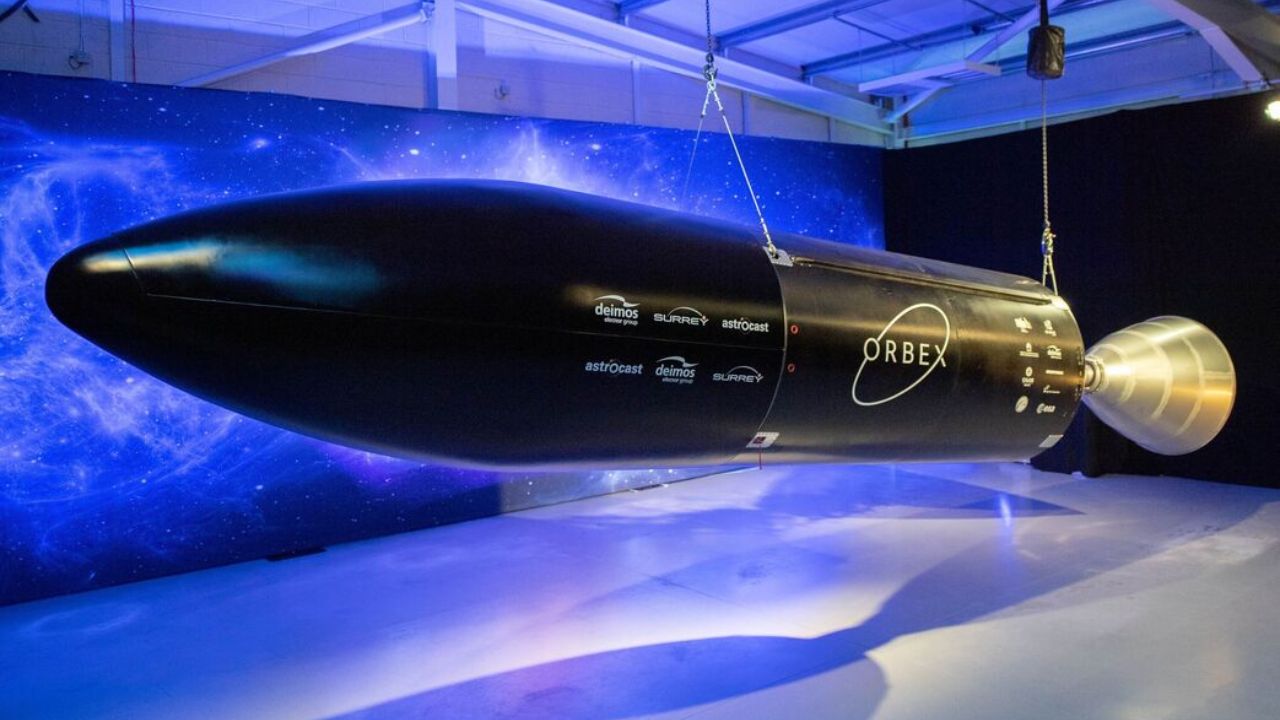
The rocket, which measures 62 feet (about 18 meters), is being built at Orbex’s factory in Forres, Scotland. Its mission is to take small satellites into Earth’s orbit, assisting in various operations from communications to environmental monitoring.
If successful, it will be the first rocket manufactured in the UK to conduct orbital missions since the historic Black Arrow, which flew for the last time in 1971. Unlike that time, however, this launch will occur on British soil, a milestone for the country’s space industry.
Shetland Islands: The New Space Launch Hub
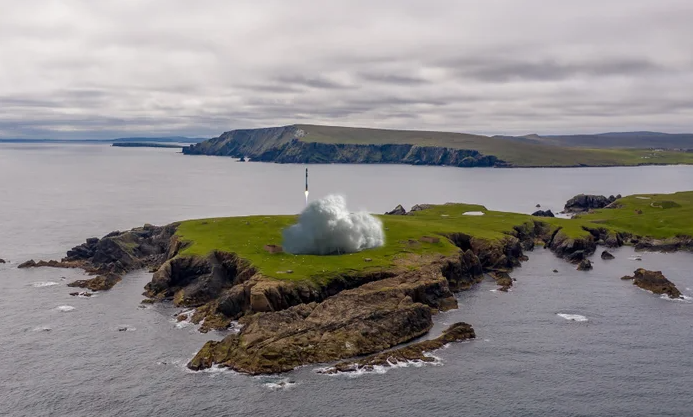
The small island of Shetland, in the north of Scotland, was chosen as the rocket’s launch site. The decision was not made lightly: its location offers important strategic advantages, such as a safe trajectory to polar orbit and less risk to populated areas.
Additionally, the UK intends to leverage its geography to its advantage, using its position in the North Atlantic to attract more investments and transform Shetland into a new hub for space launches in Europe.
The UK Against Giants Like SpaceX
It’s no secret that the space race is increasingly dominated by giants like Elon Musk’s SpaceX. But the UK does not intend to simply copy the American model. According to Peter Kyle, the British strategy will be unique, and the country will not become a “mini-America”.
Orbex is focused on developing sustainable rockets with a low environmental impact. Unlike SpaceX’s reusable rockets, the Scottish company aims to reduce carbon emissions during launches. This approach could be a competitive differentiator, attracting customers interested in more eco-friendly missions.
The UK in the Space Sector
If the launch is successful, the UK could establish itself as one of the few countries capable of designing, testing, building, and launching its rockets. This would open doors for new missions and position the nation as a relevant player in the space market.
With the growing demand for satellite launches, the investment could bring significant returns, generating jobs and strengthening the British space economy. If all goes as planned, this could just be the first of many fully British space missions.


