






 Portuguese
  Spanish


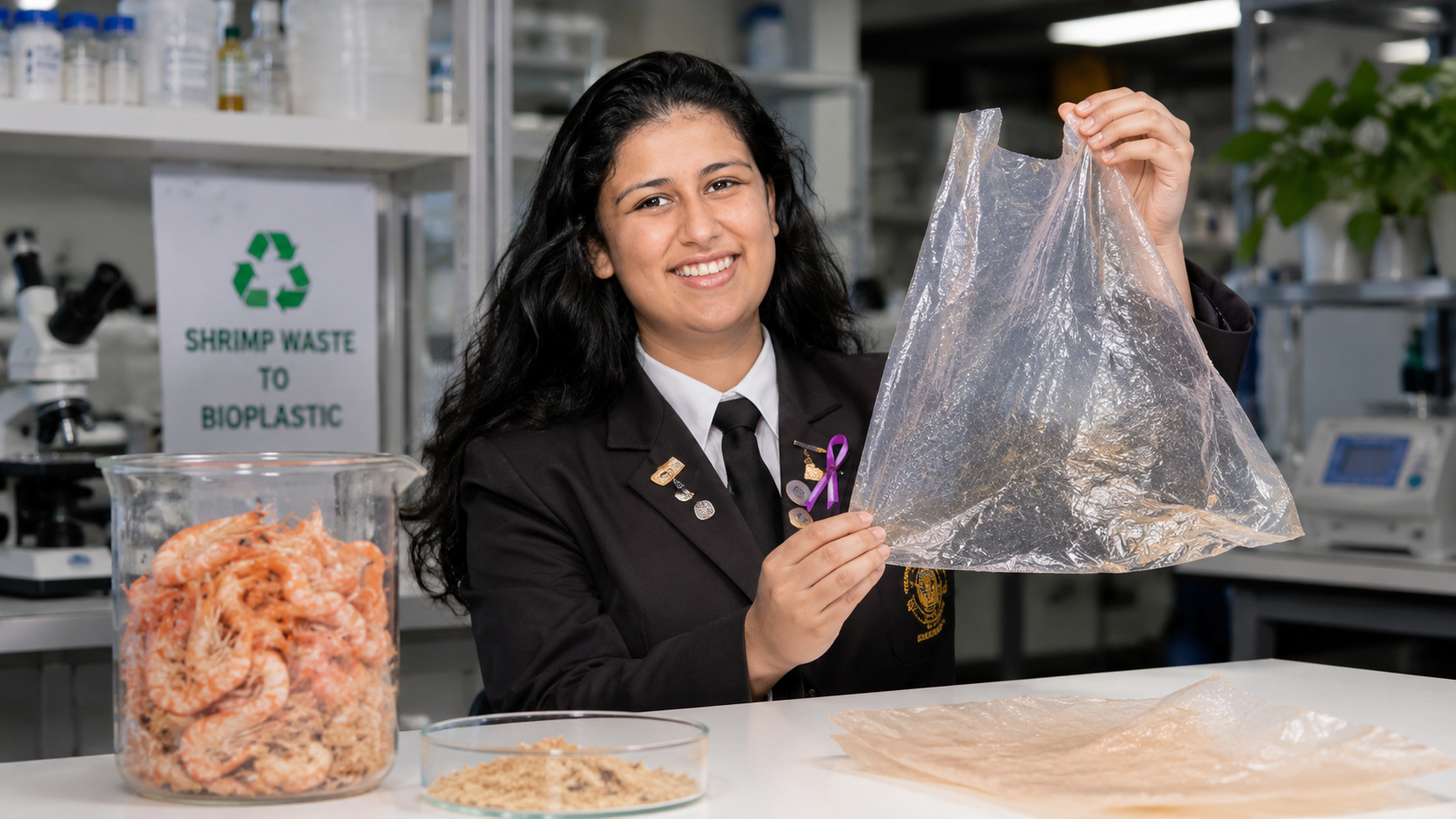


At 16 years old, Angelina Arora created a biodegradable plastic using shrimp shells and natural proteins to combat pollution caused by conventional packaging.
In 2018, Australian student Angelina Arora, from Sydney Girls High School, gained international attention by presenting an unusual solution to one of the planet’s biggest environmental problems. While billions of tons of plastic continued to accumulate in landfills, rivers, and oceans, the young woman decided to look at something that would normally be discarded after a dinner: shrimp shells. From them, she developed a biodegradable material capable of mimicking the characteristics of conventional plastics without relying on petroleum.
The invention earned scientific awards, international recognition, and transformed Angelina into one of the most well-known examples of young researchers who attempted to tackle the global plastic crisis through science. The project gained prominence after reports from National Geographic and Australian scientific outlets, which followed the development of the technology created while still in high school.
The idea was born when a student noticed that shrimp shells looked like plastic
According to Angelina’s own accounts, the inspiration came after numerous failed attempts to produce a biodegradable plastic using other organic materials.
-
Scientists Develop Battery Using Mineral Found in Bones and Chalk, Surviving 1,000 Charges While Retaining 75% Capacity, Paving the Way for a Lithium-Free Future

-
Super-Earth Twice the Size of Our Planet Discovered Nearby, Offering Clues About Life Beyond the Solar System
-
Teen Invents Promising AI Device to Detect Eye Misalignment Using 3D-Printed Visor and Small Cameras for $300

-
Bosch Unveils Series 8 Dishwasher with Zeolith Drying, Voice Control, and Energy-Efficient Features


She had tested alternatives based on plant waste, including banana peels and natural starches, but the results did not present sufficient resistance to compete with conventional packaging. It was then that she noticed a visual similarity between plastic and the shrimp shells consumed during a family meal.


The observation led the student to investigate the chemical composition of the shells. During her research, she discovered that they contained chitin, a natural polysaccharide found in crustaceans and considered one of the most abundant biomolecules on Earth.
From this discovery, she began to develop a material completely different from petroleum-derived plastics.
Shrimp chitin and silk protein gave rise to the biodegradable material
The process developed by the student utilized the extraction of chitin present in shrimp shells. Subsequently, this substance was converted into chitosan, a biopolymer widely studied in medical, pharmaceutical, and environmental applications.
To increase the strength and flexibility of the material, Angelina combined chitosan with fibroin, a protein found in silkworm cocoons.
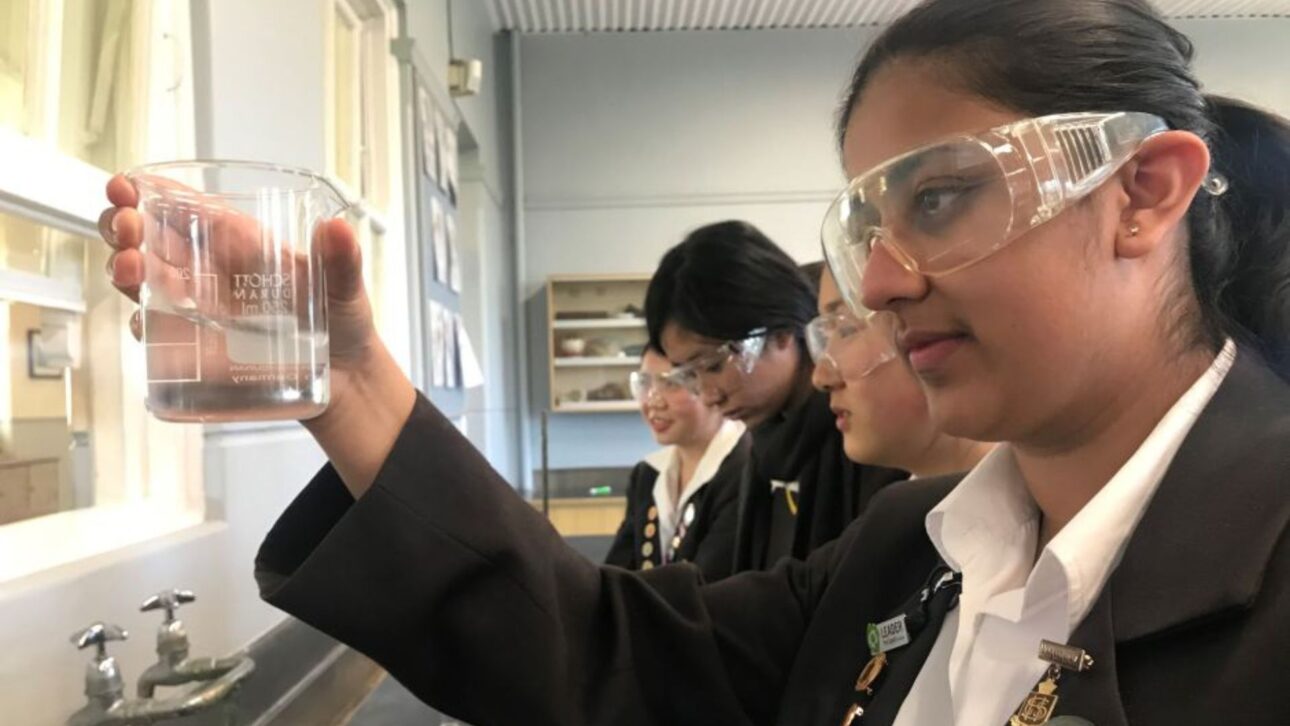
The result was a transparent, lightweight, flexible, and strong material, fundamental characteristics for applications in packaging and bags.
According to the young researcher, the goal was never just to create something biodegradable. The intention was to develop an alternative that could compete with conventional plastics in performance and practicality as well.
Material decomposes much faster than conventional plastics
One of the most striking pieces of information during the project’s disclosure was the decomposition speed of the material.
According to the tests presented by the student and published by Australian scientific outlets, the bioplastic produced from shrimp shells and natural proteins could decompose about 1.5 million times faster than many conventional plastics, disappearing completely in approximately 33 days under certain disposal conditions. Petroleum-derived plastics, on the other hand, can remain in the environment for centuries.
Although decomposition times vary depending on the type of material and environmental conditions, common plastic packaging is among the most persistent waste produced by modern society.
The fishing industry produces millions of tons of waste every year
Another important aspect of the project is the origin of the raw material. The shrimp shells used in the production of the material are typically treated as waste by the fishing and food industries. In many cases, this waste has low economic value and ends up being discarded after food processing.
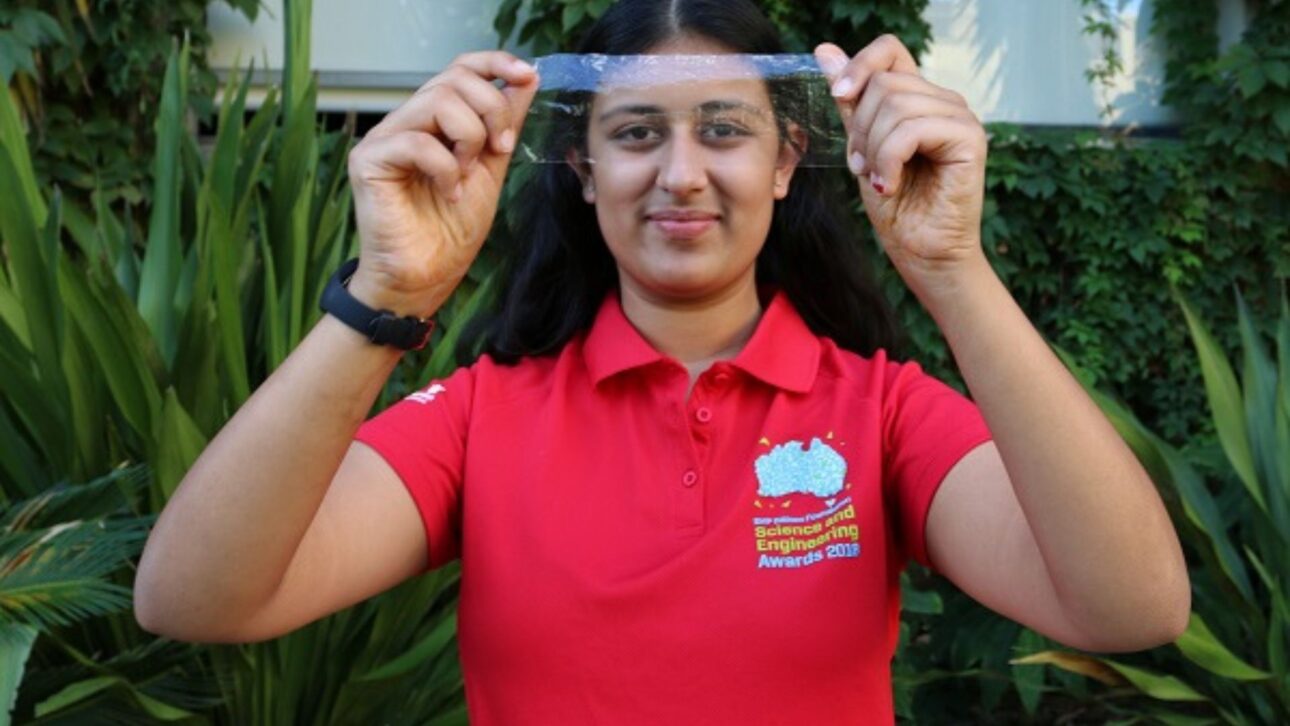
By using this material as the basis for a new product, the invention also fits into the concept of a circular economy, where waste from one activity serves as input for another production chain.
This characteristic helped increase the interest of researchers and companies in the idea presented by the Australian student.
Project won important international scientific competitions
The impact was not limited to the classrooms. Angelina’s work won the Innovator to Market Award during the BHP Science and Engineering Awards and also received recognition at the Intel International Science and Engineering Fair, one of the largest student scientific competitions in the world. On that occasion, she achieved fourth place globally among students from dozens of countries.
Subsequently, the young woman also received recognition from the Australian Geographic Society, which acknowledged her contribution to environmental conservation.
The case became a frequent example of how projects developed by students can gain international relevance when they address real problems and present innovative solutions.
The invention did not promise to save the planet alone, but showed a different path
Despite the enormous interest generated by the discovery, experts highlighted that turning a laboratory prototype into an industrial solution is a complex challenge.
Issues related to production scale, costs, logistics, certifications, and industry adaptation need to be resolved before any experimental material can replace traditional plastics on a large scale.
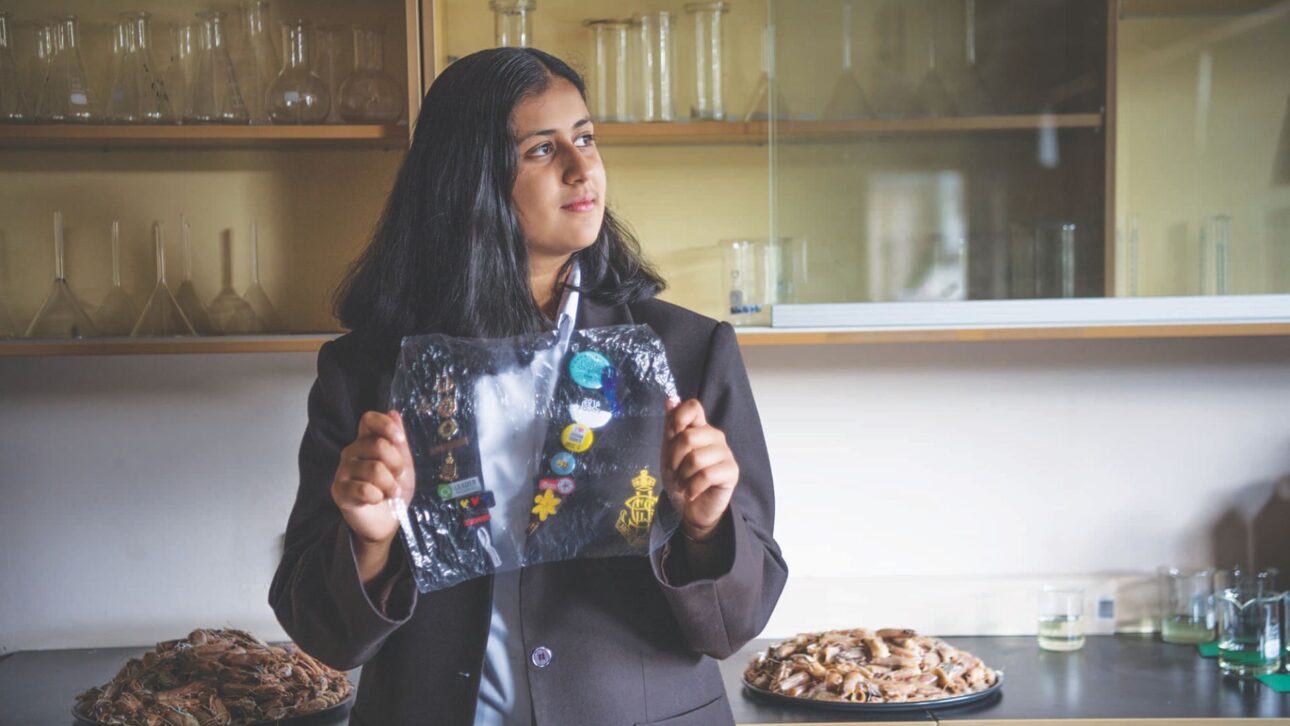
Even so, the research demonstrated something important: waste considered worthless can hide raw materials capable of originating advanced products.
Instead of seeking petroleum to manufacture plastic, the student showed that waste from the fishing industry could serve as a starting point for biodegradable alternatives.
A simple shrimp shell became a symbol of a bigger idea
The story of Angelina Arora did not become known just because a student created a different material. It gained attention because it showed how a global problem can be tackled from a simple observation.
While billions of packages continue to be produced every year from fossil fuels, the young Australian decided to look at a waste product that almost no one valued and saw an opportunity in it.
Whether the technology reaches the shelves of the world on a large scale is a question that still depends on many factors. But the idea of transforming shrimp waste into an alternative to conventional plastic remains one of the most curious and unlikely stories ever to emerge from a student science fair.


