Portuguese
  Spanish


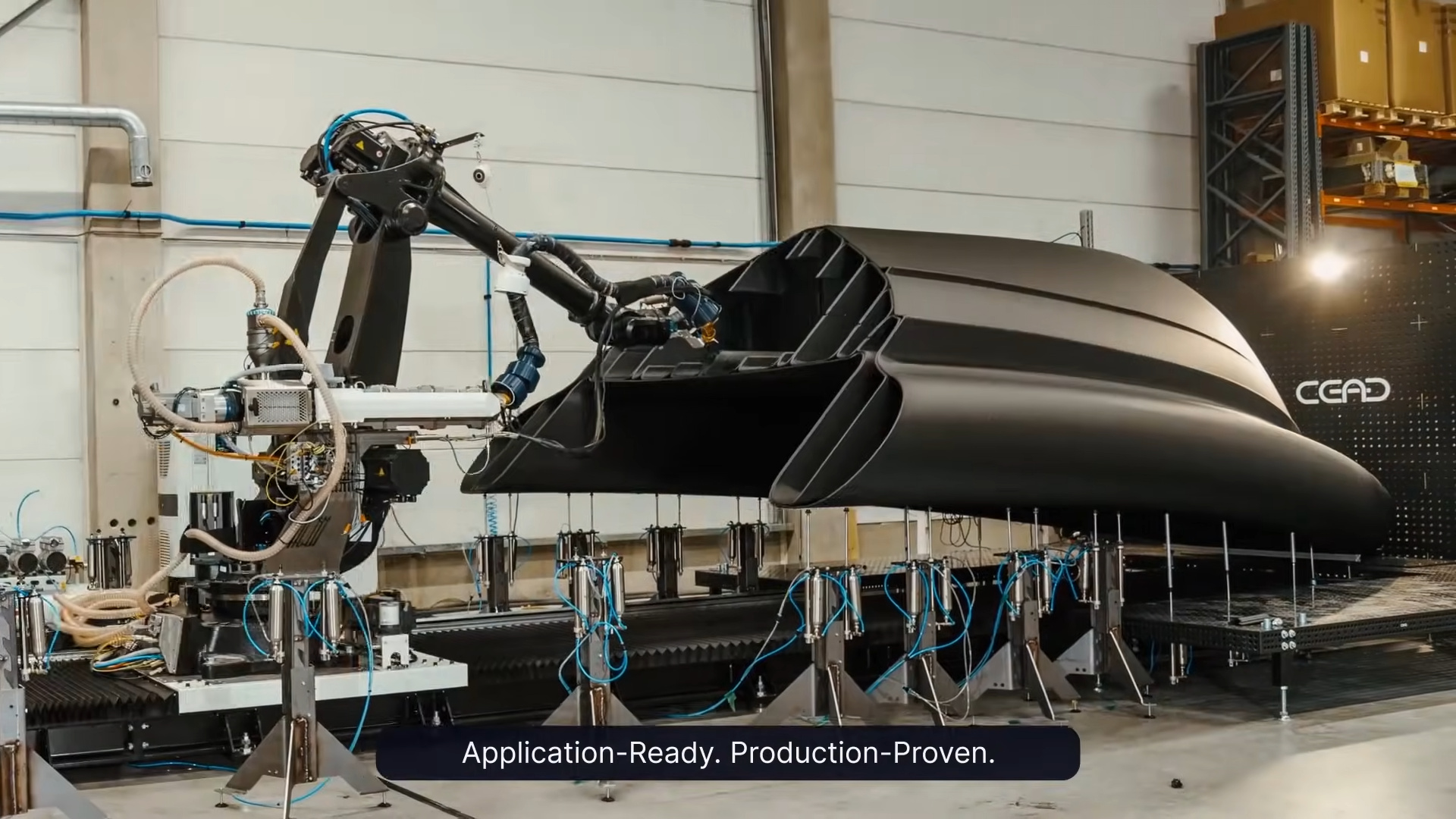


Dutch company prints boats up to 12 meters in a single piece and promises to drastically reduce shipbuilding time.
For centuries, building a boat meant cutting materials, making molds, assembling structures, aligning parts, installing reinforcements, and going through a long finishing process. Now, a Dutch company is trying to completely change this logic with technology that seems straight out of a futuristic movie: a robot capable of printing an entire boat hull in a single piece. The company responsible for the innovation is CEAD, specializing in large-scale additive manufacturing. Its system called Faber Navalis was developed to print marine hulls up to 12 meters long and 4 meters wide without the need for molds, section assembly, and traditional structural alignment steps. The result is a vessel that is practically ready directly from the printer.
The shipbuilding industry has always relied on molds, cuts, and manual assembly, but Faber Navalis eliminates almost all of that
Modern shipbuilding still requires a huge amount of manual labor. Even relatively small vessels undergo complex manufacturing processes involving molds, cuts, fittings, and assembly of multiple parts.


Faber Navalis was created precisely to eliminate this fragmentation. Instead of producing several separate pieces to then join them, the system prints the entire main structure of the hull at once. According to CEAD, this eliminates segmentation, assembly, and alignment steps, significantly reducing manufacturing complexity.
-
The FLIP: A 108-Meter Ocean Laboratory That Stood Vertically for 60 Years, Dismantled in 2023

-
North Korean Fiasco: Launch of the Largest Warship Ends in Sinking

-
While giant ships still burn heavy fuel and the maritime sector races against climate targets, Maersk and Vale are starting to bet on ethanol as a new route to reduce emissions at sea.

-
China begins construction of the world’s largest LNG ship, a 344-meter giant capable of supplying 4.7 million homes for a month, carrying 271,000 m³ of gas, and placing QatarEnergy in the largest naval order ever recorded in world history.


In practice, the boat stops being assembled like an industrial puzzle and starts to emerge as a single continuous structure, produced directly from a digital model.
The robot prints vessels up to 12 meters and turns weeks of work into an automated process
The most impressive aspect of the technology is the scale. Most 3D printers known to the public produce small or medium-sized parts.
The Faber Navalis operates in a completely different dimension. The system was designed to manufacture hulls up to 12 meters in length, equivalent to a patrol, work, or light transport vessel.
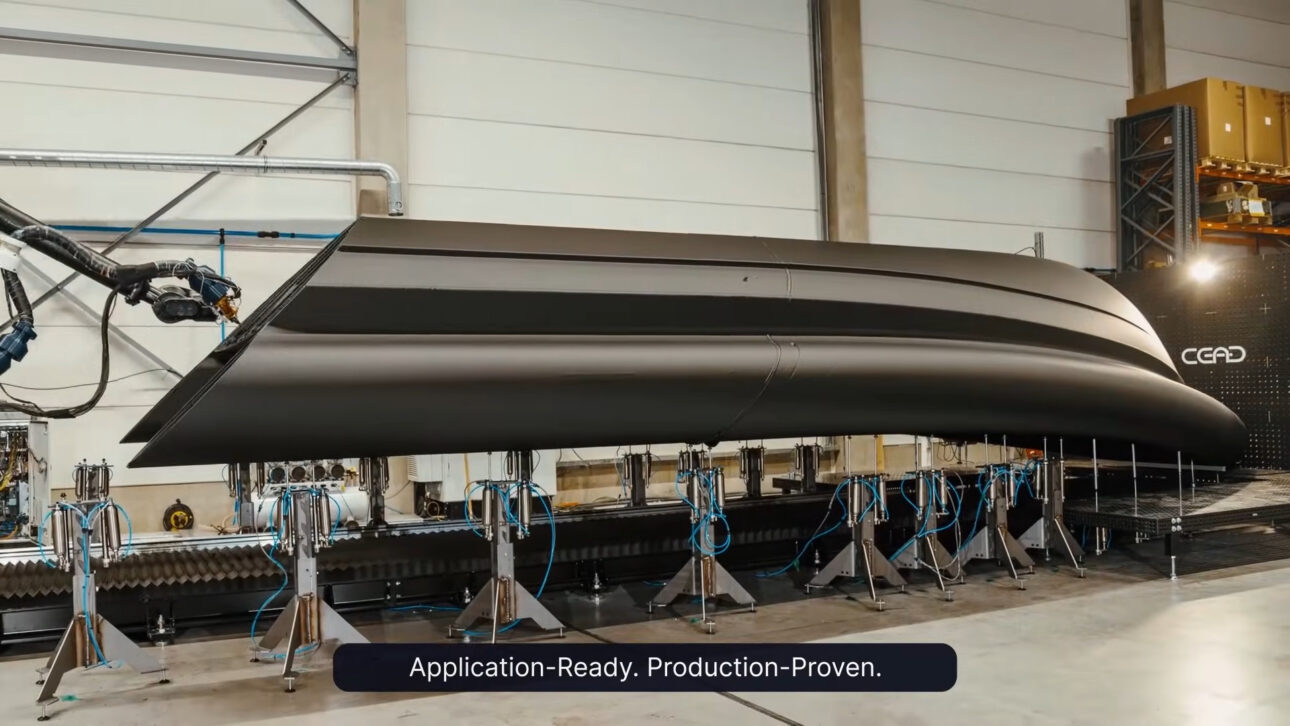
According to the company, the printing occurs in a fully automated manner. Once the process is started, the equipment works almost independently, continuously manufacturing the main structure of the boat. CEAD claims that this method can reduce the total production time by 60% to 80% compared to conventional processes.
This means replacing weeks of coordinated activities with an automated cycle based on software, robotics, and digital control.
The hull is practically ready and already receives structural reinforcements during printing
Another important differential is that the system does not just print a “hollow shell.” CEAD developed a workflow capable of incorporating structural elements directly during manufacturing.
Internal reinforcements, stringers, bulkheads, and other components that would normally be installed later can be integrated into the hull itself during printing.
This reduces assembly steps and allows the project to move from the computer screen to the physical world with much less human intervention.
The result is a more integrated structure, with fewer junction points and less need for subsequent adjustments.
The material used promises to be lighter than fiberglass and more resistant than traditional solutions
CEAD also strongly bets on the material used by Faber Navalis. The company developed a compound called HDPro, specifically designed for maritime applications.
According to the manufacturer, the material is about 10% lighter than equivalent fiberglass solutions, in addition to offering high impact resistance, good durability, and less maintenance requirement.
Another argument used by the company is the possibility of simpler recycling when compared to some conventional composite structures.
In an industry increasingly pressured by environmental demands, this point can become an important differentiator.
The Royal Netherlands Navy has already tested a boat printed with the new technology
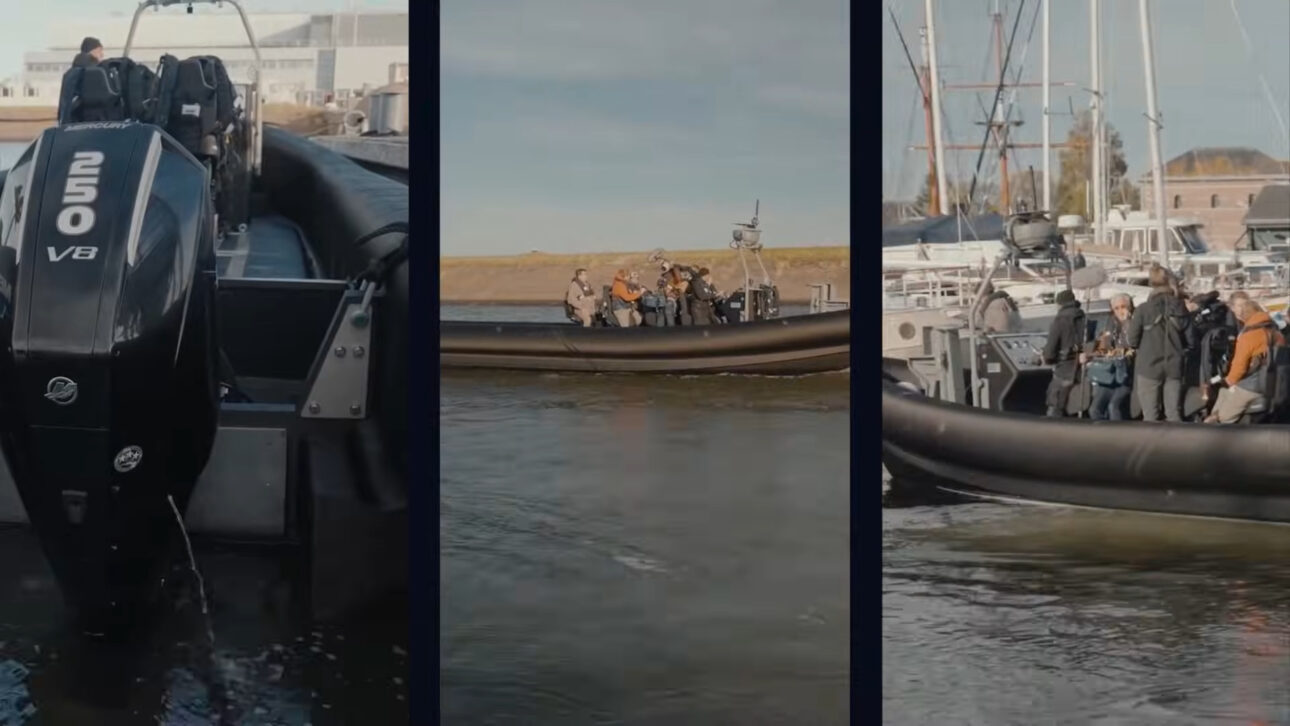
The project is no longer just a laboratory experiment. CEAD reports that it has already produced a vessel of approximately 12 meters in collaboration with the Center of Expertise in Additive Manufacturing of the Royal Netherlands Navy. The boat was used to validate the technology in real operating conditions.
According to the company, the prototype served to demonstrate that automated boat manufacturing is not just a theoretical possibility.
The experience also allowed for the evaluation of structural performance, durability, and hull behavior in a maritime environment.
The impact can go far beyond patrol boats and work vessels
Although the demonstration attracted attention due to its size, the ambition of the technology goes beyond a single type of vessel.
CEAD claims that the system can be used to produce work boats, fishing vessels, floating platforms, patrol boats, unmanned surface vehicles, and various other maritime applications.
This opens up the possibility for a scenario where shipyards operate more like digital manufacturing centers than traditional naval assembly lines.
Instead of storing molds and components, companies could work with digital projects and start production on demand.
What impresses most is not the size of the boat, but the change in manufacturing logic
Major industrial advances usually do not happen just because something became bigger, faster, or more powerful.
They happen when a technology completely changes the way a product is manufactured.
This is exactly what makes Faber Navalis so interesting for the naval industry. The innovation is not just in printing a boat. The real change is in eliminating steps that have existed for decades and replacing them with an integrated digital flow. The hull no longer begins in a mold but in software.
Naval construction may be entering a new era
The history of navigation has been marked by great transformations. Wood gave way to steel. Steel began to share space with aluminum and composite materials. Engines replaced sails. Digital systems replaced analog instruments. Now, a new change is beginning to appear in shipyards.
Instead of dozens of workers assembling parts for weeks, a giant robotic arm prints an entire hull directly from a digital file. No mold. No seams. No section assembly.
If the technology can deliver on its promises on an industrial scale, the question may no longer be how to build boats faster. The question will become why anyone would continue building the old way.