





 Portuguese
  English
  Spanish
  5 min of reading
  0 comments


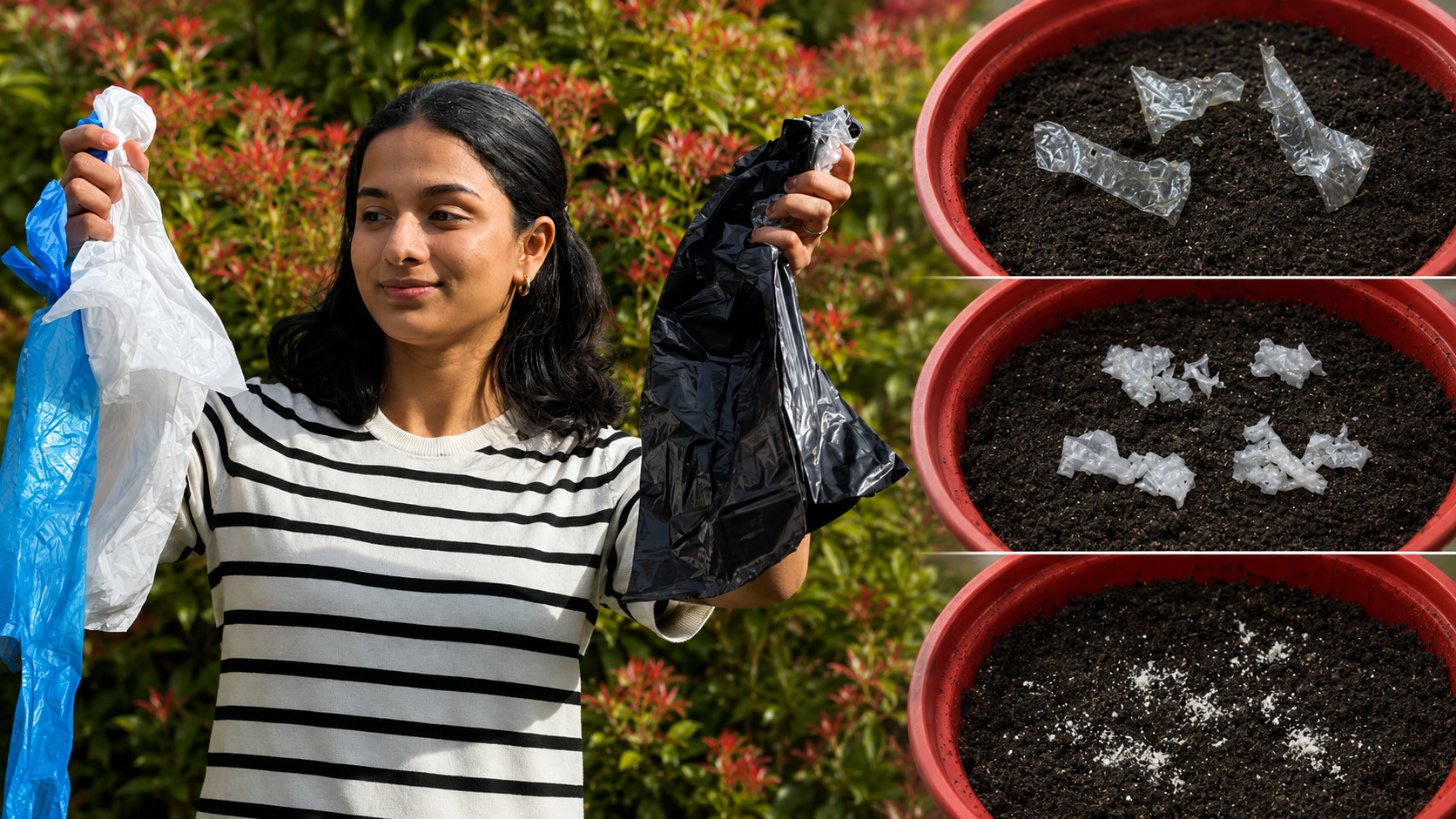
Irish student creates biodegradable plastic that releases enzymes to help degrade microplastics and wins European environmental award.
An 18-year-old student from Ireland caught the attention of the international scientific community by developing a material that attempts to tackle two environmental problems at once. Instead of just replacing conventional plastic, her invention is designed to help combat the microplastics already scattered across the planet.
The young Arya Satheesh, a student from Letterkenny, was announced in May 2026 as the European winner of the The Earth Prize 2026, one of the largest environmental competitions in the world aimed at teenagers. Her project, called Eco Purge, consists of a biodegradable plastic that naturally decomposes and releases enzymes capable of aiding in the degradation of microplastics present in the environment.
The idea arose when a student discovered that microplastics could be found, but almost never removed
The inspiration for the project came during previous research conducted by Arya on water quality. While analyzing environmental samples, she realized that detecting microplastics was relatively simple. The real challenge appeared afterwards.
-
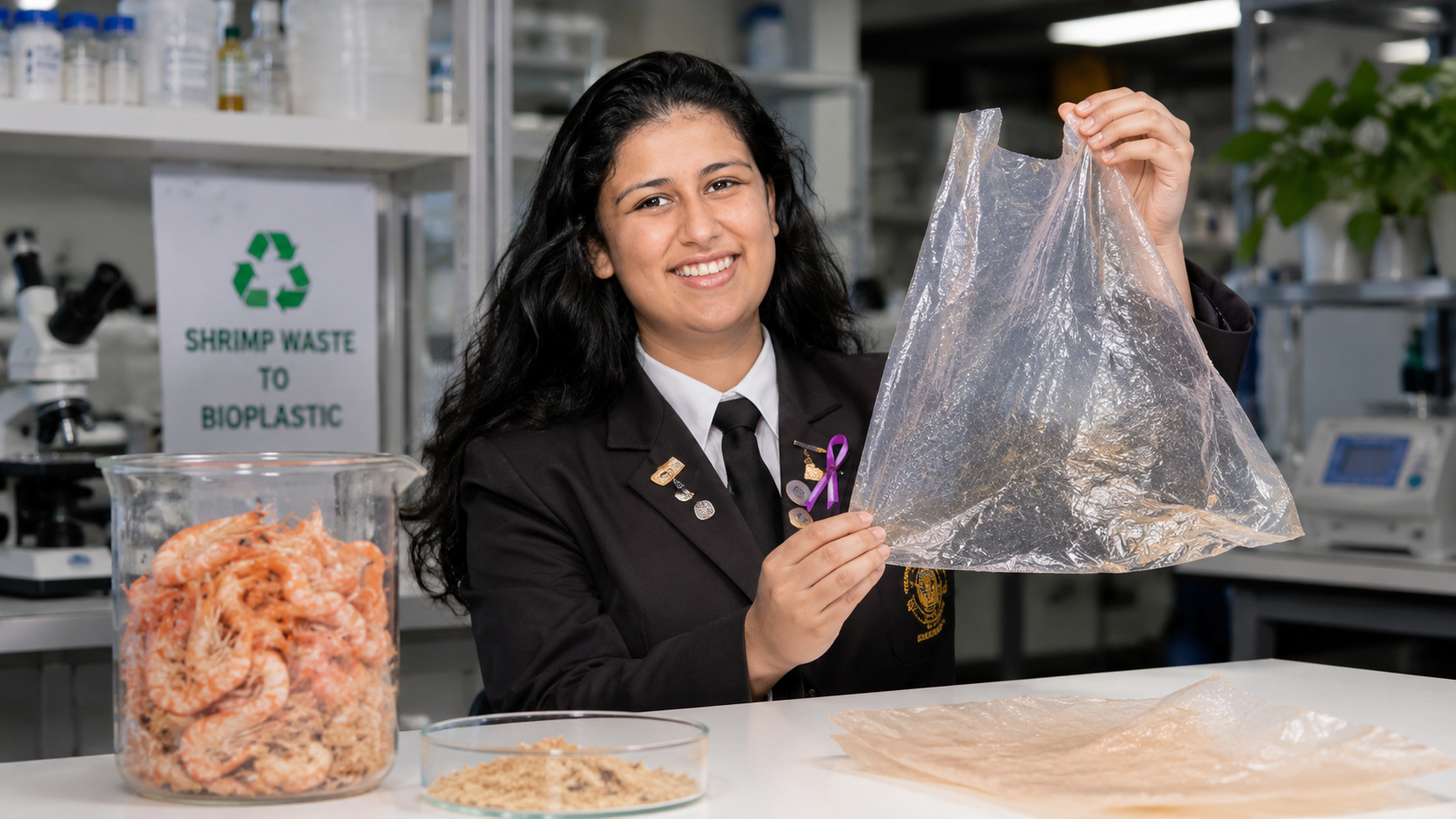
16-year-old student transforms shrimp shells into biodegradable plastic and creates a “seafood bag” that doesn’t rely on petroleum, uses waste from the fishing industry, and aims to replace packaging that takes centuries to disappear from nature.

-
Resident of a municipality in Pará creates a fully functional wooden Jet Ski over 4 meters long, spending less than R$ 1,000.

-
Scientists warn that the World Cup may have slower games, with less intense matches and players lacking the explosive pace expected by fans.

-
This June, the world’s first nuclear waste repository reaches its final phase in Finland. The structure will be 433 meters deep and promises to store radioactive fuel for at least 100,000 years.



These tiny particles have already been found in rivers, lakes, oceans, food, drinking water, and even in the air. Despite the growing number of studies on the subject, the removal of these fragments remains one of the greatest environmental challenges of today.


It was from this realization that the student began to seek a solution that not only reduced the use of traditional plastic but also helped tackle the existing contamination.
Eco Purge attempts to transform plastic itself into an environmental cleaning tool
The biggest difference between Eco Purge and other biodegradable plastics is what happens during its decomposition.
According to information released by The Earth Prize and European outlets, Arya developed a bio-based material capable of storing special enzymes in its structure. During normal use, these enzymes remain stable within the material. When the plastic begins to naturally degrade, they are gradually released into the environment.
The proposal is that these enzymes help break down microplastics already present in soils, aquatic environments, and composting systems.
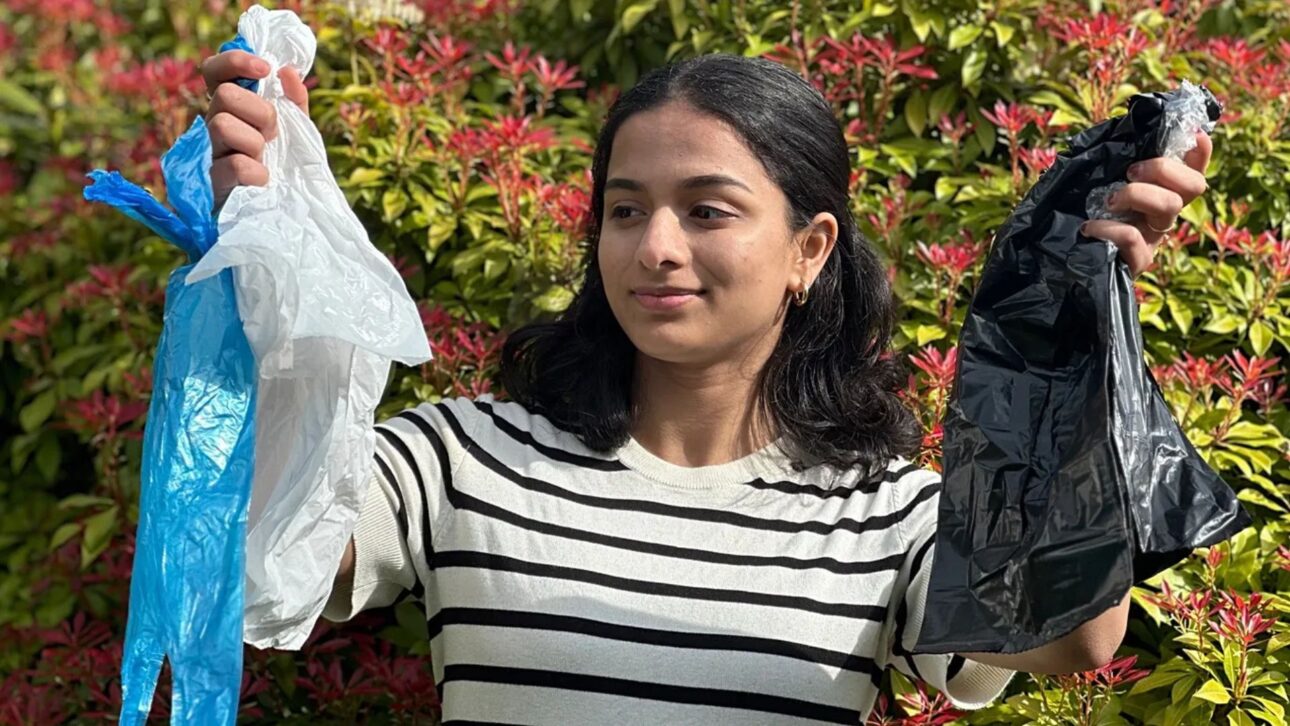
In practice, the invention attempts to do two things at once: replace part of conventional plastic and act on plastic waste already spread throughout the environment.
The problem of microplastics has become one of the biggest environmental concerns on the planet
Microplastics are extremely small fragments generated by the degradation of larger plastic materials. Bags, packaging, bottles, synthetic fabrics, and countless everyday products end up fragmenting over time.
The result is an invisible contamination that reaches practically all known ecosystems.
Recent research has already detected microplastics in deep oceans, glaciers, rivers, agricultural soils, marine organisms, and even in the human body. Scientists are still studying the long-term impacts of this continuous exposure.
This scenario helps explain why the Irish student’s project attracted so much international attention.
The project has already moved from paper to a functional prototype
The Eco Purge is not just a theoretical idea. According to information released by The Earth Prize, Arya has already developed a functional prototype and worked in collaboration with researchers from University College Dublin (UCD), Atlantic Technological University (ATU), and the BiOrbic Bioeconomy Research Centre.

This collaboration allowed the project to advance beyond the initial concept and start being evaluated within specialized research environments.
The goal now is to expand the tests and verify the material’s performance in applications closer to real-world conditions.
The invention won one of the world’s largest environmental contests for young people
International recognition came in May 2026. Arya was chosen as the winner for the European region of The Earth Prize 2026, a global competition aimed at students aged 13 to 19. The prize identifies innovative environmental projects with the potential to generate real impact and offers funding for the development of the winning solutions.
The student received $12,500 to continue developing the technology and bring the project closer to future commercial applications.
The recognition placed the young inventor among the leading names of the new generation of environmental researchers.
Compostable bags and packaging are among the first targets of the technology
The initial intention is not to replace all the plastic produced in the world. According to the developer herself, the idea is to start with products where biodegradable materials already have a growing space, such as packaging, compostable bags, and short life cycle disposable applications.
These products represent an interesting opportunity because they are consumed in large volumes and typically have a relatively short lifespan.
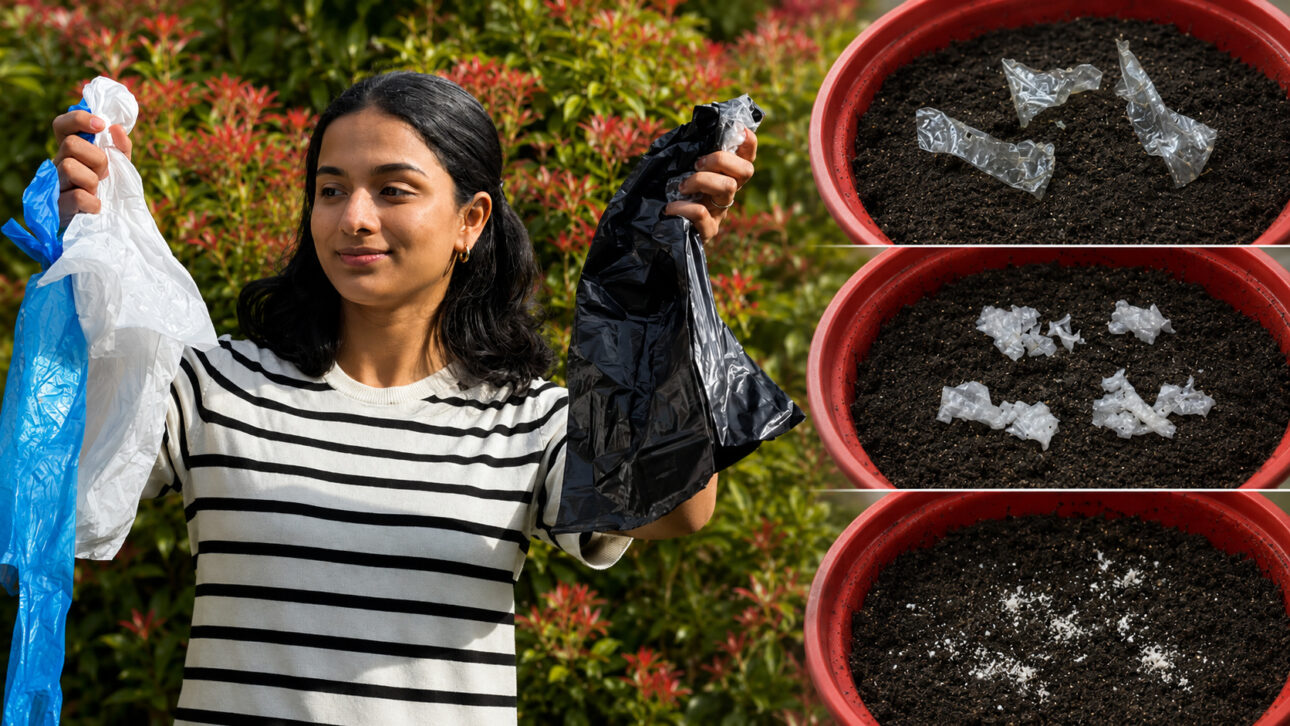
If the technology can advance to commercial applications, it could operate precisely in a category that generates enormous amounts of waste every year.
Scientists still need to assess large-scale performance
Despite the excitement surrounding the invention, researchers emphasize that additional tests will still be needed to validate the technology’s effectiveness on a real scale.
Laboratory projects often face challenges when moving to more complex environments, especially when involving biological processes and environmental degradation.
Therefore, one of the next steps will be to verify how the enzymes behave outside the controlled laboratory conditions and what their real capacity is to act on microplastics in different scenarios.
Even so, experts consider the concept promising for tackling a problem that few solutions attempt to address directly.
An 18-year-old student created a solution that goes beyond replacing traditional plastic
A large part of environmental projects related to plastic focuses efforts on reducing consumption, improving recycling, or replacing conventional materials. The Eco Purge tries to take a step further.
Instead of just disappearing after use, the material was designed to continue acting during its own decomposition, releasing enzymes that can help tackle the invisible pollution already present in rivers, lakes, oceans, and soils.
If the upcoming tests confirm the potential of the technology, the invention could represent an unusual approach to one of the greatest environmental challenges of the 21st century.
After all, while most plastics leave residues behind, Arya Satheesh’s idea is exactly the opposite: to create a plastic that disappears and still tries to clean up some of the mess left by those that came before.





Be the first to react!