






 Portuguese
  Spanish


The return was faster than scientists predicted. Weeks after the fall of the last dam in 2024, monitoring stations were already counting thousands of salmon crossing sections closed for generations. Behind the victory are decades of struggle by indigenous peoples like the Yurok and the Karuk, for whom the fish is a symbol of life.
For the first time in over a century, the Klamath River is flowing freely in the United States, following the demolition of four hydroelectric dams that were damming its waters. In just a few weeks, salmon have already reappeared in sections that have been blocked since 1918, in what is considered the largest river restoration project in American history, a milestone for environmental science and for the native peoples of the region.
Located between southern Oregon and northern California on the West Coast of the United States, the Klamath had its course profoundly altered starting in 1918, when the first of four large dams was built. The last of them, Iron Gate, was demolished in 2024, ending a cycle of over one hundred years of damming and returning the river to its natural flow, with environmental results that surprised even the most optimistic scientists.
A century of dammed river
The four Klamath dams were built between 1918 and 1962 by the energy company PacifiCorp, named Copco No. 1, Copco No. 2, J.C. Boyle, and Iron Gate. They were erected to generate hydroelectric power, but over the decades, they caused severe environmental impacts, interrupting the natural flow of sediments and blocking fish access to hundreds of kilometers of habitat upstream.
-
12-year-old girl develops a virtual receptionist with artificial intelligence for small businesses and demonstrates how the combination of creativity, programming, and automation can boost productivity, reduce repetitive tasks, and expand access to digital transformation.

-
A rock weighing almost 500 tons seems to defy gravity for over 11,000 years in Finland and remains balanced on a tiny base without collapsing or moving.
-
At 76 years old, a retired man reveals a subterranean labyrinth he dug by hand for 30 years under his own garden, descending 6 meters into sand dunes, erecting 1.5-meter concrete walls with calculations from his mathematician wife, and transforming a “crazy” idea into a hidden cave with a bridge and waterfall.

-
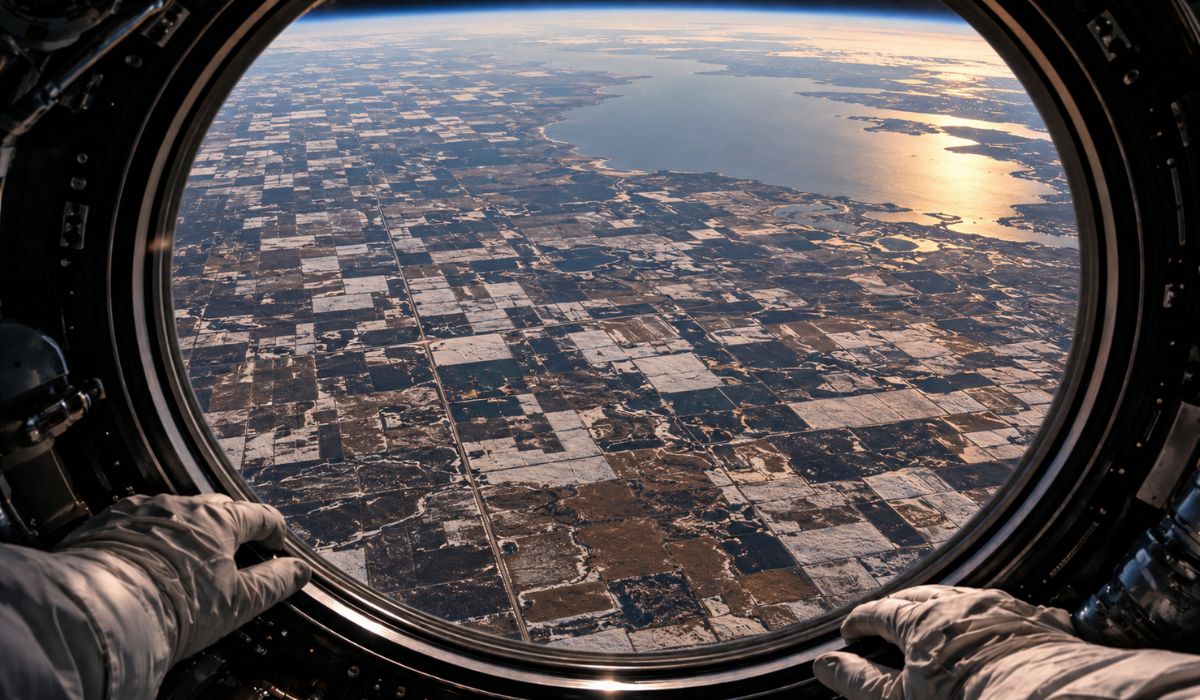
Seen from space, an astronaut captures in Canada a geometric carpet of crops drawn over the backdrop of a ghost lake that disappeared 12,000 years ago, was once larger than all the Great Lakes combined, and left a scar of fertile mud that still sustains agriculture.


Over time, the Klamath, which was once the third-largest salmon-producing river on the entire American West Coast, saw its waters become warmer, stagnant, and, at certain times, even toxic, with the proliferation of harmful algae. The most affected species was the Chinook salmon, a migratory fish that is born in rivers, goes to the ocean, and returns to its place of origin to reproduce. Unable to bypass the dams, their populations went into sharp decline.
The largest dam removal in U.S. history
The turnaround truly began in 2023 and was completed the following year. The removal of the four dams, starting with Copco No. 2 in October 2023 and concluding with the fall of Iron Gate in 2024, became the largest dam removal and river restoration project ever undertaken in the United States, reconnecting hundreds of miles of previously inaccessible habitat.
The project was the result of decades of coordination involving the governments of California and Oregon, the company PacifiCorp, environmental organizations, fishermen, and, decisively, the local indigenous tribes. The final approval by the Federal Energy Regulatory Commission came in December 2022, and California Governor Gavin Newsom even visited the works, classifying the initiative as a historic river revitalization effort.
The Surprisingly Rapid Return of Salmon
What impressed the most was the speed of recovery. Just a few weeks after the removal of the structures, Chinook salmon returned to ascend the river through areas inaccessible for over a hundred years, and eggs of the species were found in tributaries where the fish had not been seen for decades. In October 2024, authorities recorded the fish in the Klamath basin in Oregon for the first time in a century.
Sonar monitoring stations, installed by organizations like California Trout in partnership with the tribes, counted thousands of fish crossing the former blockade points in the first months. According to scientists, the return is linked to the strong migratory instinct of salmon, capable of finding their historical breeding sites. For Barry McCovey Jr., fisheries director of the Yurok Tribe, the speed and scale of the recovery exceeded even the most optimistic scientific models, proving nature’s ability to heal when barriers fall.
A Victory for Indigenous Peoples
More than environmental, the recovery of the Klamath represents a profound cultural milestone. Indigenous peoples such as the Yurok, Karuk, Hoopa, Shasta, and the Klamath Tribes fought for decades for the removal of the dams, associating the return of the salmon with the recovery of traditions, ceremonies, and ways of life interrupted for generations. For these communities, salmon is not just food, but a central part of their spiritual identity.
“The death of the salmon means the death of our entire way of life. We are all connected,” summarized a member of the Yurok tribe in a statement to the press. Leaders like Frankie Myers, vice-president of the Yurok Tribe, and Russell Attebery, president of the Karuk Tribe, celebrated the fall of the dams as the fulfillment of a sacred duty to their ancestors and their children, in one of the greatest examples of indigenous leadership in recent environmental restoration.
The Other Side: What Was Lost in Energy
It is important, for a balanced view, to note that the removal of the dams also had costs and trade-offs. The four structures generated hydroelectric power, a renewable source, and their removal meant the loss of this generation, even though the plants were relatively small, old, and considered obsolete given the environmental damage they caused.
There were also short-term impacts: the release of a large volume of sediments accumulated in the reservoirs temporarily affected water quality and caused fish mortality in the first months, an effect predicted by scientists and considered a temporary price for long-term recovery. This balance between energy generation and environmental preservation is precisely one of the central debates in the electric sector worldwide, including in Brazil.
Why this topic matters to the CPG reader
For those who follow energy, hydroelectric plants, and the environment, the case of the Klamath is extremely rich. It brings into discussion the life cycle of hydroelectric plants and what to do with old and obsolete dams, whose environmental cost may outweigh the energy benefit, a theme increasingly present in the global agenda of energy transition and ecosystem recovery.
Brazil, which has hydroelectricity as the base of its matrix, with giants like Itaipu and Belo Monte, closely follows these debates, especially after episodes that exposed the risks of large dams, such as the crisis of the Hidroituango plant in Colombia, and the tragedies of Mariana and Brumadinho, linked to mining. The Klamath shows that, in some cases, returning the river to nature can be the most sensible decision, albeit complex.
The story of the Klamath River running free again is one of the most inspiring in the recent environmental agenda. In a few weeks, nature responded to a century of damming with the surprising return of salmon, rewarding decades of struggle by indigenous peoples and environmentalists. The case does not mean that every dam should fall, as hydroelectric power remains strategic, but it proves that when a structure becomes more harmful than useful, removing it can reopen paths that seemed lost forever, for fish, rivers, and people.
And you, what did you think of this story of the Klamath River, which ran free again and saw the salmon return in a few weeks? Do you believe it is worth removing old dams in the name of the environment, even losing energy? Leave your comment, share your opinion on the balance between energy and nature, and share the article with those interested in the environment, rivers, and sustainability.





At 87 years of age it is great news to hear that the earth and man can evolve together for the betterment for those who follow as industrial practices also evolve and change.