






 Portuguese
  Spanish


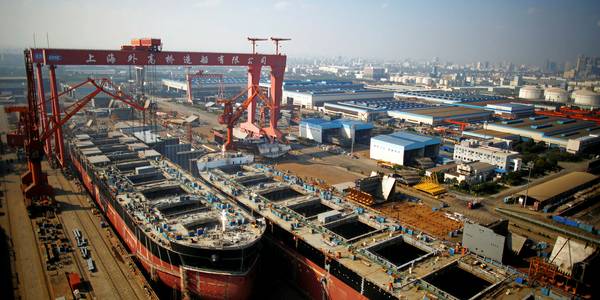

The Dutch FPSO Giant, SBM Offshore, Officially Signed a Contract for the Second Fast4Ward FPSO Hull with the Chinese Shipyard SWS. SBM Offshore is Ordering the FPSO Hull on Speculation and Without a Signed Contract for the FPSO.
The signing ceremony in Shanghai on Wednesday coincided with the launch ceremony for the first Fast4Ward FPSO hull that SBM Offshore had previously ordered, which will serve the development of ExxonMobil’s Liza 2 in Guyana. The hull is the second FPSO hull ordered under SBM Offshore’s Fast4Ward program, designed to standardize, accelerate, and reduce the costs of FPSO construction. According to the company, the Fast4Ward program speeds up the delivery of the FPSO by a year and can save half a billion dollars per FPSO.
To recall, SBM Offshore said last week that it had ordered the second hull, and this is now just an official confirmation of what was stated.
-
Over 2,000 Tons of Discarded Fishing Nets Since 2020 Repurposed into Durable Caps, Fins, and Parts

-
Seals and Sea Lions Lose Habitat and Food as Climate Change Advances, Impacting Ice, Prey, and Coastal Communities

-
Brazilian Innovator Uses 3D-Printed Device to Cool Two Rooms with One Air Conditioner
-
China Uses 432 Robots to Move a 7,500-Ton Historic Building in Shanghai, Preserving Architecture While Creating Space for Underground Center


“With the signing of this second hull in its planned series of Fast4Ward FPSOs, SBM Offshore is signaling to the industry that this means that business and its revolutionary solution are on the right path and ready for when clients come calling. The level of customer endorsement thus far demonstrates that the concept is gaining the sector’s trust,” SBM Offshore said on Wednesday.
The Dutch company also explained that the order, while speculative, is based on positive signals in the market.
“Although there is no concrete EPC contract for this second hull, the company sees the ongoing positive industry outlook as a good indicator, hence the move to sign with SWS for a second floating unit. Parallel projects for Fast4Ward are now underway in the yard,” said SBM.
The CEO of SBM Offshore, Bruno Chabas, said: “The timing of our Fast4Ward strategy aligns perfectly with the market recovery. We have been preparing for this exact scenario since 2014 and today, we see tangible evidence of how Fast4Ward addresses the sector’s need for standardized and cost-conscious solutions, which reduces risk and accelerates projects.
As previously reported, ExxonMobil awarded contracts to SBM Offshore in July to carry out the Front End Engineering and Design (FEED) for a second floating production, storage, and offloading (FPSO) vessel for the Liza project located in the Stabroek block in Guyana.
Following the FEED and subject to the necessary governmental approvals, project sanction, and authorization to proceed to the next phase, SBM Offshore will build, install, and lease and operate the FPSO for a period of up to 2 years, after which ownership and operation of the FPSO will transfer to ExxonMobil.
The hull for the first Fast4Ward, for which the keel was laid on Friday, was also ordered on speculation in August 2017.
The FPSO is designed to produce 220,000 barrels of oil per day and will have gas treatment capacity of 400 million cubic feet per day, along with water injection capacity of 250,000 barrels per day.
Commenting on Wednesday, Chabas said: “The major players are starting to invest in projects and are seriously considering our revolutionary solution, as we saw in our July announcement of an FPSO FEED for the Liza development, which is based on our Fast4Ward program. ”
The CEO said last week that it may take some 24 to 30 months for the second hull to be completed. He also provided an optimistic outlook for FPSO demand, stating that SBM Offshore was tracking 45 potential FPSO projects in 25 countries, which could materialize in the next two to three years.


