Portuguese
  Spanish


Project at Visakhapatnam port uses seabed sediments to restore erosion-hit tourist stretch and maintain navigation channels on India’s east coast.
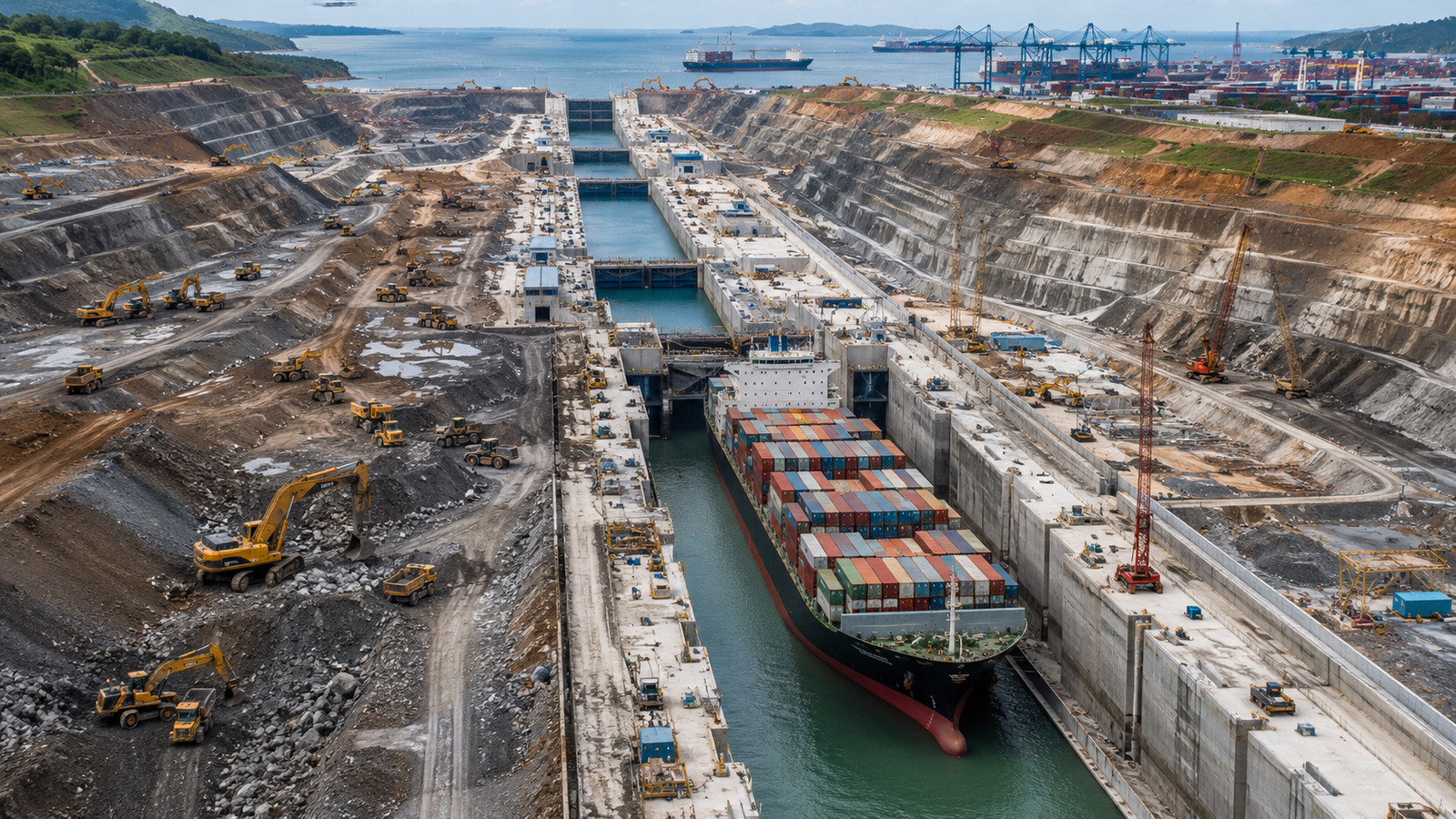
The port of Visakhapatnam, on India’s east coast, has begun an annual dredging operation to remove approximately 250 thousand cubic meters of seabed sediments and use part of this material to restore erosion-hit beaches.
The sand removed from the New Sand Trap, a sediment retention area of the outer harbor, will be pumped through pipelines to coastal stretches, including Rama Krishna Beach, locally known as R.K. Beach.
The action is conducted by the Visakhapatnam Port Authority, responsible for port administration, under a three-year contract valued at 82.98 crore rupees, equivalent to 829.8 million Indian rupees.
-
While playing video games in his room, a 13-year-old teenager was struck by a lightning bolt that entered the house, left a hole in the wall, passed through a metal piece of the desk, and made the boy scream, thinking he was going to die.

-
A metal detector led a prospector to a rock that resisted a saw, acid, drill, and sledgehammer; years later, scientists cut the block with diamond and discovered a 17 kg meteorite from the beginning of the Solar System.

-
Just one message on WhatsApp: Belém launches “Plante Aqui” and plants a tree for free at your doorstep within 15 days, with a goal of 5,000 seedlings by the end of 2026 in the capital of Pará.

-
The most ‘stingy’ millionaire in Canada? Bill Holland saved money to retire at 32, led the management company that now manages $140 billion, and still takes public transportation, in the same club as Warren Buffett and Elon Musk.



According to information released about the project, each annual phase should be completed within 45 working days, provided that weather and sea conditions allow the operation.

Sand removed from the port will be returned to the beach
Rama Krishna Beach is located in an urban area of Visakhapatnam and appears in the project as one of the coastal restoration points.
The proposal is to use sediments accumulated in the port structure to reinforce the sandy strip in areas affected by erosion, instead of transporting material from a distant source.
In practice, the operation is based on a procedure known as artificial beach nourishment, also called beach replenishment.
In this type of intervention, sand or compatible sediments are placed in coastal stretches where material has been lost.
The objective stated by the port is to reduce the effects of erosion on the coastal strip and, at the same time, maintain port areas in adequate navigation conditions.
The project does not treat dredging as an isolated action.
The forecast of annual work for three years indicates that sand replenishment will be carried out periodically, following the accumulation of sediments in the port and the need for restoration in nearby coastal areas.
Port dredging also serves navigation
In addition to beach restoration, sediment removal has an operational function for the port.
Maintenance dredging prevents the accumulation of sand and silt from reducing the depth of channels, turning basins, and areas used by vessels.
The work will be carried out in the New Sand Trap and other strategic points of the port area, including OHTB, OB-1, OB-2, MPB, IC, and IHTB.
These acronyms appear in the technical description of the project and refer to internal sectors related to port operations.
When sediments deposit at the bottom of these areas, ships may face draft limitations and maneuvering difficulties.
Dredging removes this material and helps maintain the necessary depth for vessel circulation.
In the case of Visakhapatnam, the removed sediment will not merely be discarded, but directed towards nourishing nearby beaches.

Dredge XXI initiated the first phase of the project
The first phase of the program, referring to the fiscal year 2025-26, began on March 10, 2026.
The operation uses the vessel Dredge XXI, from Dredging Corporation of India, a company involved in the execution of the service.
The contract foresees continuity in the fiscal years 2026-27 and 2027-28.
In each cycle, the goal is to remove approximately 2.5 lakh cubic meters of sediments.
In India, the expression “lakh” corresponds to 100 thousand units; therefore, 2.5 lakh is equivalent to 250 thousand cubic meters.
The removed material will be sent to the coast via pipelines.
This method allows dredged sand to be pumped directly to the sections defined in the project, reducing the need for land transport within the urban area.
The efficiency of the replenishment, however, depends on physical factors of the coast, such as waves, currents, tides, and characteristics of the sediment used.
Coastal erosion and sediment loss
Coastal erosion occurs when the beach loses more sediment than it receives over time.
This process can be linked to the natural action of waves, currents, and tides, but can also be influenced by construction, urban occupation, and changes in sand transport along the coast.
In port regions, structures built in the sea can alter sediment circulation.
Part of the sand transported by currents can accumulate at certain points, while other areas experience a deficit of material.
Dredging associated with beach nourishment seeks to transfer sediments from an accumulation zone to an area where there is sand loss.
In the case of Visakhapatnam, the released information indicates that the New Sand Trap functions as a material retention point in the outer harbor.
By removing sediments from this location and pumping them to the beach, the port authority aims to simultaneously meet two demands: maintain port operations and replenish coastal sections affected by erosion.


Port authority cites coastal preservation
The chairman of Visakhapatnam Port Authority and Dredging Corporation of India, Madhaiyaan Angamuthu, stated that the port authority is committed to controlling erosion through regular sand replenishment at Rama Krishna Beach.
According to him, the material used in the process will come from the outer port’s sand trap.
Angamuthu also stated that early intervention is important to preserve the beach and that the work is carried out in coordination with the state government.
The statement was presented by the port authority as part of the justification for the program’s continuation in the coming fiscal years.
The official project description does not present dredging as a definitive solution for erosion.
What is foreseen is a maintenance routine, with annual sediment removal and pumping of the material to coastal areas.
Under this model, the beach becomes dependent on planned replenishments to compensate for part of the sand lost due to the natural movement of the sea and changes in coastal dynamics.
Coastal engineering in urban areas
The operation in Visakhapatnam shows how ports and neighboring beaches can be part of the same sedimentary system.
Sediment that accumulates in an operational area, where it can hinder navigation, is utilized at another point on the coast, where sand loss compromises the beach strip.
This type of intervention requires technical monitoring because the coastline remains in motion even after sand replenishment.
Waves and currents continue to redistribute the material placed on the beach, which explains the forecast for new stages over the following fiscal years.
The choice of pumping through pipelines also highlights the operational dimension of the project.
The sand will not only be removed from the seabed; it will be transported in a targeted manner to fulfill a specific function in coastal replenishment.
For urban areas near the sea, the Indian case illustrates the relationship between port infrastructure, tourism, erosion, and sediment management.