






 Portuguese
  Spanish


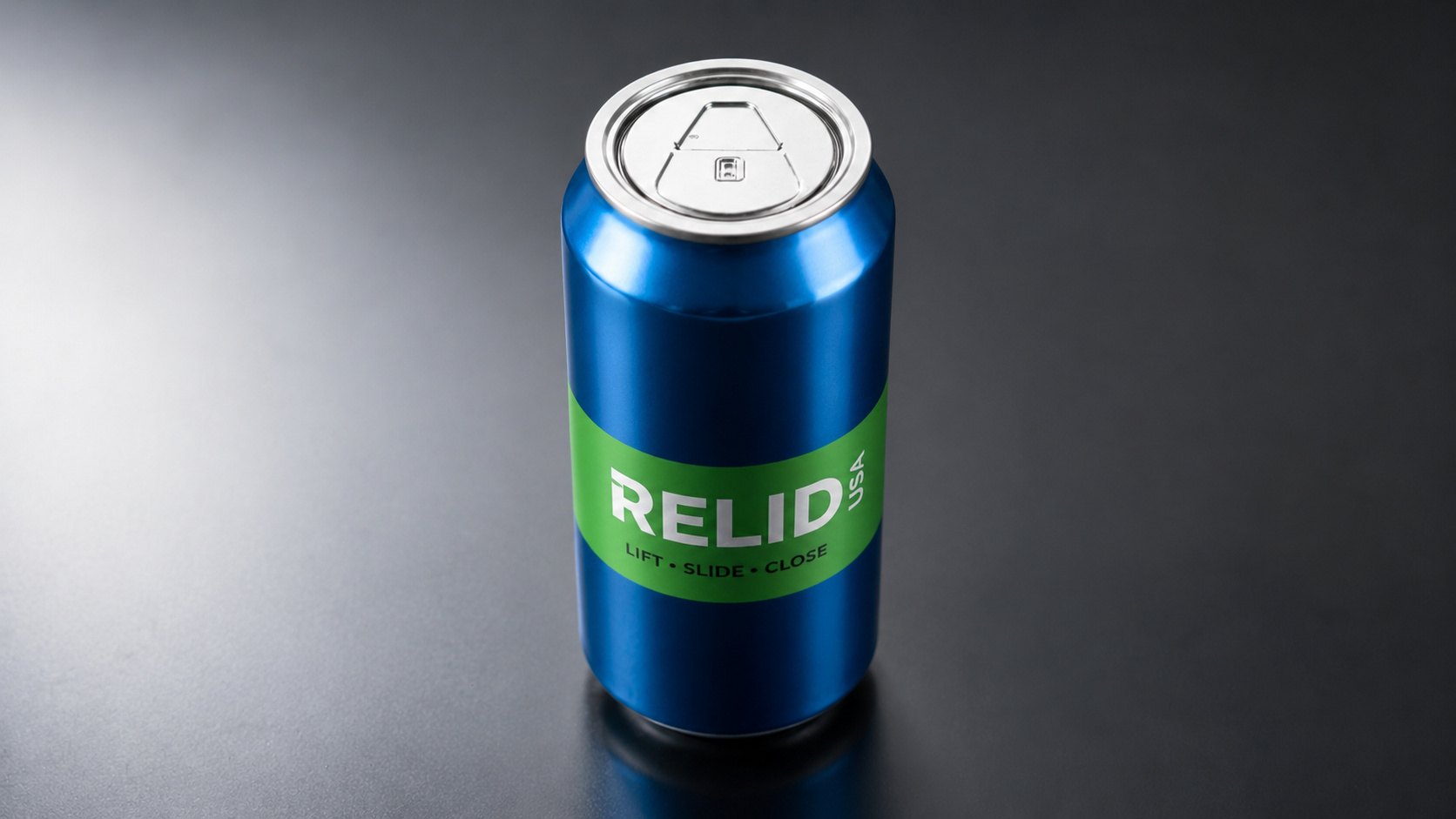

Discover the technology of ReLid USA that combines practicality and sustainability with a reusable aluminum can focused on the circular economy.
An apparently simple innovation can bring about significant changes in the beverage industry. According to an article on Portal Terra on June 6, ReLid USA developed a reusable aluminum can capable of being opened and closed multiple times, combining the traditional practicality of plastic bottles with the environmental advantages of aluminum.
The novelty arrives at a time of strong pressure for more sustainable solutions. Companies, consumers, and governments have been seeking alternatives to reduce waste generation, making the replacement of plastic a priority in various sectors. In this scenario, the new packaging emerges as a promising bet to expand the use of sustainable packaging, strengthen the circular economy, and drive a new phase of innovation in beverages.
According to the manufacturer, the lid supports at least 14 cycles of opening and closing, maintaining the seal even in carbonated beverages. The technology already has commercial application planned in the United States and may pave the way for new sustainable solutions in the sector.
-
World’s Largest Particle Accelerator Begins Four-Year Hiatus for Magnet Overhaul, Aiming to Hunt Dark Matter by 2030

-
“Sahara Dust Turns Rain Red, Startling Residents Across Europe”
-
Stanford Scientists Develop 20-Cent Paper Centrifuge Inspired by Ancient Toy, Spins at 125,000 RPM Without Electricity, Separates Plasma in 1.5 Minutes, Aiding Diagnostics in Remote Areas

-
World’s Largest Vaccine Manufacturer, Immunizing Two-Thirds of Global Infants, Originated in a Pune Horse Farm





How the technology that transforms a regular can into reusable packaging works
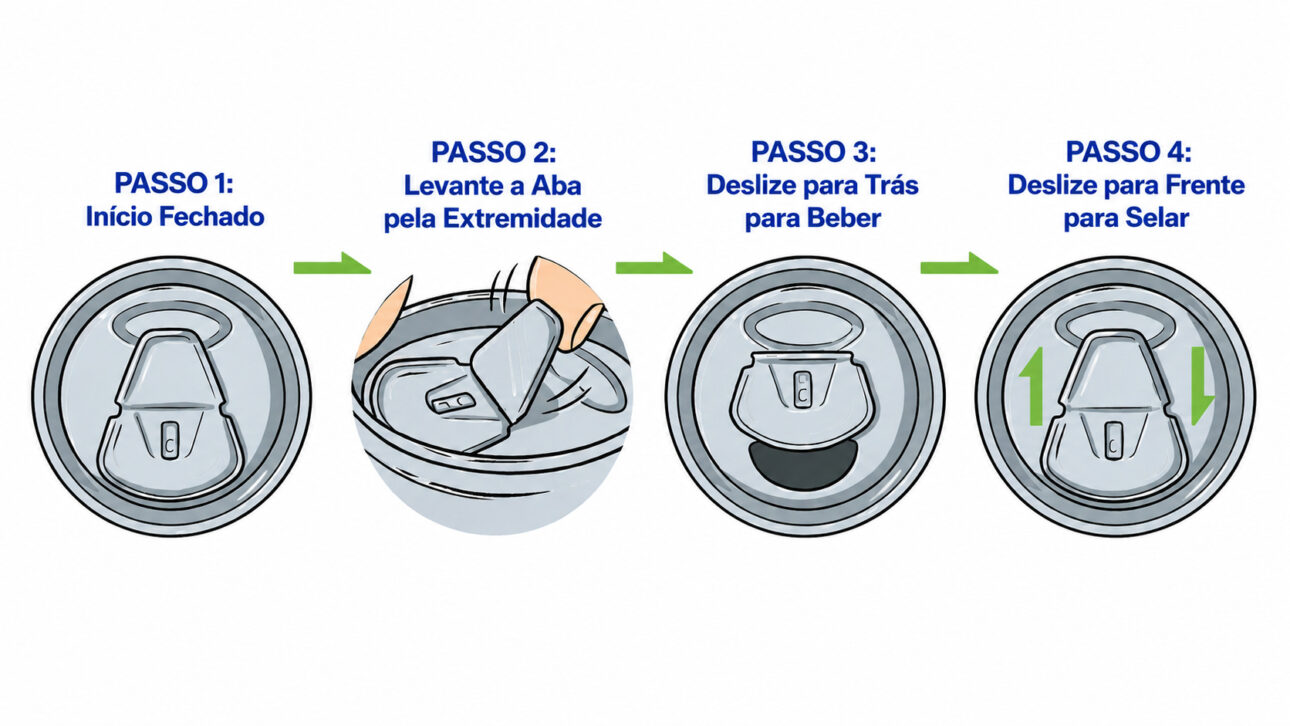
The main novelty of the packaging is a sliding mechanism incorporated into the lid itself. Unlike traditional cans, which need to be consumed after opening, the new system allows the beverage to be closed for later consumption.
In practice, the consumer can open the packaging, consume only part of the content, and store the rest without needing to transfer it to another container.
According to ReLid USA, the system was designed to withstand at least 14 uses between opening and closing, maintaining proper sealing and supporting the internal pressure of carbonated beverages.
This functionality brings the user experience closer to that of plastic bottles without giving up the environmental characteristics of aluminum.


Reusable aluminum can combines practicality and lower waste generation
The proposal of the reusable aluminum can goes beyond convenience. One of the main objectives is to reduce waste both in packaging and beverages.
Many people do not consume the entire content of a can after opening. When this happens, part of the beverage may be discarded or lose quality when left exposed.
With the possibility of sealing, the new packaging offers benefits such as:
- Greater consumption flexibility;
- Less beverage waste;
- Ease of transport;
- Reduction in the need for additional containers;
- Better product utilization.
These features help make the experience more practical for the modern consumer.
Plastic substitution gains a new ally in the beverage industry
The substitution of plastic has become one of the main environmental goals of the packaging industry.
In recent years, the increase in concerns related to pollution caused by plastic waste has accelerated investments in more recyclable materials with lower environmental impact.
In this context, the new solution from ReLid USA emerges as an interesting alternative. By using a structure entirely made of aluminum, the packaging eliminates plastic components present in various traditional models.
The goal is not only to reduce waste but also to expand the use of materials that can return to the production cycle more efficiently.
The growing pursuit of plastic substitution may favor the adoption of such technologies in the coming years.
The role of sustainable packaging in transforming consumption
Sustainable packaging has moved from being just a trend to becoming a strategic necessity for companies in various segments.
Consumers are increasingly aware of the environmental impact of the products they purchase. As a result, manufacturers have started investing in solutions that reduce waste and increase recyclability.
Among the main factors driving sustainable packaging are:
- Reduction of environmental pollution;
- Less dependence on virgin raw materials;
- Encouragement of recycling;
- Compliance with regulatory requirements;
- Strengthening of brand image.
The packaging created by ReLid USA fits directly into this movement by using a widely recyclable material and eliminating unnecessary disposable components.
Circular economy strengthens the strategic value of aluminum
The circular economy seeks to keep materials in use for as long as possible, reducing waste and increasing resource reuse.
In this model, aluminum holds a prominent position. According to the Brazilian Aluminum Association (ABAL), the material is among the most recycled in the world and plays an important role in reducing the consumption of natural resources.
The new packaging takes advantage of this characteristic. By being produced entirely in aluminum, it favors the reinsertion of the material into the production chain after proper disposal.
Furthermore, the possibility of temporary reuse of the packaging itself also contributes to the goals of the circular economy, reducing product losses and increasing consumption efficiency.
Innovation in beverages goes beyond the content of the packaging
When talking about innovation in beverages, many people think only of new flavors or ingredients. However, packaging also plays a fundamental role in the evolution of the sector.
The technology created by ReLid USA demonstrates how a relatively simple change can generate significant impacts for consumers and manufacturers.
By combining reuse, sealing, and recyclability, the company creates a solution that responds to different demands of the current market.
This innovation in beverages emerges at a time when brands face increasing pressure to reduce plastic use and develop alternatives more aligned with sustainability goals.
Initial production has already started and expansion is in the plans
The first commercial application of the technology will be carried out by the company L.A. Libations, which intends to use the reusable caps in products sold in supermarkets in Southern California.
Currently, the caps are manufactured in Germany. However, those responsible for the project are already studying the installation of a production unit in the United States to expand manufacturing capacity.
At this moment, production is around 1 million units per month.
The expectation is that this volume will gradually increase as demand grows and new markets adopt the technology.
The challenges of bringing the technology to millions of consumers
Despite the sustainable potential, large-scale adoption still depends on some important factors.
As with practically any industrial innovation, expansion requires investments, adaptation of production lines, and market acceptance.
Among the main challenges are:
- Implementation costs;
- Production scalability;
- Adaptation of factories;
- Change in consumer habits;
- Competition with already established packaging.
On the other hand, the growing demand for sustainable solutions may accelerate this process in the coming years.
A small change that can generate significant environmental impacts
The story of the reusable aluminum can shows how an apparently simple change can create significant opportunities for an entire industry.
By combining practicality, reuse, and high recyclability, the technology developed by ReLid USA reinforces trends related to the replacement of plastic, the advancement of sustainable packaging, the evolution of innovation in beverages, and the strengthening of the circular economy.
Although still in the early stages of commercial expansion, the solution already demonstrates potential to reduce waste, increase resource utilization, and offer a more sustainable alternative for consumers and manufacturers. If the technology gains global scale, it could contribute to transforming the way beverages are packaged and consumed in the coming decades.


