Portuguese
  Spanish


In Manchester, England, Embassy Village transformed 22 arches of an old railway into 40 furnished houses for the homeless population, each with its own door. More than just housing, the village offers a community hall, laundry, garden, and court, as well as support and training for residents to restart their lives.
A forgotten space under the tracks turned into an entire neighborhood. In Manchester, England, the Embassy Village project occupied 22 arches of an old railway and transformed them into 40 furnished houses for the homeless population. The case was reported by the website Good Good Good.
The difference lies in treating housing as a starting point, not an endpoint. Each of the 40 units is furnished and has its own door, kitchen, bathroom, and bed, restoring privacy and dignity to those who had been sleeping on the street. Residents rent their homes, instead of occupying a temporary shelter.
The village goes far beyond the walls under the arches. The complex includes a community hall, laundry, garden, and court, as well as a support program that teaches everything from cooking to managing money. The idea is to provide a structure for each person to rebuild their own life. See below how the project works.
-
New Highway Section in Brazil’s Serra das Araras Opens: $300 Million Investment, 24 Viaducts, and Promised Travel Time Cuts of Up to 50% to Rio de Janeiro and 25% to São Paulo

-
Major Infrastructure Project in Northeast Brazil Advances with New Overpass Construction to Ease Traffic for Over 13,000 Daily Drivers

-
Frustrated by local government inaction, Brazilian villagers crowdfund $800 to build wooden bridge for coffee transport across stream
-
Turkey Constructs World’s Deepest Undersea Rail Tunnel Connecting Europe and Asia, Uncovering Largest Collection of Medieval Ships in Byzantine Port


How Embassy Village Works in Manchester
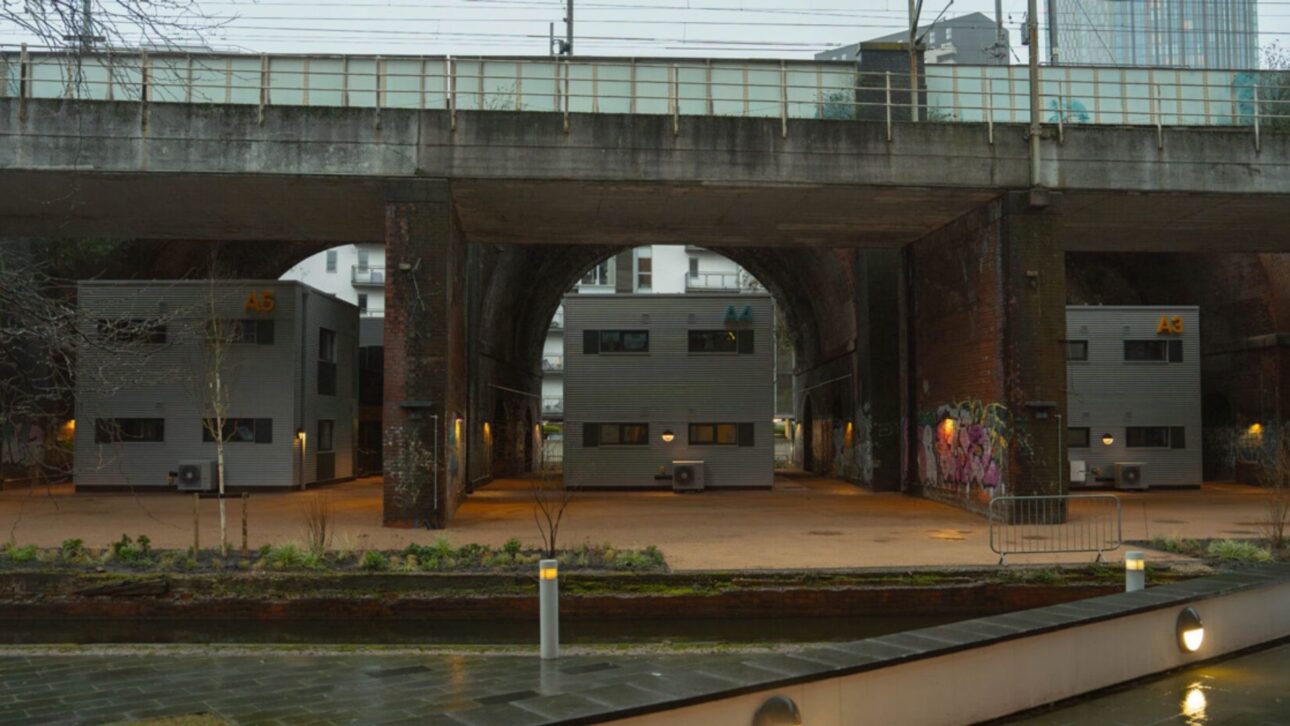
The project was born out of a practical response to a growing problem. Embassy is a charity in Manchester, established in 2019, that decided to tackle the increasing number of people sleeping on the streets. The most ambitious result of this work is the Embassy Village, described as the largest village of its kind ever built in the UK for the homeless population.
The chosen location was an underutilized section of the city. The houses are located in Castlefield, in the center of Manchester, under 22 arches of a railway, near canals and the river. Where there was once just an idle space under the tracks, a planned community emerged, with houses, green areas, and collective spaces.
The project was only possible thanks to a large support network. According to Good Good Good, the project brought together Embassy, real estate developers, and over a hundred companies that donated materials, labor, or services. The construction was carried out non-profit, and the funding came from foundations and public resources aimed at degraded urban lands.
The inauguration took place at the beginning of 2026. After years of planning, the village was completed and began to welcome residents, marking a new phase in the fight against the homeless population in the city. For Embassy co-founder Sid Williams, the goal was never just to provide a roof. “We are not just giving people a home. We are offering the chance to rebuild their lives,” he stated.
Houses under the arches of a railway: the idea behind
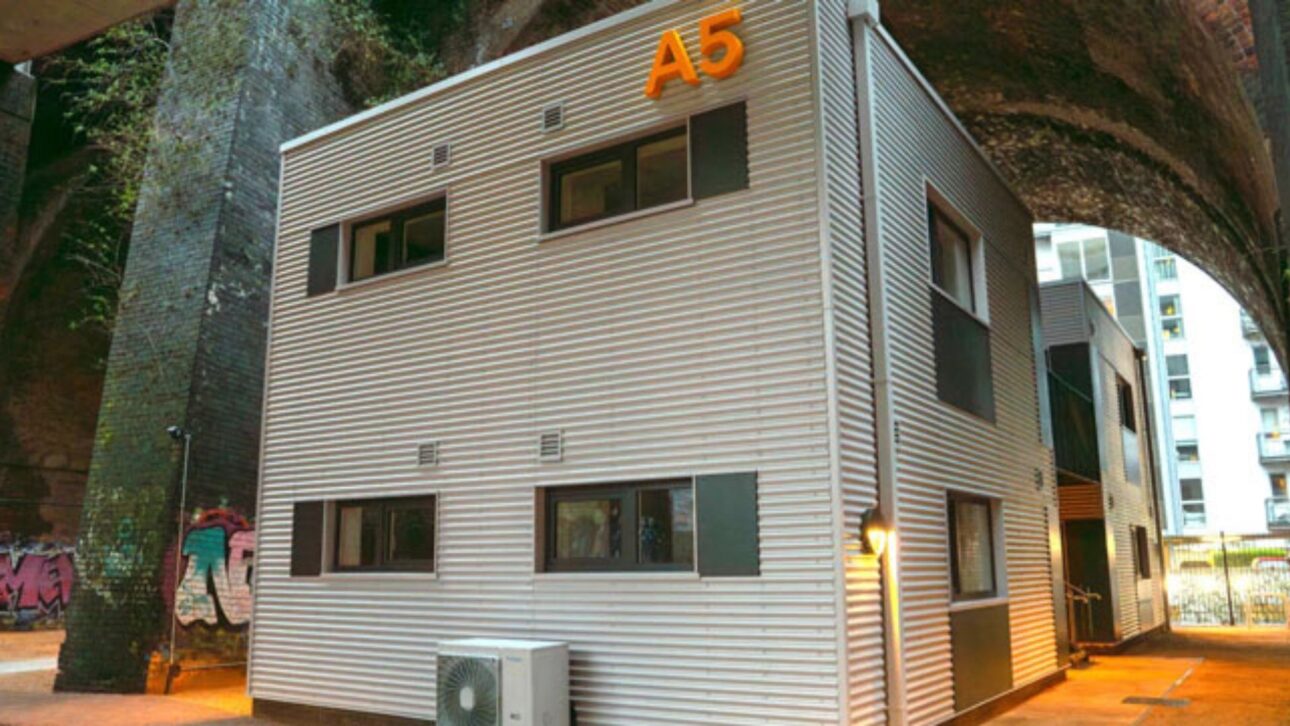
Utilizing the arches of a railway is what makes the project so original. Old railway viaducts often leave large brick spaces underneath, often empty or used as storage. Instead of erecting a building from scratch, Embassy saw these spaces as ready-made structures to house homes.
The choice has evident practical advantages. The arches already offer robust walls and coverage, are located in a central and well-situated area of Manchester, and cost less to repurpose than a new plot would require. It’s an example of intelligent reuse of urban infrastructure, transforming a dead spot in the city into housing.
The history of Embassy itself shows this creative vein. Before the village, the institution operated a double-decker bus adapted as a mobile shelter, with mattresses, curtains for privacy, and even a small cinema and kitchen space. The village under the arches is the natural evolution of that idea, now on a much larger and permanent scale.
The result is a real neighborhood, not a collective warehouse. Under the old railway, the houses are organized like a small street, with individual doors, gardens, and common areas. The architecture aimed to break the cold logic of traditional shelters, creating something that resembles a home.
Each resident with their own furnished door
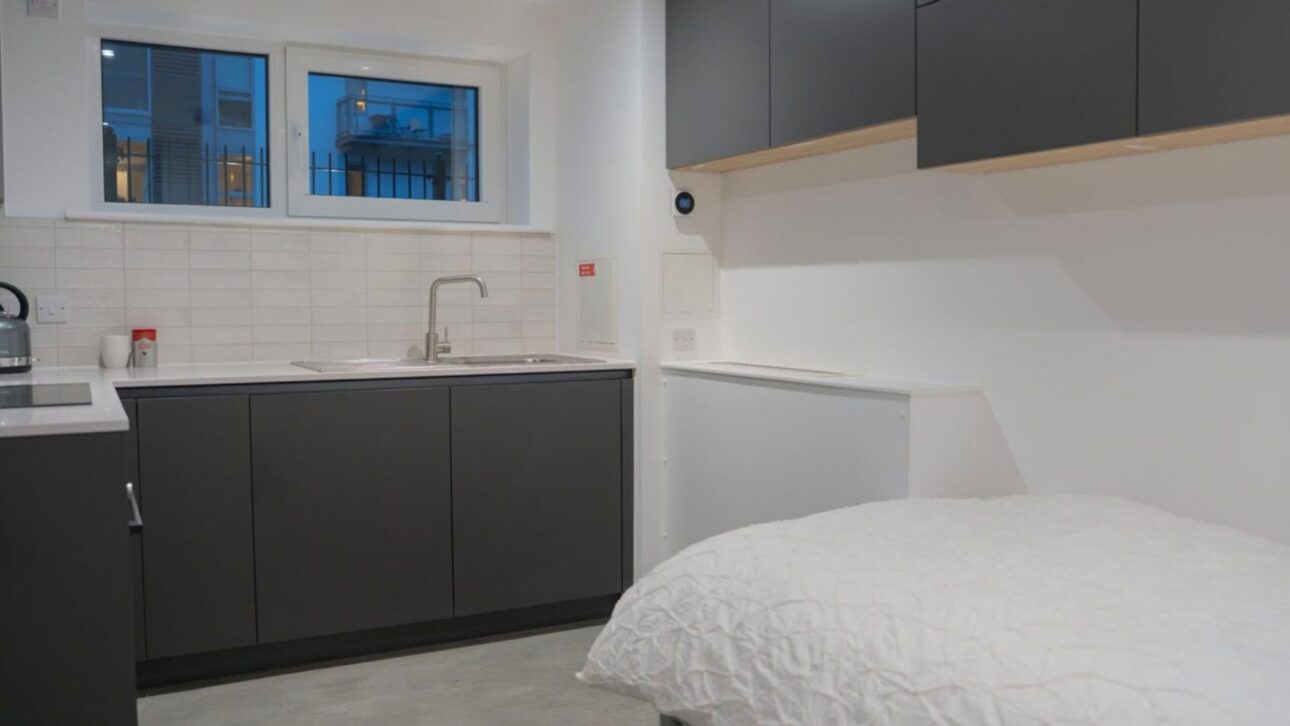
The detail of having one’s own door is more symbolic than it seems. Instead of sharing a hall full of beds, each resident of Embassy Village has their own individual housing, with a door that opens and closes, a key, and privacy. It’s the difference between passing through and finally having an address.
The 40 houses are delivered ready to live in. Each unit comes furnished and equipped with a kitchen, bathroom, and bed, so the person doesn’t have to start from scratch. Leaving the street and finding a complete, clean, and personal space has a huge impact for those who have been homeless for months or years.
Having a fixed address changes everything in practice. With their own door, the resident can receive mail, store documents, schedule appointments, and even look for a job with an address to call their own. Small daily acts, almost impossible for those on the street, become viable again within a stable housing.
Another central point is that the residents rent their houses. Instead of occupying a temporary shelter spot, they become tenants, with the responsibility and rights that come with it. According to Embassy, it is this arrangement that allows, in the institution’s words, to end the homelessness situation on the very first day.
This model returns autonomy to people. Having their own door, paying for housing, and taking care of the space helps each resident rebuild a routine and prepare for an independent life. The house stops being just a shelter and becomes a base to start over, within a safe and supportive environment.
Hall, laundry, garden, and court: the complete village
Embassy Village was designed as a neighborhood, with communal life. In addition to the 40 houses, the complex has a community hall that functions as the heart of the place, gathering a support room, training kitchen, shared laundry, and computers for residents’ use. It’s where much of the activities take place.
The external areas complete the structure. The village gained a vegetable garden and flowerbeds where residents can plant and harvest, as well as a sports court and landscaped gardens with more than 1,800 plants. The greenery, rare under a railway, helps transform the space under the arches into a pleasant environment.
These spaces serve a purpose beyond leisure. The laundry, the garden, and the hall encourage social interaction and create a healthy routine, combating the isolation common among those who have lived on the streets. Taking care of a plant or playing a game becomes part of the process of rebuilding connections and self-esteem.
Social interaction, in fact, is part of the treatment. Those who study the homeless population often point out that social isolation is as harsh as the lack of shelter, and shared spaces help recreate lost bonds. By bringing neighbors together in the hall, the garden, or the court, the village under the arches combats loneliness as much as it does the cold.
All this was set up in a space that no one valued before. Where there was only the dark gap of a railway, houses, a court, a garden, and landscaped areas emerged. The transformation shows how a bit of planning can convert idle infrastructure into decent housing and a real sense of community.
More than a roof: the support to start over
Embassy Village is based on a simple idea: a house alone is not enough. Therefore, each resident receives individual support, with about six hours of personalized assistance per week. This support is what differentiates the village from a simple set of houses for the homeless population.
The training is very practical and focused on daily life. Residents learn to cook, manage their own budget, and prepare for job interviews, essential skills for those who are going to resume an independent life. The training kitchen and the rooms in the community hall are used precisely for this.
There is also space for emotional care. The hall has a counseling room where residents can talk and receive psychological support, an important part of the recovery for those who have gone through difficult situations on the streets. The focus is on treating the whole person, not just solving the lack of housing.
The founder sums up this philosophy well. “We are not here to do things just any way. We are here to do them very well,” said Sid Williams, according to the British press. The phrase explains why Embassy invests in quality and continuous support, rather than makeshift solutions for the homeless population.
From shelter to employment: the model that delivers results
The main goal of the village is to help people get back on their feet for good. To achieve this, Embassy has established a direct bridge with the job market, forming partnerships with about 20 companies willing to offer job opportunities to the residents. Securing a job is a key piece in leaving the street behind for good.
The results of this model are already evident in numbers. According to the Big Issue, among the people assisted by the Embassy who found employment, 75% maintained the position for at least one year. It is a strong indicator that the combined support of housing and training really helps stabilize people’s lives.
This focus on results originates from the institution’s experience. Before the village, the Embassy realized how difficult it was to place people from the homeless population in common properties: according to Sid Williams, only one in 25 property owners agreed to rent to these people. Building their own village was a way to circumvent this prejudice.
With housing, training, and employment together, the cycle tends to close. The person leaves the street, gains stability in a home, develops skills, and enters the job market, reducing the risk of returning to the homeless population situation. It is this combination, not an isolated measure, that sustains the project’s success.
Why repurposing railway arches makes sense
The case of Manchester draws attention to a wasted resource in cities. Viaducts, bridges, and railway arches create, beneath them, huge areas that usually remain empty, become storage, or simply degrade. Transforming these spaces into housing is a creative way to use what already exists.
The economic advantage is considerable. Repurposing an existing structure tends to cost less than building from scratch, and the project received strong support: millions of pounds came from a foundation and public funds for degraded areas, as well as companies that donated materials and labor. This helped make the construction feasible.
The timing is also important in the face of the crisis. In Manchester, it is estimated that about one in every 74 people experiences some form of housing shortage, and the number of people sleeping on the streets has increased in recent years. Quick and low-cost solutions, like repurposing the arches, gain urgency in this scenario.
There is also an environmental and urban gain. Reusing an old infrastructure avoids demolitions and waste, brings life back to a forgotten area, and brings housing closer to the center, near jobs and services. The model of the railway arches shows how cities can look at their idle spaces with different eyes.
What this has to do with Brazil
Brazil is dealing with an increasingly larger homeless population crisis. According to recent official data, more than 300,000 people in street situations are registered in the country, a number that has grown significantly in the last decade. In large cities, it is common to see people sleeping under viaducts, canopies, and bridges, exactly the type of space that Manchester transformed into homes.
The Embassy Village model engages with local debates. The idea of offering housing first, and then support and work, is the basis of the concept known as Housing First, which has already inspired pilot projects in some Brazilian cities. The logic is the same: without a stable roof, it becomes almost impossible to rebuild any other part of life.
The reuse of spaces also makes sense here. Brazil has many idle properties, empty buildings, and areas under viaducts that could become social housing with planning, instead of just housing abandonment. Housing programs and partnerships with the private sector could follow paths similar to the arches of Manchester.
Some Brazilian initiatives are already pointing in this direction. Cities like São Paulo and Curitiba have tested republics and housing programs for the homeless population, and idle public buildings in city centers are a recurring target for housing retrofit proposals. What is often lacking, however, is the scale and support package that make the Manchester model truly work.
Finally, there is the lesson about dignity and results. More than just getting a person out of the cold, the English example shows the importance of providing a private door, support, and a path to employment. For Brazil, which often still treats the homeless population merely as a case of emergency shelter, it is a concrete model worthy of study.
And you, do you think this idea can be copied in Brazil?
Embassy Village shows that it is possible to transform a forgotten space into a home. Under 22 arches of a railway in Manchester, 40 furnished houses with private doors, along with a hall, laundry, garden, court, and plenty of support, became a concrete response to the homeless population. All supported by training, employment, and the idea of treating housing as a right, not a favor.
And you, do you believe that Brazilian cities could use viaducts and idle spaces to create villages like this? Share in the comments what you thought of the Manchester project and what other solutions you imagine to address the situation of the homeless population in Brazil.