Portuguese
  Spanish


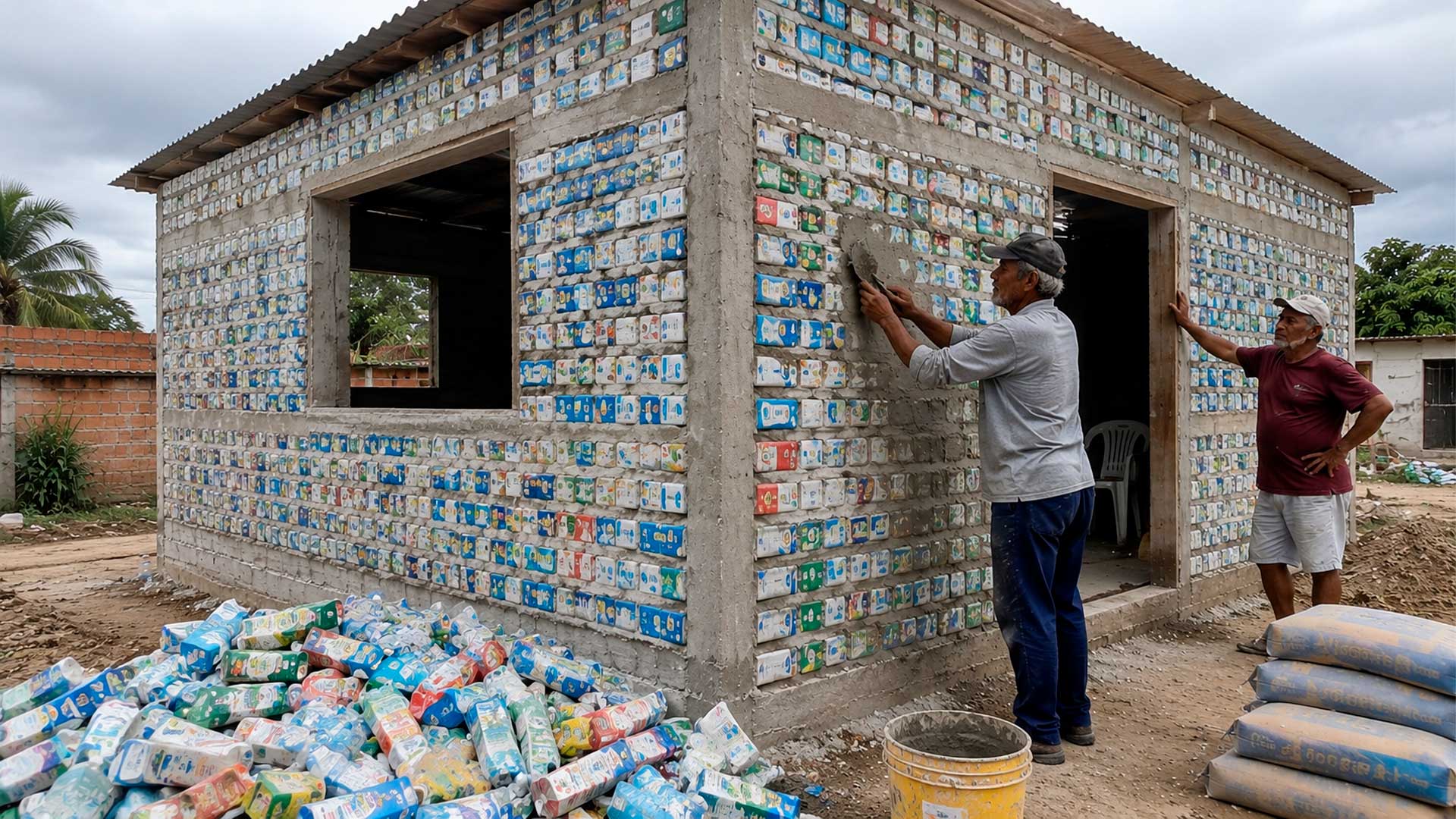

With no money for conventional materials, a retired bricklayer gathered thousands of long-life packages and turned milk cartons into walls of a house in the northern zone of Sorocaba. The construction attracted attention because it replaced part of the common masonry, became an example of reuse, and opened a discussion about cost, technology, safety, and limits of this type of solution.
A retired bricklayer from Sorocaba, in the interior of São Paulo, found an unusual solution to build a house without relying on common bricks. He gathered more than 4,000 milk cartons and used the packages as part of the walls of a two-room dwelling in the northern part of the city.
As reported by R7, in a report by the program SP no Ar, the idea arose amidst a lack of money to buy construction materials. The case was published on September 13, 2010, and resurfaced as an example of a project made with waste reuse.
The construction gained a detail that increased curiosity. According to the report, an engineer evaluated the project and said that the structure could last up to a century, provided it is maintained in good condition and protected against factors such as infiltration, wear, and finishing flaws.
-
Brazilian Well Taps Guarani Aquifer, Sparking Debate on Water Supply and Security

-
Unique Neck Flexibility and Natural Echolocation Make Amazon’s Pink River Dolphin Extraordinary

-
Young Brazilian Woman Rescues 60 Animals, Faces $6,500 Debt, and Strives to Build Shelter for Dogs and Cats
-
Artesian Well Becomes Lifeline for Small Brazilian Farm: Drilling Reaches 60 Meters, Finds Marble, Navigates Rock Fissures, and Strikes Fresh Water




The story does not turn milk cartons into an automatic solution for any project. It shows a handcrafted experience, made by someone with practice in civil construction, and raises a concrete question. To what extent can recyclable materials replace traditional inputs without compromising safety and performance?
The house was born from the lack of money and a solution tested in practice
The project was built in two rooms, without the purchase of conventional bricks for the main walls. The retired bricklayer gathered the long-life packages, assembled the blocks, and applied sealing techniques with mortar to shape the structure.
What draws attention is the volume of material used. More than 4,000 packages were prevented from going straight to the trash and began to serve a physical function in the construction, creating a light wall with reused material and lower cost.


Long-life milk cartons are not made only of paper. According to Tetra Pak, this type of packaging uses layers of cardboard, polyethylene, and aluminum to protect the food against moisture, light, oxygen, and contamination. This combination helps explain why the material has rigidity and moisture resistance when intact.
In practice, however, the packaging alone does not replace design, foundation, tying, water protection, and proper finishing. The use in walls depends on how the material is prepared, sealing, plastering, and the structure that receives the construction load.
Why a milk carton can become a wall, but requires technical care
The long-life carton has a clear advantage for this type of experiment. It is light, easy to gather, has a regular shape, and can be stacked with organization. When filled, closed, or used in conjunction with mortar, it behaves similarly to a handcrafted sealing block.
The critical point is the difference between sealing and structure. A wall can simply close off an environment, separating the inside from the outside, or it can help support weight. This distinction changes everything in construction.
The ABNT NBR 15575 Performance Standard treats residential buildings as a set of systems that need to meet safety, thermal performance, acoustic, durability, and maintenance criteria. In other words, it’s not enough for the wall to stand initially. It needs to withstand use, climate, and time.
Therefore, experiments like the one in Sorocaba should be viewed with caution. The idea is creative and reduces waste, but any reproduction requires professional evaluation, especially when it involves roofing, electrical installations, soil moisture, and risk of cracks.
What explains the estimate of up to 100 years mentioned by engineer
The durability estimate of up to 100 years, mentioned in the report, draws attention because it seems high for a material associated with disposal. The likely explanation lies in the whole construction, not just the packaging. The carton becomes part of a wall protected by mortar, roofing, and finishing.
When the material is isolated from direct water, intense sun, and impacts, degradation tends to be less. The cardboard is protected by the plastic layers and aluminum, while the mortar helps lock the set.
Still, lifespan is not a simple promise. The guide from the Architecture and Urbanism Council on the ABNT NBR 15575 differentiates project lifespan, maintenance, and warranty. A construction can last decades when well executed, but it needs inspection, repair, and protection against infiltrations.
In the case of a house made with milk cartons, maintenance is even more crucial. Cracks in the plaster, roof failures, moisture rising through the base of the wall, or internal leaks can affect the material and reduce durability.
Reuse draws attention in a sector that consumes a lot of material
The construction industry uses large volumes of sand, cement, gravel, steel, wood, ceramics, and water. Therefore, any alternative that reduces waste attracts interest, especially in small projects, community renovations, and low-budget housing.
Long-life packaging already has a recycling route in Brazil. According to Tetra Pak, the materials can be recovered and transformed into new products, such as cardboard boxes, egg cartons, tiles, and other items. In construction, the most common use occurs in recycled tiles and panels, manufactured in an industrial process.
The difference is that the house in Sorocaba took a different path. Instead of sending the packages to a factory, the builder used the cartons directly on the site. This reduces material costs but transfers part of the technical responsibility to the executor.
This is the point that separates a good story from a broad recommendation. Reusing materials can work, but the safety of the dwelling depends on calculation, knowledge of the soil, foundation, waterproofing, and finishing. Improvisation without guidance can save money initially and cause losses later.
Would you have the courage to live in a house made with milk cartons, provided it is evaluated by an engineer? Leave your opinion in the comments and tell us if this type of construction could be a solution in regions where conventional material weighs on the budget.