Portuguese
  Spanish


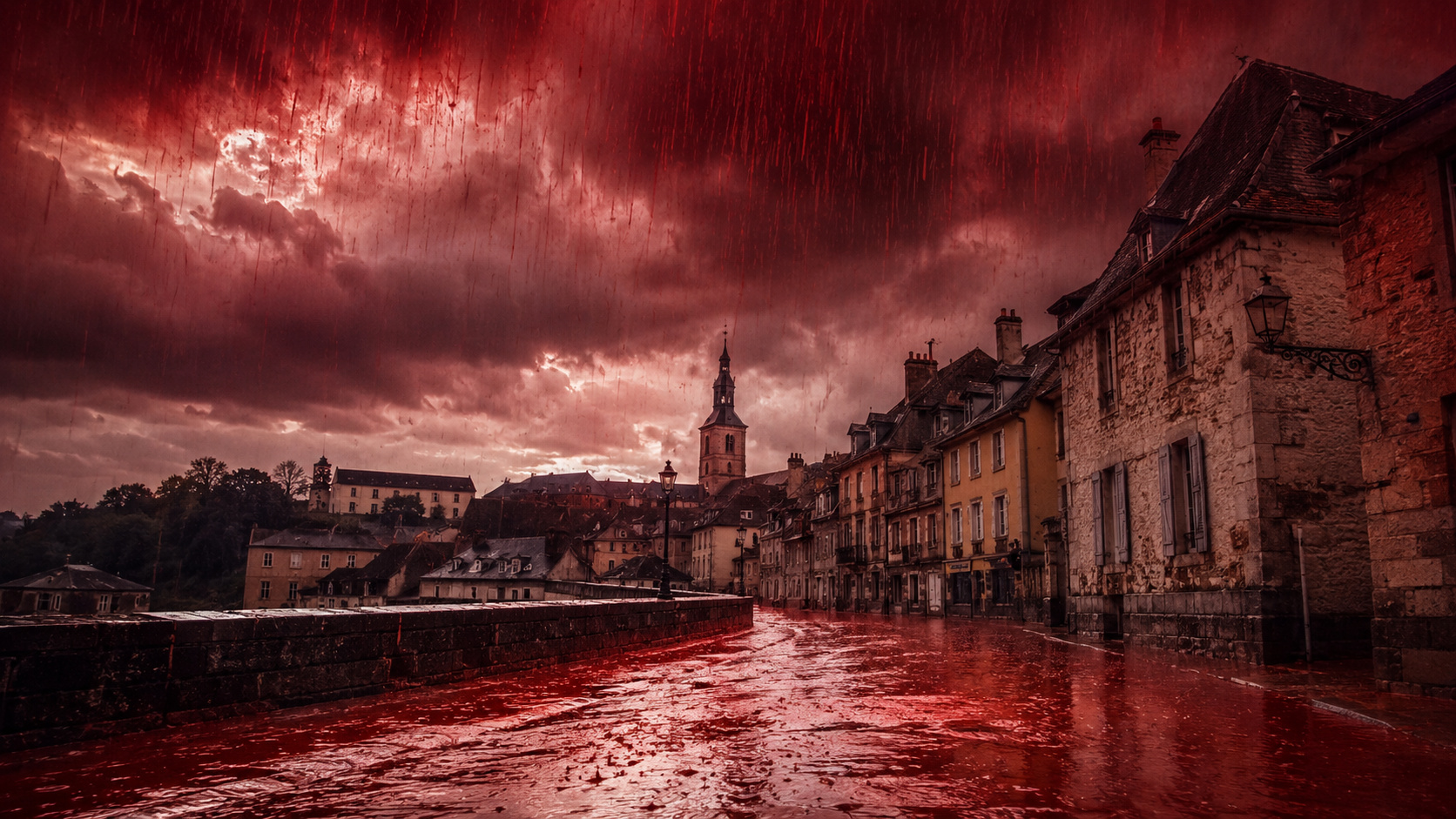

Sahara dust can travel thousands of kilometers, tint the rain red, and create the phenomenon known as blood rain.
Throughout history, reports of a mysterious “blood rain” have been interpreted as omens, supernatural signs, and even announcements of wars or catastrophes. Today, science understands the phenomenon well and knows that it does not involve blood, but rather dust particles carried by the wind over great distances. Known internationally as blood rain, the reddish rain occurs when large amounts of dust rich in iron oxides, primarily originating from the Sahara Desert, remain suspended in the atmosphere and end up being incorporated into raindrops.
The result is precipitation capable of leaving orange, reddish, or brownish stains on cars, buildings, streets, and crops.
Sahara dust can travel thousands of kilometers to reach European countries and change the color of the rain
The Sahara is one of the largest sources of atmospheric dust on the planet. According to the Met Office, the UK’s national meteorological service, sandstorms raise enormous amounts of fine particles that can remain suspended for days or weeks, being transported by atmospheric currents across the Mediterranean and much of Europe.
-
Stanford Scientists Develop 20-Cent Paper Centrifuge Inspired by Ancient Toy, Spins at 125,000 RPM Without Electricity, Separates Plasma in 1.5 Minutes, Aiding Diagnostics in Remote Areas

-
World’s Largest Vaccine Manufacturer, Immunizing Two-Thirds of Global Infants, Originated in a Pune Horse Farm

-
Scientists Discover Mars Had Complex Deep Magma Systems Similar to Earth’s Despite Lack of Tectonic Plates

-
Accidental Discovery of Stretchable Plastic Leads to Waterproof Membrane for Mountaineers and Artery Grafts


In certain weather conditions, air masses coming from North Africa move these particles to countries such as Spain, France, Portugal, Italy, the United Kingdom, and even Alpine regions.
When rain systems pass through these dust-laden layers, the water absorbs the sediments present in the atmosphere and precipitates onto the Earth’s surface already mixed with the reddish material. According to the Met Office, this process produces the so-called blood rain, although the name is just a popular expression for a completely natural phenomenon.
Iron present in the Sahara sand is responsible for the red hue observed in the rain
The characteristic coloration is directly related to the mineral composition of Saharan dust. Experts explain that a large part of the particles contains high concentrations of iron oxides, substances responsible for the reddish hue similar to rust.
In March 2026, a new episode caught attention in Europe. The Met Office reported that a large plume of Saharan dust advanced over parts of the continent, causing orange skies, intensely red sunsets, and the possibility of blood rain in some regions.
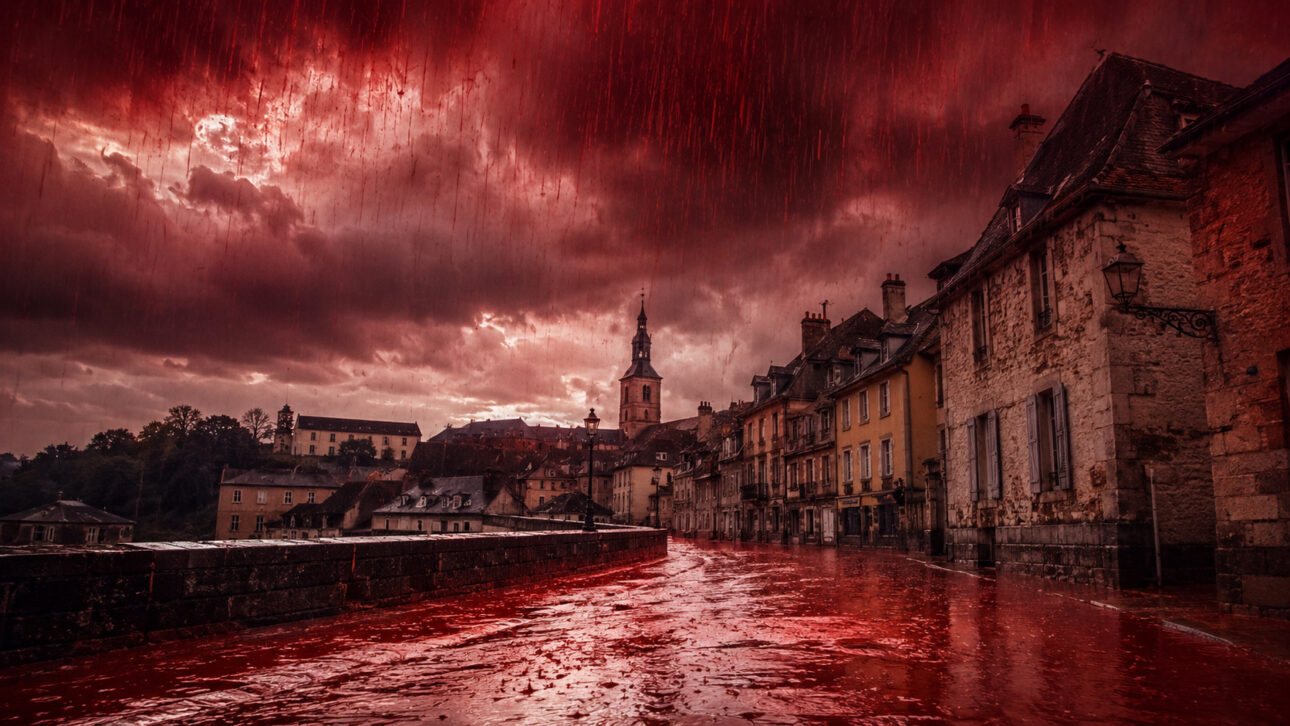
Researchers from the University of Reading highlight that, after the evaporation of water, fine rust-colored residues remain adhered to vehicles, windows, and external surfaces, creating the impression that red mud fell from the sky.
Phenomenon has intrigued ancient civilizations and was associated with supernatural signs for centuries
Historical records show that red rain events have been described since Antiquity. According to studies published in the Bulletin of the American Meteorological Society, reports of “blood rains” appear in texts attributed to Roman and Greek authors, who interpreted the phenomenon as an omen of conflicts, epidemics, or significant political changes.
Scientific understanding only began to consolidate from the 19th century, when researchers started collecting samples of these precipitations and identifying mineral particles similar to those found in African deserts.
Today, the scientific consensus indicates that most European episodes are related to the atmospheric transport of Saharan dust.
Beyond the reddish color, the dust can alter air quality and affect regional climate

The impact of Saharan dust goes far beyond the visual aspect. According to the Met Office, the arrival of these particle masses can temporarily raise particulate matter levels in the air, primarily affecting sensitive individuals, such as those with preexisting respiratory conditions.
The presence of atmospheric dust also influences climatic processes, interferes with cloud formation, modifies solar radiation patterns, and can transport nutrients and microorganisms to other continents.
The red sky that seemed like an apocalyptic omen is, in fact, a long journey of sand across the planet
Although the name “blood rain” continues to cause amazement, the phenomenon represents one of the most impressive examples of the atmosphere’s ability to connect extremely distant regions.

Sand grains torn from the world’s largest hot desert can travel thousands of kilometers, cross oceans, color the sky, tint the rain, and settle over entire cities.
What for centuries was seen as a supernatural sign now reveals something equally fascinating: the Earth’s extraordinary ability to transport matter between continents through the wind.