Portuguese
  Spanish


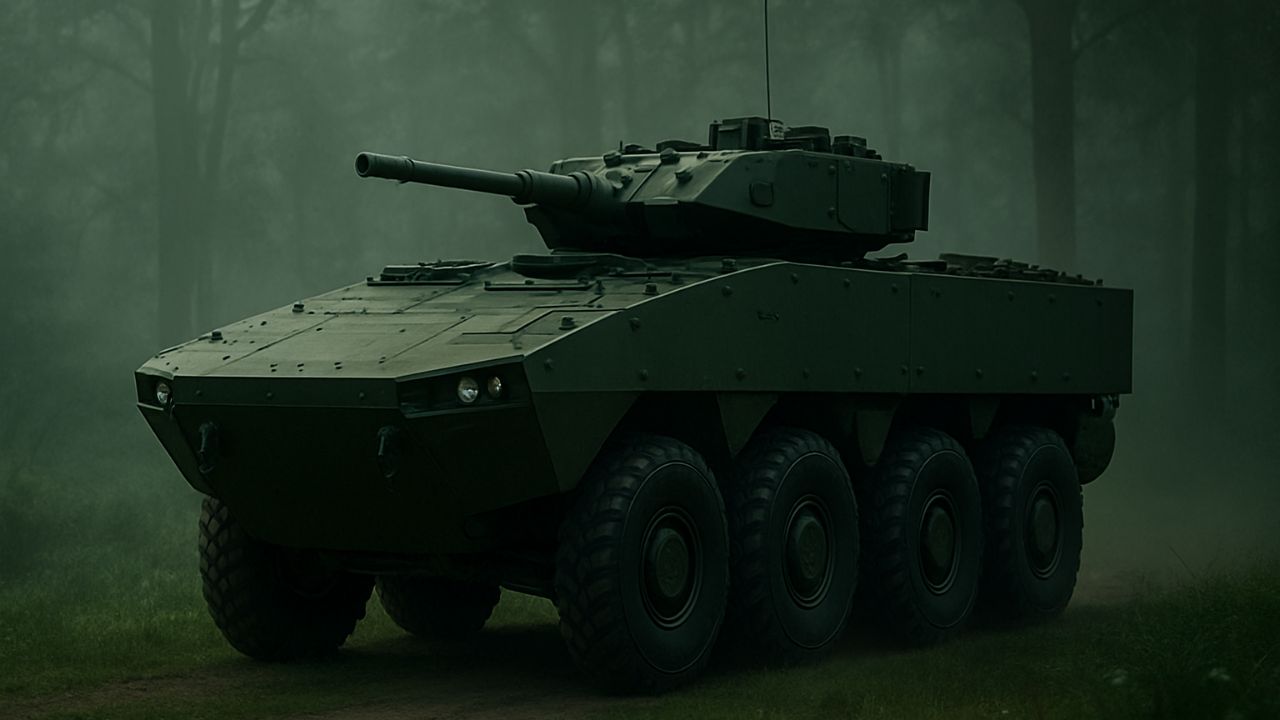


Developed in Public University, An Innovation in Advanced Materials Places Brazil in a Select Group of Nations with Control Over Stealth.
Brazil has developed a “secret weapon” technology. It is an innovative capability, born in a public university, to make military equipment practically undetectable. This Brazilian technology not only modernizes the Armed Forces but also attracts the interest of foreign powers, consolidating the country’s sovereignty in the defense sector.
Public Universities, Military Institutes, and Industry
Brazil’s advancement in stealth technologies is no accident. It results from a well-articulated research and development (R&D) ecosystem. Collaboration involves public universities, military institutes, and the defense industry.
Public universities are the academic pillar of this evolution. The Federal University of Campina Grande (UFCG), in Paraíba, is a major highlight. Since 2013, UFCG has collaborated with the Armed Forces on the MATEST project (Strategic Materials). The university focuses on the production of ceramic nanomaterials, such as ferrites. These materials are essential for absorbing electromagnetic radiation and making equipment less visible to radars. UFCG already has a pilot plant capable of producing up to 60kg of nanomaterials per month.
-
From matches sold by bicycle at age 5 to a global furniture empire: the lumberjack’s son founded IKEA at 17 in his uncle’s kitchen and transformed a small company into the largest furniture retailer on the planet.

-
The mansion in Flamengo, built in 1865 for the Baron of São Clemente and closed for 20 years, has become a spa, event hall, and gym for “Symphony,” a luxury condominium that sold 70% of its gross development value in the first month on the R$ 60 million land of the former Bennett College.

-
The Ipiranga convent, a 1924 building adjacent to the Museum that remained vacant for a decade and became home to dozens of cats, is reborn as “Alma Mater,” a luxury development worth R$ 130 million with a pool in the courtyard and a clubhouse in the former nuns’ chapel.

-
An empty pool of almost 3 meters turned into tilapia farming in the backyard after a family transformed the dangerous space for children into an urban greenhouse with eggs and organic food.




Military institutes transform scientific knowledge into practical solutions. The Institute of Aeronautics and Space (IAE), of the Brazilian Air Force (FAB), has developed and patented a paint with Radar Absorption Material (RAM). Named “Rin”, this technology transforms the energy from enemy radars into heat, preventing detection. The Navy Research Institute (IPqM) also has a long history in developing anti-radar paints, with successful tests on submarines. The Army Technological Center (CTEx) completes this front by researching Military Employment Materials.
The Main Stealth Technologies
The basis of military “invisibility” lies in Radiation Absorbing Materials (RAM). Brazil dominates different approaches to this technology.
Stealth Paints: The “Rin” paint, patented by the IAE in 2016, is a 100% national technology. It has unique characteristics compared to other existing products worldwide. IPqM, in partnership with the industry (Avibras), has also developed a paint with over 90% absorption power in the X band, the most widely used frequency by military radars.
Nanomaterials and Ferrites: UFCG stands out in the production of ceramic nanomaterials. These particles, obtained through a combustion reaction process, are the raw material for creating stealth coatings. The quality of Brazilian material is comparable to the best international products.
Composites and Elastomers: A partnership between IPqM and UFCG has resulted in adhesive sheets of absorbing material. Unlike paints, which require multiple coats, these sheets come in the ideal thickness, facilitating application on ship surfaces and other platforms.
Geometric Design: Besides materials, the shape of the equipment is crucial. The future Tamandaré Class frigates of the Navy will have a “stealth construction”. Their structures will be designed without edges or protrusions, deflecting radar waves away from the enemy.
How the Armed Forces Use Brazilian Technology
This Brazilian technology is being directed to equip the country’s most strategic platforms.
Brazilian Air Force (FAB): The main candidate to receive the IAE’s stealth paint is the new Gripen F-39 fighter jet. The application of the paint would enhance the aircraft’s survivability in combat. However, there is still no official confirmation regarding the use of the material on operational fighters.
Brazilian Navy: The Navy has already successfully tested the technology. The periscope of a Tapajó submarine, coated with IPqM’s paint, became completely invisible to the radar of an aircraft. The new Tamandaré Class frigates will also incorporate stealth design and special paints from their construction.
Brazilian Army: CTEx researches military employment materials, but the specific applications for land platforms are less detailed. Potentially, the technology may be used in armored vehicles and command posts to reduce their detection.
The Strategic Impact of Brazilian Technology
The development of stealth technologies generates a profound impact for Brazil. Tactically, it increases the survivability of equipment and ensures the element of surprise. Strategically, the effect is even greater.
By mastering this area, Brazil reduces its dependence on foreign suppliers. This is a pillar of national sovereignty, as it prevents the country from becoming vulnerable to embargoes or geopolitical restrictions. The mastery of RAM paints places Brazil in a select group of countries, such as the USA, France, and Japan, which enhances the country’s international prestige and its deterrence capacity.
The “covetousness of foreign powers” should be understood as a strong strategic and technological interest in the level achieved by Brazil. This recognition validates the importance of national innovations. The true strength of Brazilian technology lies in ensuring autonomy and strengthening the Defense Industrial Base (BID), consolidating Brazil as a relevant player on the global stage.