Portuguese
  Spanish


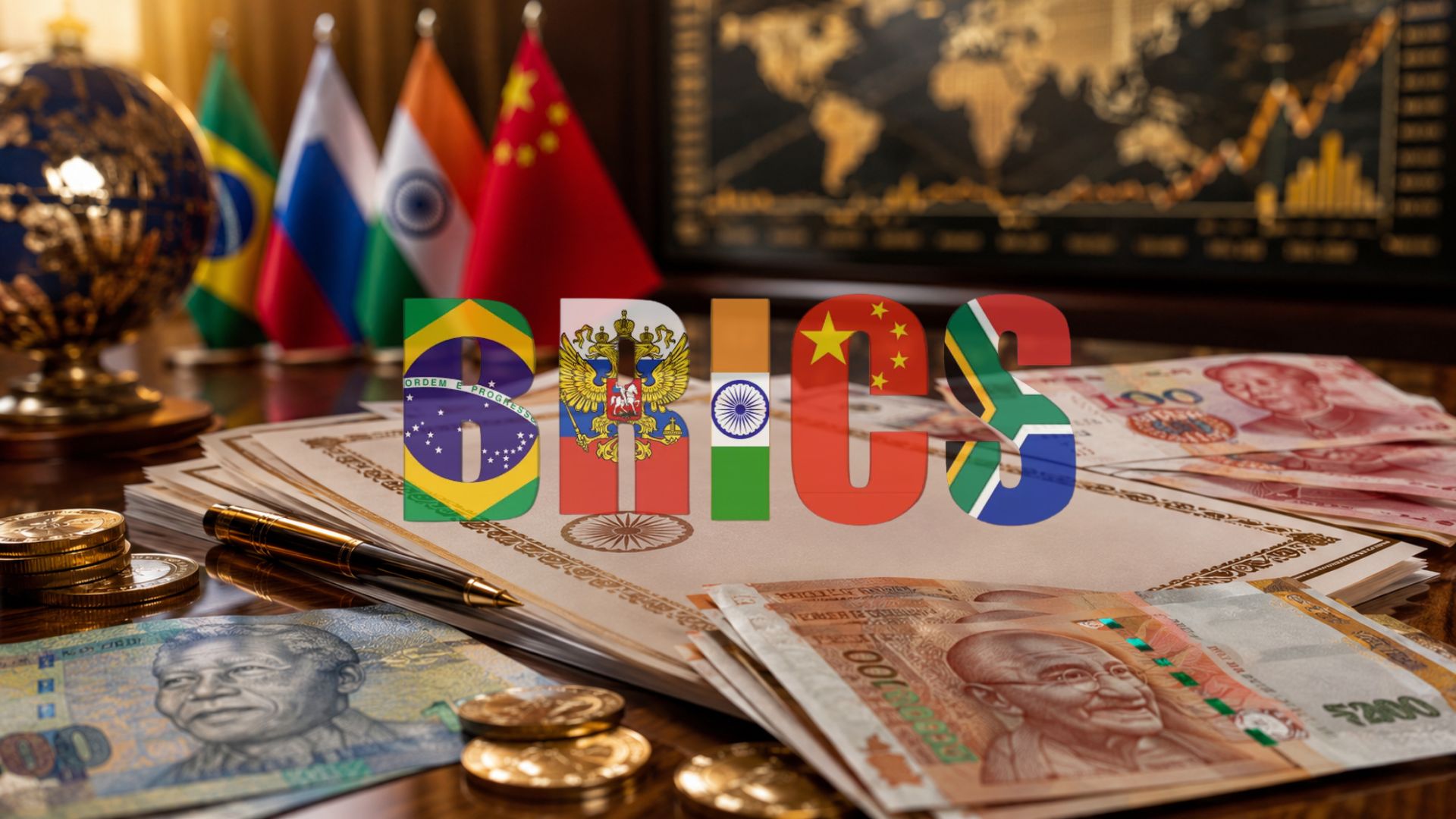

The New Development Bank of the Brics is in the final stage of preparation to issue bonds in Indian rupees, expanding a local currency financing strategy that already includes operations in South African rands and Chinese yuan. According to TV Brics, the confirmation was made by the institution’s president, Dilma Rousseff, during the press conference held after the 11th annual meeting of the bank’s Board of Governors in Moscow on May 14 and 15.
The issuance in rupees represents another step in a long-term strategy aimed at reducing the bank’s dependence on the US dollar. Currently, almost 30% of the Brics Bank’s projects are already financed in national currencies, with the Chinese yuan concentrating the largest share of these investments. The goal set in the institution’s five-year strategy is that by 2031, more than 45% of projects will be financed in local currencies of member countries, a significant leap that requires the opening of capital markets in currencies that until recently had no expression in international infrastructure financing.
Dilma Rousseff was direct in explaining the importance of the issuance in rupees for the Brics Bank: “The bank, by its nature of being a Global South bank, has to create its own support with its resources. The more resources we have, the more autonomy we have in front of programs. Issuing in local currency is a crucial issue.” The statement positions currency diversification not as an alternative to the dollar for ideological reasons, but as an operational necessity for an institution that wants to have the capacity to finance projects without relying on a currency controlled by a country that is not part of the group.
From rands to rupees: the expansion of Brics Bank currencies

The Brics Bank began its local currency fundraising operations with the issuance of bonds in Chinese yuan, taking advantage of the size and liquidity of the Chinese capital market. Then, it expanded to the South African rand, creating a precedent for currencies of smaller economies within the group. Now, with the issuance in Indian rupees in the final stage, the bank adds the currency of the world’s fifth-largest economy to its fundraising portfolio.
-
Over 500,000 Wild Boars Culled in Eight Months, but Industry Estimates 1.25 Million, Raising Concerns About Crop Damage, Threatened Livestock, and Health Risks in Rural Brazil

-
Chinese Spacecraft Releases Mysterious Object in Orbit, Sparking Global Debate on Space Technology and Earth Monitoring

-
Retired Builder Constructs House Using Over 4,000 Milk Cartons in Brazil, Engineer Estimates Structure Could Last 100 Years

-
Brazilian Well Taps Guarani Aquifer, Sparking Debate on Water Supply and Security



Each new currency incorporated into the bank’s issuance system expands the number of institutional investors who can buy BRICS bonds without needing to convert to dollars. An Indian pension fund that buys bonds in rupees eliminates the currency risk it would have when investing in dollar-denominated securities. A South African investor who acquires bonds in rands does the same. This logic multiplies the bank’s funding base without relying on debt markets denominated in the American currency.
The yuan as a pillar and the goal of 45% by 2031
The Russian Finance Minister and Chairman of the Bank’s Board of Governors, Anton Siluanov, detailed the current numbers of the BRICS local currency strategy. “Almost 30% of the projects are already financed in national currencies and, according to our strategy by 2031, the share of these projects should exceed 45%. Currently, the Chinese yuan occupies a central position both in fundraising and investments,” said Siluanov. The focus on the yuan is natural: China is the bank’s largest shareholder and has the most developed capital market among the members.
The goal of 45% by 2031 means that, in five years, almost half of the entire BRICS Bank project portfolio will be financed without going through the dollar. To reach this percentage, the institution needs to diversify beyond the yuan, incorporating currencies such as the rupee, the rand, and potentially the Brazilian real and the Russian ruble. Issuance in Indian rupees is a concrete step in this direction and paves the way for other group currencies to be included in the funding portfolio in the coming years.
Four new shareholders and three waiting
The Moscow meeting also brought news about the composition of the BRICS Bank. Siluanov reported that four new shareholders have recently joined the institution: United Arab Emirates, Bangladesh, Egypt, and Algeria. The entry of these countries expands the bank’s geographic base to the Middle East, Southeast Asia, and North Africa, regions where financing in local currencies may have particularly strong demand from governments seeking alternatives to the Western financial system.
In addition to the four new members, the entry of three more countries is being considered: Uzbekistan, Colombia, and Ethiopia. If these three are accepted, the BRICS Bank will bring together economies that represent significant portions of the world’s population and GDP of developing countries. For the local currency issuance strategy, each new member is potentially a new currency to be incorporated into the funding system, expanding the diversification that Dilma Rousseff considers essential for the institution’s autonomy.
Tokenization: the next step the bank is studying
During the opening ceremony of the meeting in Moscow, Dilma Rousseff announced the development of a new five-year strategy for the BRICS Bank with three priorities: financing in national currencies, strengthening local capital markets, and studying the possibility of tokenization. Tokenization, which involves converting financial assets into digital tokens recorded on blockchain, could allow the bank’s securities to be traded on decentralized platforms, reducing intermediation costs and expanding access for smaller investors to securities that currently circulate only among large institutions.
The mention of tokenization indicates that the BRICS Bank is not only seeking alternatives to the dollar but is exploring alternatives to the traditional financial infrastructure itself. If securities issued in rupees, rands, or yuans can be tokenized and traded on digital platforms accessible to investors from any member country, the bank would create a parallel debt market to the conventional system of exchanges and clearinghouses dominated by the West. It is a long-term ambition that depends on regulation and technological infrastructure, but it is already on the institution’s strategic radar.
Financial autonomy as a survival strategy
Dilma Rousseff’s insistence on issuance in local currencies is not rhetorical. For the BRICS Bank, relying on dollar funding means depending on market conditions defined by the American Federal Reserve and a payment system where transactions can be blocked by unilateral sanctions. Each security issued in rupees, rands, or yuans is a piece of financing that cannot be interrupted by political decisions from Washington.
The logic is especially relevant for Russia, which faces Western sanctions and cannot access debt markets in dollars or euros. But it equally benefits other members who want to reduce their exposure to a currency that fluctuates with American monetary and geopolitical policy decisions. By diversifying its funding sources to local currencies, the BRICS Bank builds a financial infrastructure that operates independently of the mood of any specific central bank.
Rupees today, 45% in local currencies by 2031
The BRICS Bank is preparing to issue securities in Indian rupees, already operates with rands and yuans, and aims to have more than 45% of projects financed in national currencies by 2031. Dilma Rousseff positions this strategy as essential for the autonomy of an institution that was born to finance the Global South without relying on structures dominated by the West. With four new shareholders, three in the entry queue, and the study of tokenization on the horizon, the bank accelerates a transformation that could reshape how emerging countries finance infrastructure.
Do you think the BRICS Bank will achieve the goal of 45% financing in local currencies by 2031? Tell us in the comments what you think about the issuance in rupees, whether Brazil should have bank securities in reais, and how you evaluate the strategy of reducing dollar dependence. We want to hear your opinion.