






 Portuguese
  Spanish


Water Retention by Turkish Megadams on the Upper Course of the Tigris Transformed One of the Cradles of Human Civilization into a Territory Marked by Salinization, Ecological Collapse, Health Crisis, and Growing Food Insecurity in Iraq
Before you is the Tigris River, one of the most important waterways in human history, stretching about 1,900 kilometers. It originates in the Taurus Mountains, in southeastern Turkey, crosses approximately 402 kilometers of Syria, and flows for about 1,416 kilometers within Iraq, where it becomes the country’s main source of freshwater. Although often overshadowed by wars and political crises today, the Tigris remains vital for the survival of millions of people.
Archaeologists and scientists have proven that it was in this region, about 8,000 years ago, that the first human groups began to practice organized agriculture, domesticate animals, and found cities such as Eridu and Uruk. It was there that writing, the wheel, the first code of laws, and structured agricultural systems emerged. The foundations of modern human society were born along the banks of the Tigris and Euphrates, rivers that, for millennia, sustained entire populations in a naturally arid environment.
Information has been disclosed through technical analyses and specialized reports on water resources in the Middle East, which indicate that almost 99% of drinking water for domestic use and irrigation in Iraq depends directly on the Tigris and Euphrates rivers. In practice, there is no viable large-scale alternative source. Therefore, any significant change in the flow of these rivers has immediate and profound downstream impacts.
-
Defying Medical Odds for 65 Years, 72-Year-Old Brazilian Acarajé Vendor Continues Family Legacy

-
Brazil’s Most Famous Fish Travels Over 600 km Against the Current, Overcomes Dams with Eco-Friendly Ladders, and Navigates Flooded Rivers in a Remarkable Migration for Reproduction
-
Revive Old Photos: Gemini’s Little-Known Feature Uses AI to Restore Damaged Images in Seconds with a Professional Six-Step Recovery Process
-
Chinese Farmer Builds 5-Ton Homemade Submarine Over a Decade, Capable of Diving 8 Meters with Two Passengers


The Tigris River as a Historical and Vital Axis of Iraq

Despite its central role, the Tigris has increasingly come under control outside Iraqi borders. In the headwater region, Turkey has intensified water retention through large dams, redirecting increasing volumes for energy generation and agricultural irrigation. This change has altered a hydrological balance that remained relatively stable for thousands of years.
To understand this decision, it is necessary to observe the internal pressures facing Turkey. In less than 40 years, the country’s population grew from about 45 million to over 85 million inhabitants, while accelerated urbanization raised the demand for energy, water, and food. Megacities such as Istanbul and Ankara have begun to consume ever-increasing volumes of electricity, while industrial sectors such as steel, cement, and textiles require a constant and low-cost energy supply.
The structural problem is that Turkey is not self-sufficient in fossil energy. Between 2021 and 2022, spending on oil and natural gas imports exceeded 90 billion dollars, putting pressure on the Turkish lira and the macroeconomic balance. In this context, reducing external dependence has become a strategic priority for the State.
Why Turkey Began Retaining Water from the Tigris in Megadams
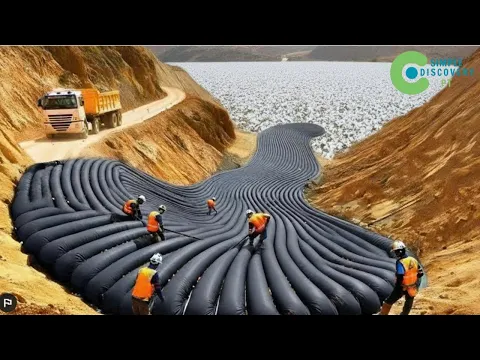

It is in this context that the Southeastern Anatolia Project (GAP) emerges, the largest water project ever implemented by Turkey in a single region. Managed by the State Hydraulic Works, the project covers more than 75,000 square kilometers, equivalent to almost 10% of Turkish territory, and directly affects between 8 and 9 million people. The estimated total investment is around 32 billion dollars.
The core of the GAP consists of 14 large dams built on the Tigris and Euphrates rivers, interconnected by thousands of kilometers of irrigation canals. The decisive test occurred with the Atatürk Dam on the Euphrates River, completed in 1992. Standing at 169 meters tall, 1,819 meters long, and with a reservoir capable of storing about 49.2 km³ of water, the plant has an installed capacity of 2,400 MW and produces an average of 8,900 GWh of electricity per year.
Thanks to this system, southeastern Anatolia no longer depends on irregular rainfall and has stable irrigation throughout the year. This change has completely transformed the local agricultural structure. Traditional drought-resistant crops have given way to high-value economic crops, especially cotton.
Agricultural studies indicate that it takes between 7,000 and 10,000 liters of water to produce just 1 kg of raw cotton. Before the GAP, regional production did not exceed 150,000 tons per year. In less than a decade, this number almost tripled, reaching about 400,000 tons in 2001. Today, southeastern Anatolia accounts for almost 60% of all cotton produced in Turkey, much of which is destined for export.
How the Ilisu Dam Transformed Scarcity into Humanitarian Crisis in Iraq
The turning point occurred with the construction of the Ilisu Dam, located directly on the Tigris River. Unlike Atatürk, Ilisu blocks the main source of water for Iraq. The project cost about 1.7 billion dollars and faced intense international opposition, with the withdrawal of European financing between 2000 and 2009 after reports highlighted severe environmental, social, and cultural impacts.
Nevertheless, Turkey decided to finance the project with its own resources. Construction began in 2006, suffered an armed attack in 2014, but was never interrupted. In 2018, the dam was officially completed, standing 135 meters tall, 1,829 meters long, and with a reservoir of approximately 10.22 km³ of water.
Without a legally binding international treaty for the allocation of the waters of the Tigris and Euphrates, Turkey, being upstream, now holds a decisive advantage. Ankara classifies the rivers as transboundary, rather than international, which eliminates the legal obligation to guarantee minimum flows to Iraq.
When the Ilisu reservoir began to fill, Iraqi hydrological stations recorded that, during the dry season, the Tigris River began to supply only 30% to 40% of its historical average flow in various regions. Provinces such as Basra, Dhi Qar, and Maysan faced a collapse in supply. The salinity of the water exceeded safe levels, rendering it unsuitable for consumption and even direct contact.
Between 2018 and 2022, more than 100,000 people were hospitalized in Basra due to water-related illnesses such as acute diarrhea, salt poisoning, and dermatological problems. Meanwhile, agriculture collapsed. About one-third of the Iraqi population depends directly or indirectly on the agricultural sector, which lost tens of thousands of irrigable hectares.
Furthermore, the upstream dams retain between 70% and 90% of the sediments that historically fertilized the Iraqi plains. Without these sediments, the soil quickly impoverishes, salinization advances, and saltwater from the Persian Gulf begins to penetrate further upstream. The most visible impact occurs in the Mesopotamian marshes, where entire ecosystems have collapsed and traditional populations, such as the Ma’dan people, have been forced to migrate.
In the end, the Tigris River crisis exposes a central dilemma of the 21st century: when the right to a country’s development clashes with the right to survival of another, water ceases to be merely a natural resource and becomes a strategic variable of security, stability, and global justice.
Source: Simple Discovery 24 points




Be the first to react!