






 Portuguese
  Spanish


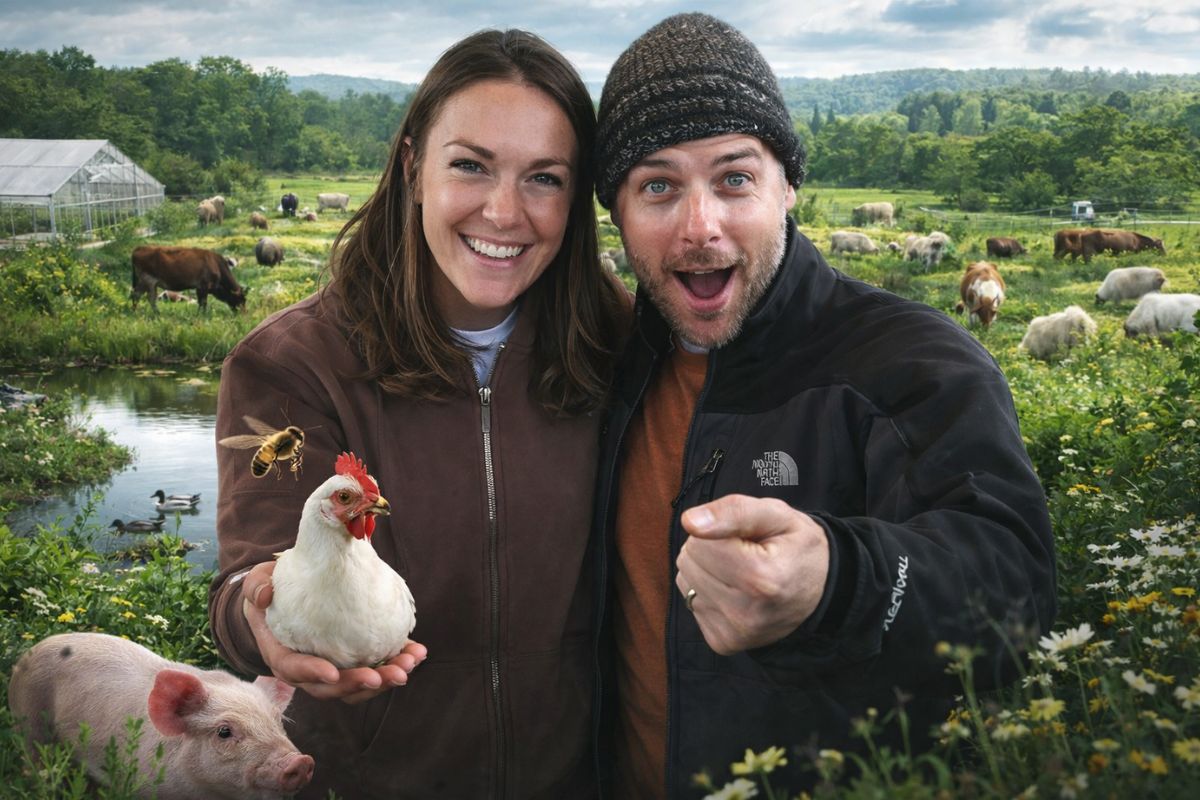


John and Molly Chester Left Urban Life and Bought a Degraded Plot of Land in Ventura County, California; By Applying Biomimicry, Soil Health, and Animal Management, Apricot Lane Farm Became a Productive Microecosystem, Restored a Lake and Pollinators, Reduced Inputs, and Inspired University Research Without Chemicals, Feeding the Community
In the beginning, the farm was practically a synonym for frustration: 80 hectares of degraded land, little apparent life, and a promise that seemed too great for two former urbanites who decided to restart in the countryside, at the foot of the mountains in Ventura County, California.
What changed the course of this story was the choice for regenerative agriculture, guided by biomimicry, and a daily commitment to decisions that favor the functioning of the ecosystem, even when it requires time, adjustments, and the humility to admit that not everything turns out perfectly.
From the City to the Real Risk of a Farm on Degraded Land

John Chester worked as a documentary filmmaker and Molly as a private chef when they left a small apartment in Los Angeles to pursue a goal that, in practice, starts much less romantically than it seems: to make a farm viable where the soil no longer responded as it should. The “how much” is straightforward and helps to understand the scale: they bought 80 hectares in a rural area of Ventura County.
-
Brazilian Farmer Invents Low-Cost Tractor Using Motorcycle Parts, Efficiently Working 2 Acres on 1 Liter of Diesel

-
Regenerative Farmers Use Keyline Plow to Improve Pasture Hydration, Storing 1 Gallon of Water Every 30 Centimeters

-
Bicolor Pumpkin Resembling Hand-Painted Art Discovered by Brazilian Researchers in the Capital Due to “Spontaneous Mutation”

-
In China, a 26-story building produces 1.2 million pigs annually, revolutionizing livestock farming with tube feeding and AI surveillance.

The “why” also avoids easy slogans. The decision was to build a farm that would feed the local community with tasty and nutrient-rich food, without relying on an increasingly larger routine of external inputs.
The ambition was not to produce despite nature, but to produce with nature, even if it meant living with uncertainties and new beginnings.
Biomimicry as a Compass: When the Farm Tries to Imitate Nature

At Apricot Lane Farms, biomimicry does not appear as a pretty word but as a decision-making method. The idea is to observe ancient and tested patterns from the natural world and apply this logic to modern agricultural problems, especially those that, in conventional systems, tend to be “resolved” with chemicals or medications.
This shifts the focus from combat to balance. Instead of reacting to symptoms, they describe an effort to understand interconnected relationships between plants, insects, and animals and, from there, replenish absent biological and native components in the ecosystem. The core of the strategy is to reduce the need for external interventions as the farm matures and stabilizes biologically.
Soil Health as the Invisible Infrastructure of the Farm
Soil health becomes the starting point for almost everything else because, in this model, healthy soil supports plants, animals, and people.
Instead of treating the soil as passive support, the farm treats it as a living system that needs coverage, diversity, and food for microorganisms.
The practices described include compost tea, manure composting, encouraging beneficial plants and insects, and diverse ground cover with grasses, legumes, and other plants that help keep the soil covered.
They associate this permanently covered soil with two desired effects: more balance in the ecosystem and the possibility of sequestering carbon from the atmosphere and returning it to the ground, storing carbon in the long term. The logic is simple and demanding: without living soil, the rest becomes patchwork.
Vermicompost and Microbes: Nutrition That Starts Before the Plant
For plants to rely more on the soil and less on external inputs, the farm needs an underground environment full of microbes that transform organic matter into nutrients.
This is where the so-called Fertility Center comes in, designed to accelerate biological processes that, in nature, happen all the time, but without the “rush” of harvests.
The described process involves cow manure coming from the pasture, placed in aerated containers to reduce pathogens and start decomposition.
Then, this material is mixed with juice scraps and offered to more than 500,000 worms in a 12-meter-long container. As they process the material, bacterial diversity increases, generating vermicompost.
This product is used in solid form on the farm and can also enter a compost tea incinerator to further increase the concentration of microorganisms before being irrigated into the soil. Here, productivity does not come from “force,” it comes from a well-fed biological chain.
Animals in Motion: Intensively Managed Grazing to Avoid Overgrazing

The management of the pasture follows a logic that tries to reproduce predator-prey relationships observed in nature: animals move, they do not stay still.
On the farm, this translates into controlled intensive grazing and rotational grazing, with frequent shifts to prevent an area from being “grazed” too much and to allow the pasture to rest and recover.

The design of the management includes different species following one another, such as sheep, cows, and chickens, using their own behavior to fertilize and stimulate the soil.
They describe a practical rule that guides this progress: the animals consume one-third of the grass, trample one-third, and leave one-third behind.
The trampling becomes food for worms and microbes, slowly transforming the biomass into humus and, over time, reinforcing the topsoil layer. The farm begins to “harvest” fertility, not just food.
Animal Health Without Chemical Shortcuts: Prevention, Routine, and Less Stress
When it comes to animal husbandry, the stated goal is to treat animals with humanity and respect, keeping them outdoors, with a diet based on grass, leaves, and herbs, and with calm and frequent movement to reduce stress.
They also mention protection against predators with guard dogs and a management routine that avoids confinement and overcrowding.
In preventive care, the farm states that it does not use antibiotics, chemical dewormers, or growth hormones, relying on measures such as adequate pasture rest, copper balance in the diet, free access to diatomaceous earth, and small amounts of fermented apple cider vinegar in the water.
They also mention specific breeds that they develop and strengthen over time, such as Dorper sheep, Scottish Highland cattle, and Red Wattle pigs. The proposal is to reduce risk early to avoid paying the price later.
Lake, Native Plants, and Pollinators: When the Farm Becomes a Refuge for Biodiversity

Among the most visible signs of recovery, the lake has become a symbol because it brings together various layers of the system at once: water, vegetation, insects, birds, and nutrient balance.
The project is described as the largest private effort to restore native species in Ventura County, with native trees, grasses, and herbs surrounding the area to create habitat.
The farm uses floating islands developed with plants and submerged roots to absorb nitrogen and phosphorus from the water, using these nutrients as food and helping to enhance the aquatic environment. Over time, various birds began to frequent the site, including night herons, egrets, gallinules, and mallards.
They also plant hundreds of native milkweed species around the lake to feed monarch butterflies, treated as an indicator of a healthy ecosystem. When water and life return, the farm ceases to be just a productive area and becomes a functional landscape.
Rescued Bees and Chemical-Free Food: Production that Depends on Balance
Bees play a practical and symbolic role. Instead of introducing “on-demand” hives, the farm receives rescued hives that would otherwise be destroyed; since 2013, rescue beekeepers relocate wild native hives to the site. There, the management follows the same principle applied to the rest: no use of chemicals or conventional medications, collecting part of the honey and pollen from over 30 hives.
On the production side, the farm works with a high diversity of biodynamic-certified fruits, citing more than 75 varieties.
From them, they develop products such as jams, fruit butters, fruit leathers, and hot sauces, reinforcing the idea of “traditional” food linked to the territory and the ecosystem that supports the harvest. The promise is not perfection, but ecological consistency over time.
What This Farm Teaches When Trends Fade and Only the Method Remains
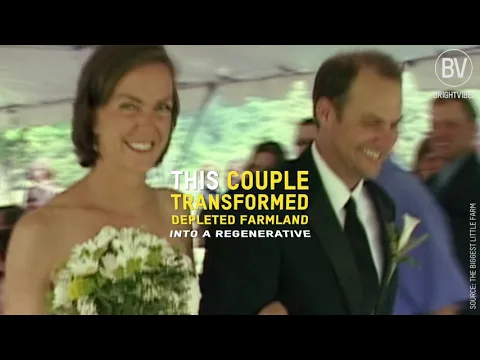

The case draws attention because it answers, without stage discourse, the questions that many people ask upon hearing “real sustainable agriculture”: who did it, where it was, how much time it took, why persist, and what really changes.
Who did it were John and Molly Chester; where it was in Ventura County, California; how much area, 80 hectares; how much time, 8 years of building and adjusting a microecosystem, with almost four years until obtaining organic and biodynamic certifications for orchards, gardens, and pastures.
And the “why” appears less as a ready-made phrase and more as a logical consequence: by seeking to reduce external inputs and rely more on biological processes, the farm tries to gain resilience, quality, and ecological predictability, while accepting that the path involves failures, corrections, and continuous learning. In the end, the differential is not a trick, but a whole system working together.
If you had to choose one first step to transform a farm, or even a backyard, into a more lively environment, what would it be: caring for the soil, diversifying plants, rethinking animal management, or restoring water and pollinators? And what do you think is the most difficult to sustain in practice once the initial enthusiasm fades: time, cost, knowledge, or patience?




Very nice 👌 this is the best way of live
Sou médico formado EVUFMG. Trabalho no meio rural desde 1983 quando me formei. Hoje estou aposentado. O caminho do planeta é o da sustentabilidade, simples assim !!!!!
O mais difícil a meu ver, é o descredito geral e impossibilidade de apoios externos.