Portuguese
  Spanish




With a probability greater than 80% of a moderate to strong El Niño, Minas Gerais monitors risks for rains, 2026/27 harvest, energy, industry, and commerce in the second semester
The possible intensification of El Niño in the second semester has raised an alert in Minas Gerais due to the risk of delayed rains, increased temperatures, and impacts on the 2026/27 harvest, energy, and industry. A technical note from Cemaden indicates more than 80% probability of a moderate to strong event.

El Niño may delay rains and increase risk for the 2026/27 harvest
Rural producers, industries, and technicians in Minas Gerais are already closely monitoring the possibility of El Niño intensifying in the second semester.
There is still uncertainty about the strength of the phenomenon, but specialists and representatives of the productive sector assess that the climate risk has increased.
-
With Nearly 60% Desert, Israel Desalinates Seawater and Recycles 90% of Wastewater to Build a Billion-Dollar Agricultural Powerhouse in Dates and Cotton

-
74-Hour Barbecue in Brazil Sets World Record: 3.4 Tons of Meat, 10,500 Meals Served

-
Man Takes on Swarms in Singapore, Saves 6 Million Bees and Encourages Locals to Choose Conservation Over Pesticides
-
In Brazil’s Arid Northeast, Vineyards Now Produce Wine Grapes Year-Round, Accounting for 98% of the Country’s Grape Exports


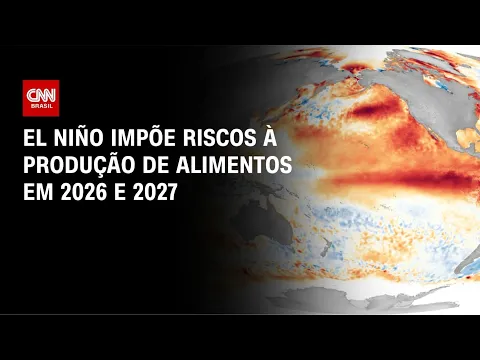
The technical note released by the National Center for Monitoring and Alerts of Natural Disasters, Cemaden, indicates more than 80% probability of a moderate to strong El Niño occurring in the second semester of this year. The scenario is associated with ocean warming of around 1.5ºC.
If confirmed, the phenomenon could directly affect the development of the 2026/27 harvest in Minas Gerais. The concern involves both the field and industrial sectors linked to energy use, logistics, and functioning of production chains.
The professor of Agrometeorology at the Federal University of Lavras, Felipe Schwerz, states that climate models already show sufficient ocean warming to characterize the phenomenon. Projections indicate a trend of moderate to strong intensity between September and October.
Despite this, Schwerz cautions that it is still not possible to predict an extreme scenario. The main alert for Minas involves the combination of higher temperatures, reduced and irregular rains, and a possible delay in the start of the rainy season.
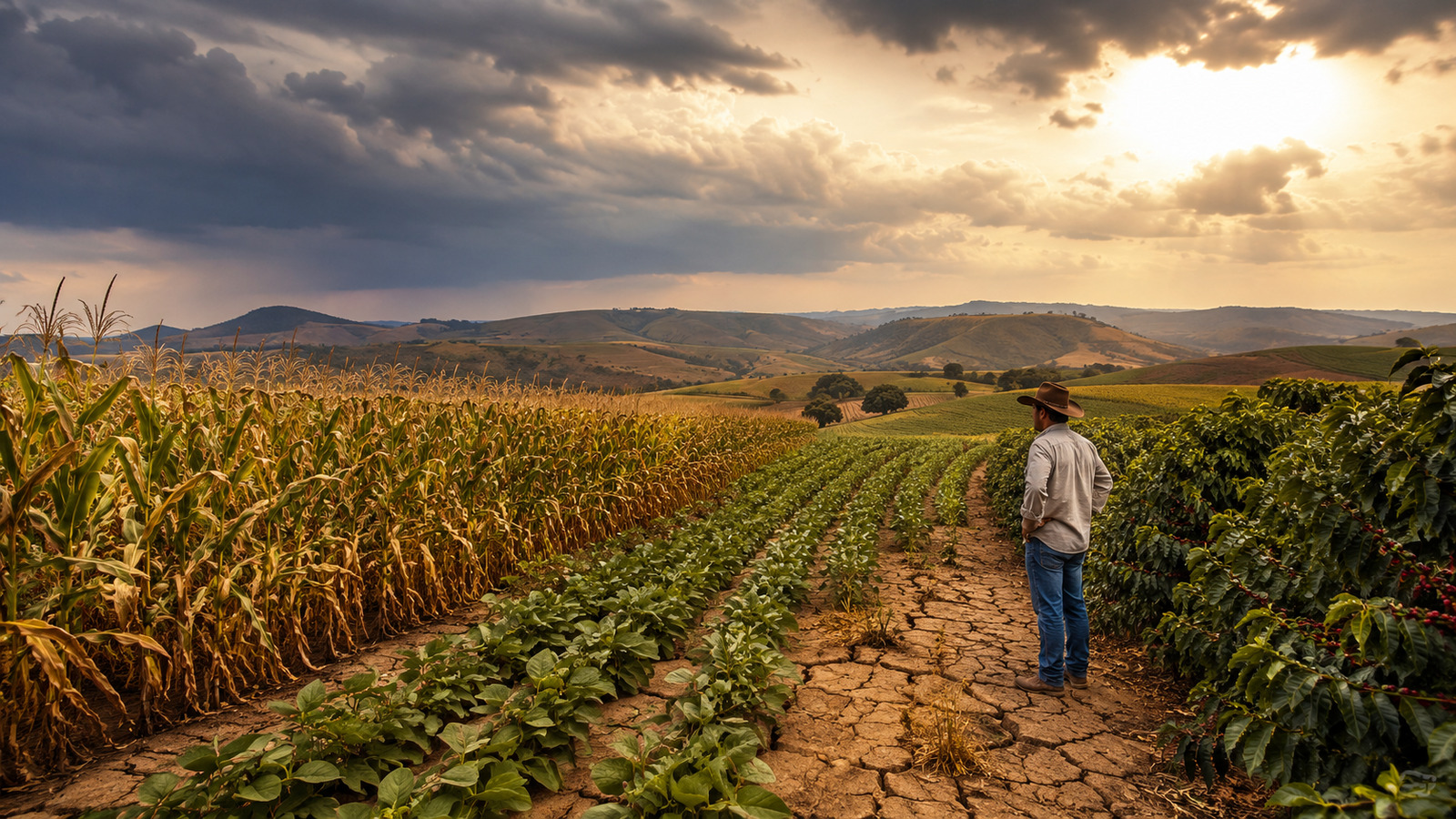
Irregularity of rains worries corn, soy, beans, and coffee
In the field, El Niño may require more cautious planning. Schwerz explains that the phenomenon tends to weaken the South Atlantic Convergence Zone, responsible for a large part of the rains in the Southeast, which increases the risk of prolonged dry spells.
This scenario may lead producers to review the planting calendar, choose more resistant cultivars, and reduce investments considered riskier. According to the professor, this is a year of higher climate risk, requiring moderate investments.
The assessment is shared by the Agribusiness Manager of the Faemg Senar System, Rafael Rocha. According to him, the phenomenon is already treated as practically certain, and the impact on the 2026/2027 harvest will depend on the extent of El Niño.
Rocha states that irregular rainfall is likely to delay planting, reduce the second crop window, and compromise crops such as corn, soybeans, and beans. Coffee is also a concern, especially in sensitive phases like flowering and grain filling.
The warning comes at a time already considered challenging for the sector. According to Rocha, producers face high production costs, rising fertilizer prices, more restricted credit, and falling commodity prices.
Heat may pressure energy and affect industrial production
The effects of El Niño in Minas Gerais are not limited to agribusiness. In the industry, the main point of attention is the energy sector, especially due to the increase in temperature and its effects on consumption.
The consultant from the Federation of Industries of the State of Minas Gerais, Fiemg, Sergio Pataca, explains that the phenomenon alters the water regime throughout the country. It may even benefit the reservoirs in the South, which operate at low levels.
At the same time, the increase in heat tends to raise energy consumption in the Southeast. According to Pataca, this imbalance may pressure the electrical system, even in a scenario of improvement in the reservoirs.
Extreme events, such as intense rains or prolonged droughts, can also have direct impacts on the industrial production of Minas Gerais. The consultant cites stoppages already seen in recent episodes in Ubá and Juiz de Fora, in the Zona da Mata.
Commerce, logistics, and rural insurance come into focus
Commerce may also feel the effects of the phenomenon. The increase in heat tends to boost the demand for fans and air conditioners, while extreme weather events can affect supply, logistics, consumption, and the availability of products and labor.
Pataca states that there is already an increase in energy consumption due to rising temperatures. He also highlights the attention to the production chain broadly, not just the electrical system.
In light of the climate risk, protection mechanisms have returned to the debate. During the Congress of the Brazilian Association of Corn Producers, held in Brasília last week, senator and former Minister of Agriculture and Livestock, Tereza Cristina, advocated for the expansion of rural insurance.
For her, the current model is insufficient given the increasing frequency of extreme weather events. The proposal is to advance towards more comprehensive insurance, including climate losses, price, and income variations.
The former minister also advocated for a guarantee fund to provide more security for rural credit and reduce dependence on government aid during times of crisis. According to her, the mechanism already exists in other modalities and needs to advance in agriculture.
This article was prepared based on information from Cemaden, Federal University of Lavras, Faemg Senar System, Fiemg, and statements by Senator Tereza Cristina, with data, numbers, and statements preserved according to the consulted material.