






 Portuguese
  Spanish


Airport Promised to Be a Regional Hub, But Today It Lives a Scenario of Abandonment. Moving Only 6.52% of Its Capacity, the Terminal Suffers from the Impact of Petrobras’ Decision to Centralize Its Operations in Another Location.
It’s hard to believe that an airport capable of handling up to 100 thousand passengers per year is operating almost like a desert.
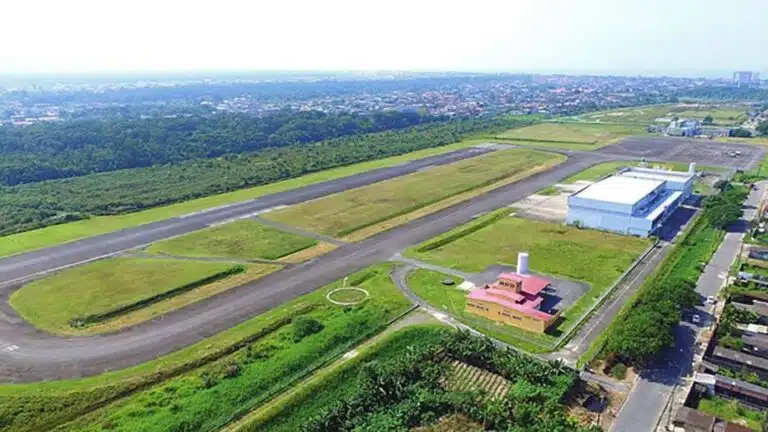
Located in Itanhaém, on the São Paulo coast, Antônio Ribeiro Nogueira Júnior Airport promised to be a driver of local development, but today it is marked by silence and neglect.
This scenario of stagnation is the result of a strategic decision by Petrobras which, according to the Diário do Litoral, changed the course of operations and the economy of the region.
-
California Opens Floodgates to Restore Wetlands and Create Natural Flood Protection in the Central Valley

-
Clarification and Right of Reply Notice

-
US Mayor Goes Undercover as Homeless for a Week to Understand Rising Homelessness, Sparking Debate in His City
-
Teen from Brazil Turns School Snack Sales into Million-Dollar Confectionery Business Projected to Earn Nearly $1.9 Million in 2024


In the past, the Itanhaém airport was a crucial point for connections and important flights, especially for Petrobras’ operations on the platforms in the Santos Basin.
However, in recent years, the sharp decline in passenger and cargo flow has turned the terminal into an underutilized structure, also affecting local businesses and tourism.
Petrobras’ Decision Empties the Airport
The Itanhaém Airport has experienced days of great movement.
During the 2000s, the runway, located along the Padre Manoel da Nóbrega Highway, recorded impressive numbers: over 22 thousand landings and takeoffs annually boosted the city’s economy.
Businesses and tourists circulated through the terminal, generating revenue for local shops and the hotel sector.
The peak of activity, however, was interrupted by Petrobras’ strategic decision to transfer its operations to Rio de Janeiro.
According to the Diário do Litoral, this decision had a direct impact on the city’s economy, resulting in a drastic drop in airport traffic and commercial activities that depended on the presence of employees and tourists.
Data from 2023 indicate a total of only 1,436 passengers recorded — a stark contrast to the terminal’s potential.
Deep Economic Impact on the Region
Petrobras’ exit generated effects that extend far beyond the airport, affecting the entire Baixada Santista.
According to the Secretary-General of the National Federation of Oil Workers, Adaedson Costa, the change dramatically affected the hotel network, commerce, and local services.
Many of the jobs the city gained with the development of the airport are now just a memory of the past.
Adaedson highlights that, prior to this restructuring, Petrobras planned to expand its operations with the construction of new platforms in the Santos Basin.
“The number of arrivals and departures at Itanhaém Airport would have quadrupled,” claims Costa.
However, since 2016, when Petrobras moved its operations to airports in Rio de Janeiro, the Itanhaém terminal has witnessed a gradual decline, going from busy to practically empty.
Investments That Did Not Yield Returns
The decline of the airport becomes even more striking when we observe the high investment made in its infrastructure.
According to the Diário do Litoral, in the early 2010s, Petrobras allocated R$ 14 million for safety and boarding improvements at the airport, while the São Paulo State Government invested an additional R$ 9 million in the modernization of the terminal.
These funds were allocated with the expectation that movement and the number of operations would only grow.
However, with Petrobras’ exit and the centralization of operations in Rio de Janeiro, all this modern infrastructure has remained practically idle.
Today, the terminal operates with only 6.52% of its capacity and, between January and August 2024, recorded only 1,091 passengers, numbers that contrast with the potential of 100 thousand passengers annually.
Uncertain Future and Possible Recovery?
Although Petrobras claims to be continuously assessing the need for flight bases for the safety of its workers, nothing concrete has been announced about a possible return of operations in Itanhaém.
In a statement, the state-owned company revealed it continues to reassess its bases to ensure the well-being and safety of its employees, but without specific plans to reintegrate the terminal into its logistics.
While the airport operates almost symbolically, the existing structure could accommodate even large aircraft, such as the Boeing 737.
Today, movement to the Santos Basin mainly occurs through airports such as Jacarepaguá, Maricá, and Cabo Frio in Rio de Janeiro, which absorb up to 26 daily helicopter operations to the oil platforms.
Logistical Justifications for the Transfer
Petrobras’ decision to concentrate its operations in Rio is defended by the company as a strategic choice: the state of Rio de Janeiro is closer to the platforms and has infrastructure more suited to its needs.
However, residents and merchants of Itanhaém question whether this change really optimizes the company’s operations, given that many workers need to travel between states, increasing costs and travel time.
With a modernized airport and practically idle, the lingering question is: how long will Itanhaém withstand without a constant flow of operations?
Will Petrobras reverse its decision, or will Antônio Ribeiro Nogueira Júnior Airport become a “white elephant” in the landscape of the São Paulo coast?





Como disse,a Danielle da Globe ” o pobre vai voltar a comer picanha ,o pobre gosta de se vestir bem e o pobre vai Voltar a andar de AVIÃO
Há um ditado que diz “Quem tem um, não tem nenhum”. Esse ditado vale para número de clientes. Se você abrir um negócio em função de apenas um cliente, se você perder esse cliente, por qualquer motivo que seja, o seu negócio já era.
As plataformas ficam mais perto do Rio de Janeiro, não compensa economicamente utilizar o aeroporto de Itanhaem. No máximo cogitar em usar algum aeródromo no litoral norte paulista (ex. Ubatuba), ou sul fluminense (ex. Angra dos Reis), mas em ambos, assim como em Itanhaem, a logística de pessoas é bem pior que no Rio de Janeiro.