






 Portuguese
  Spanish


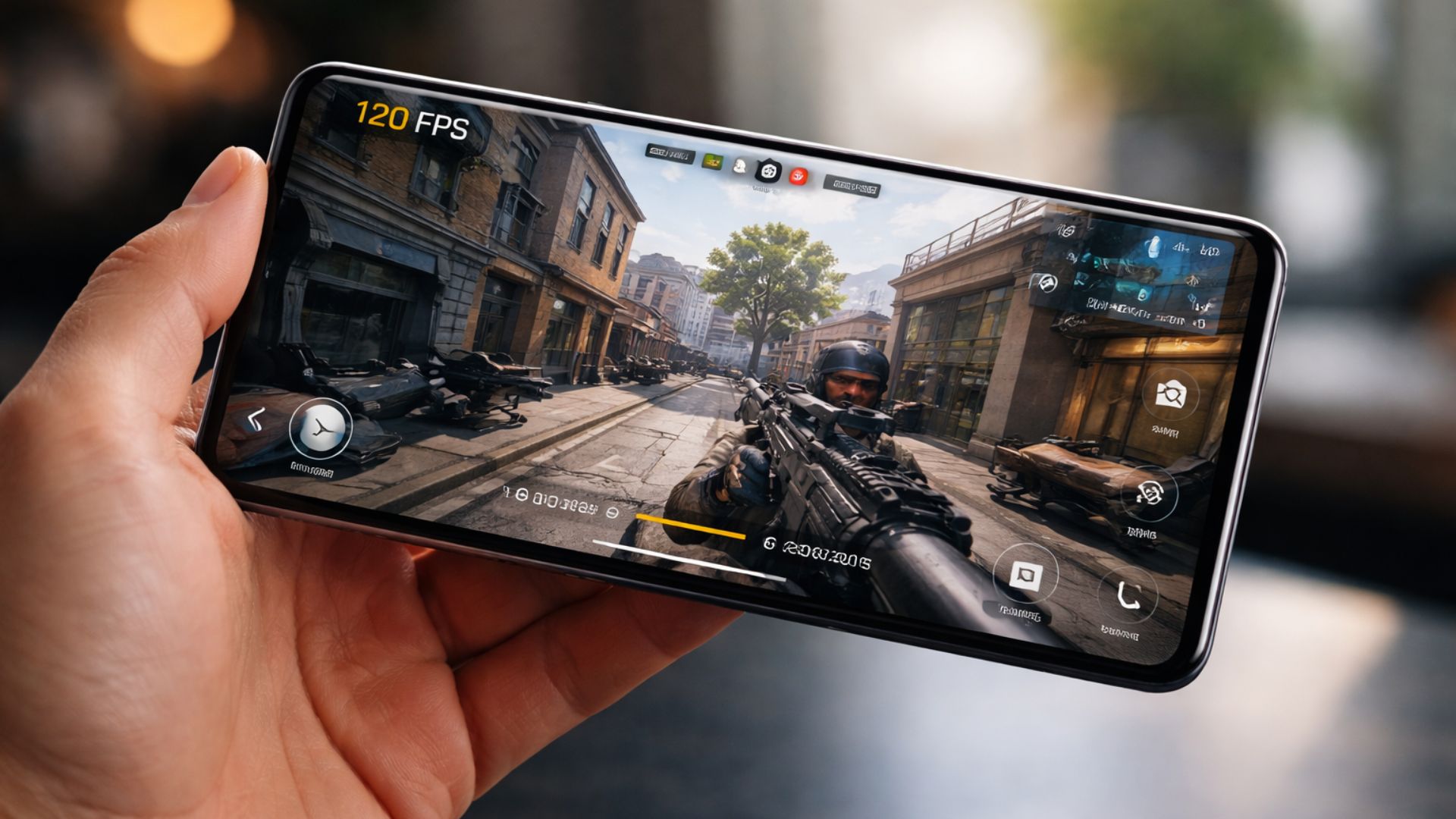


Giant Battery, High Refresh Rate Display, and Top-Tier Chip Put the OnePlus 15 on the Gamer Radar, Promising Sustained Smoothness in Long Gaming Sessions, Focus on 120 FPS, Aggressive Touch Response, and Fast Charging in a Premium Package for 2025.
OnePlus unveiled the OnePlus 15 in 2025 as its new flagship explicitly focused on sustained gaming performance.
The model combines a 7,300 mAh battery, a 6.78-inch LTPO display with dynamic refresh rates up to 165 Hz, and the Snapdragon 8 Elite Gen 5 chipset, a combination that the manufacturer associates with an “always 120 FPS” experience in compatible games and longer sessions with less performance fluctuation.
The device was first launched in China on October 27, 2025, and availability in other markets was announced in the following weeks, with communication aimed at the gamer audience and intensive daily use.
-
China Develops Custom 140-Ton Electric Mining Truck with 770 kWh Swappable Battery, Deploys 290 Units in Xinjiang’s Largest Zinc Mine

-
Meta to Launch Arena, a New Prediction App Targeting 3.56 Billion Users, Competing with Polymarket and Kalshi

-
Scientist Challenges Famous Human Evolution Theory, Argues Homo Sapiens Evolved Gradually Over Thousands of Years
-
15-Year-Old American Builds Ocean Generator with PVC Pipe and 3D-Printed Propeller for $12, Wins National Prize, Presents at White House, and Makes Forbes 30 Under 30 List




7,300 mAh Battery and Silicon NanoStack Technology
The most striking highlight is in the battery. The official product page describes a 7,300 mAh cell based on silicon technology, under the commercial name Silicon NanoStack, framing the figure as part of a recent trend of batteries over 7,000 mAh in flagships.
Practically speaking, the proposition is to offer more time away from the outlet without relying on aggressive brightness, refresh rate, or performance reductions when the device is placed under continuous load, as occurs in competitive gaming, screen recording, and combined use of network, audio, and vibration.

Cryo Velocity Cooling and Sustained Performance
Along the same lines, OnePlus aims to solve the other half of the problem that often appears in powerful smartphones: heat and performance loss over time.
In the official material, the company introduces a system called Cryo Velocity Cooling, featuring insulation layers and a vapor chamber described as central to thermal dissipation.
The promise is to keep the surface more comfortable to the touch and reduce the chances of sharp performance drops during extended gaming sessions.
As this type of thermal control depends on variables such as environment, brightness, connectivity, and specific game, what is publicly confirmed is the positioning of the product and the existence of the system described by the manufacturer, rather than universal results for every scenario.
LTPO Display of 165 Hz and Smoothness Experience
The display has also been emphasized as a key piece of the narrative.
According to OnePlus, the OnePlus 15 uses a 6.78-inch LTPO panel with 1.5K resolution and a dynamic refresh rate of up to 165 Hz.
The combination aims at two objectives simultaneously: enhancing the feeling of smoothness when content can deliver more frames, and, in theory, adapting the refresh rate to reduce consumption when 165 Hz is unnecessary.
In competitive gaming, where the player seeks quick responses and motion reading, the brand tries to link the higher rate to the perception of advantage, especially in targeting and rapid camera transitions.
Touch Response and Dedicated 3200 Hz Chip
In addition to the refresh rate, OnePlus promoted a specific component for touch.
In the promotional material, the company mentions a “touch response chip” with instant sampling at 3200 Hz, an argument used to reinforce precision and consistency of commands during high-intensity moments.
In gaming-focused smartphones, this type of specification often appears as a differentiator for the feeling of control, although the final experience depends on the game, system optimization, and the user’s own sensitivity profile.
Snapdragon 8 Elite Gen 5, Memory, and OP Gaming Core

The processor is the third pillar of the proposition.
OnePlus claims that the OnePlus 15 is equipped with the Snapdragon 8 Elite Gen 5 and mentions, along with the chipset, a combination of LPDDR5X memory and UFS 4.1 storage, specifications that typically appear in premium devices as they favor quick app launches, asset loading, and stability in multitasking.
In the official text, the brand also introduces an optimization layer called “OP Gaming Core”, described as a set of chip and system-level adjustments to keep frames more stable and reduce energy waste during heavy scenes.
Promise of “Always 120 FPS” and Compatible Games
The promise that gives meaning to the title, however, is to “hold 120 FPS.”
The official material uses the expression “always-on 120 FPS” and cites compatible games, such as Mobile Legends: Bang Bang, to exemplify the performance target.
The publicly verifiable point is that the company positions the device for this objective and ties the narrative to hardware and software features aimed at stability.
Actual performance at 120 frames per second varies depending on game support, selected graphical mode, app updates, and temperature conditions, factors that make a difference even in flagship models.
Call of Duty: Mobile World Championship and Competitive Showcase
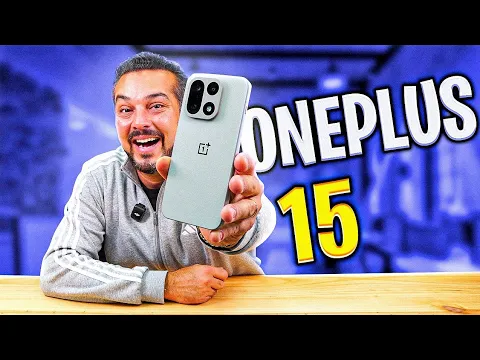

The communication strategy also includes an association with the competitive scene.
On the product page, OnePlus states that the OnePlus 15 was “officially endorsed” and presented as the “choice” for the finals of the 2025 Call of Duty: Mobile World Championship, treating the device as a product with a seal and vocation for eSports.
What can be stated with certainty from this public source is the claim itself and the use of the championship as a marketing showcase to credential the device among the gamer audience.
120W Wired Charging and 50W Wireless in Daily Use
On charging, OnePlus claims to offer 120W wired (SUPERVOOC) and 50W wireless (AIRVOOC), in addition to estimated times for full and partial charging.
In products of this segment, these figures are often used as a convenience argument: not only lasting longer but recovering energy quickly before a gaming session, a trip, or a workday.
As always, the effective power depends on a compatible charger and usage conditions, but the announced capabilities are detailed in the official material.
International Coverage, Cameras, and Availability
Other details of the device were disclosed by technology outlets covering the launch in China.

International coverage noted that the OnePlus 15 arrived in the Chinese market with a set of three rear cameras of 50 megapixels and IP69K durability rating, in addition to 120W charging and a revamped design in the camera module.
In Brazil, local publications highlighted that the model had no official sales in Brazilian stores at the time of announcement and brought references of price and availability in external markets, reinforcing that the device became a topic of discussion due to specifications and proposal, even without direct presence in national retail.
Gamer Audience in Brazil and What the OnePlus 15 Brings to Discussion
Thus, the OnePlus 15 fits into a small group of smartphones that, in 2025, tried to transform typical “enthusiast” specifications into a clear usage narrative: competitive gaming focused on stability, fast display, aggressive touch response, above-average battery, and a cooling package designed to sustain long sessions.
In a scenario where Brazil has a large mobile gamer audience, the question that tends to divide opinions is simple: would you trade a 2K display at 120 Hz for an LTPO at 165 Hz and a 7,300 mAh battery if the central promise was to maintain 120 FPS for longer?





