





 Portuguese
  English
  Spanish
  4 min of reading
  0 comments


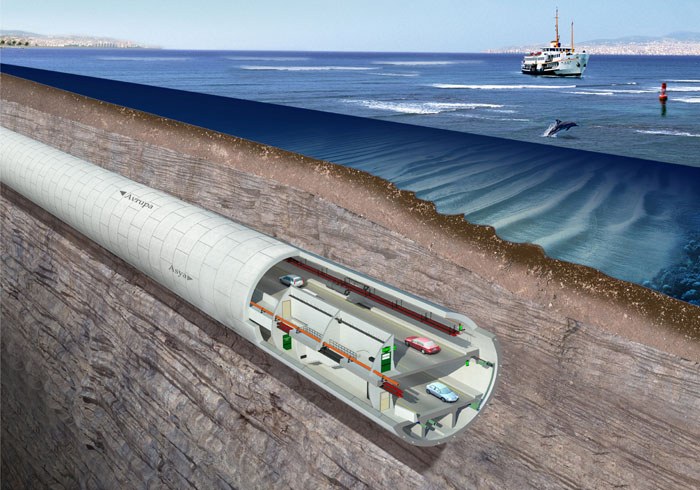
India has approved the construction of the country’s first submerged road-rail tunnel, a nearly 16-kilometer project dug under the bed of the Brahmaputra River in the state of Assam, which will carry cars and trains simultaneously beneath one of Asia’s largest rivers, placing the country in a small club of nations capable of crossing a river underground.
The defining number of the agenda is that of the tunnel itself: about 15.8 kilometers of double tube excavated underwater, part of a larger corridor that spans over 30 kilometers connecting two sections of a federal highway. The approved investment exceeds 18 thousand crores of rupees, and the structure was designed to combine a vehicle lane and a railway line in the same underwater crossing.
The allure here is the spectacle of the work. Drilling under a river the size of the Brahmaputra, in a strategic border region battered by violent floods every year, is the kind of engineering challenge that separates countries that dream big from those that can execute.
How to dig a tunnel under a giant river
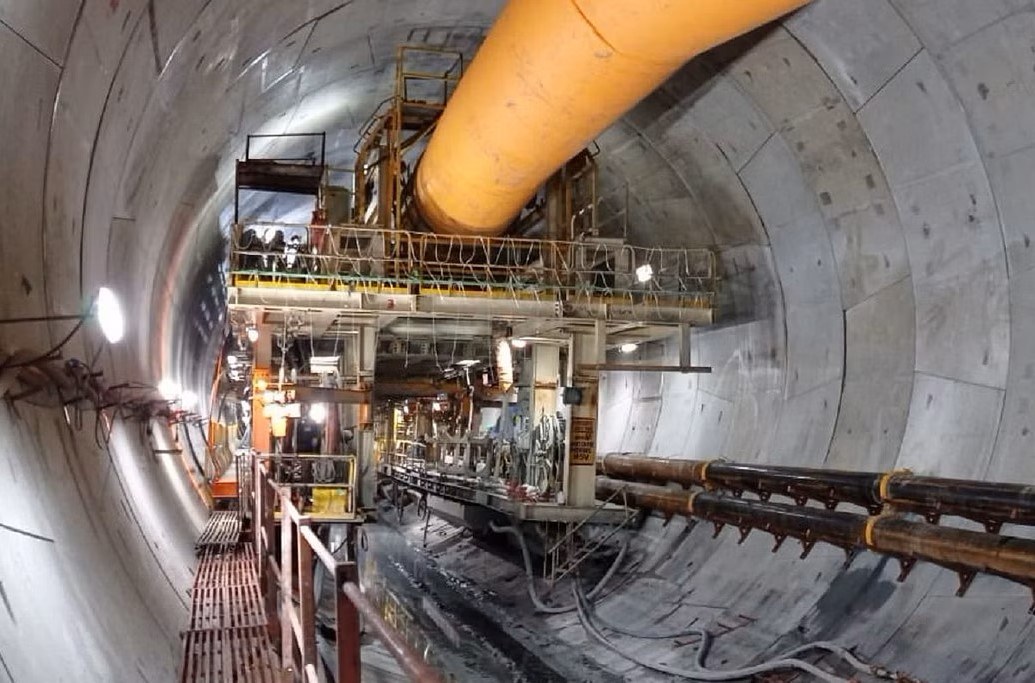
The image that comes to mind is that of divers, but the reality is more impressive and drier than that. Most of these tunnels are opened by a tunnel boring machine, a colossal cylindrical machine that slowly advances underground, with a rotating head that grinds rock and sediment while, right behind, it assembles the concrete rings that become the tunnel wall. The worker operates in dry conditions, dozens of meters below the riverbed, and the water always stays above.
-
A 90-ton steel ring erected in 57 days stands tall in a city in Santa Catarina, the R$ 50 million Ferris wheel that will reach 60 meters in height in Itapema.

-
The largest treated water reservoir in Latin America, made with double steel technology, is completed in Curitiba, receives an investment of R$ 40 million, and promises to strengthen the supply for 130,000 residents in five neighborhoods of the capital.

-
Goodbye rent could become a reality for families in Gaspar: the city in SC will build 43 affordable homes in three neighborhoods, invest R$ 5.7 million, and pave the way for those hoping to achieve homeownership with dignity.

-
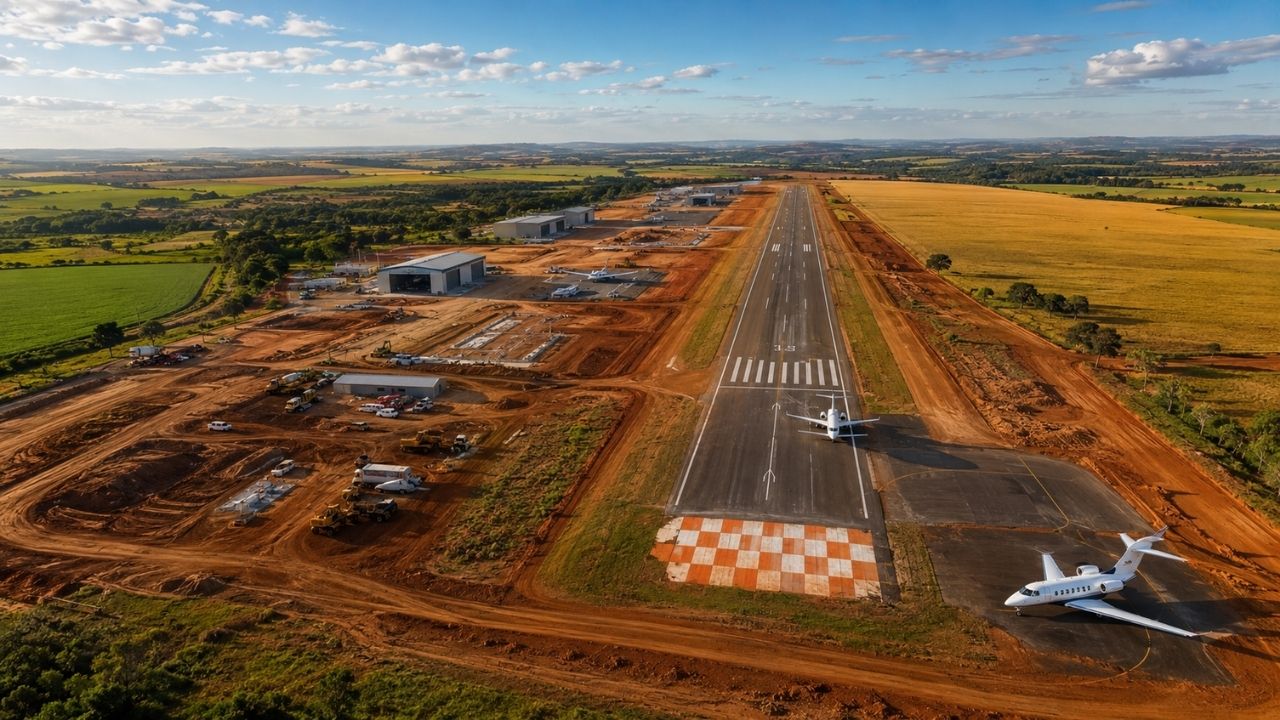
The largest private airport under construction in Brazil is progressing in Goiás with a 2 km certified runway, support for executive jets, and a promise to be operational in 2028, but the project reveals how agribusiness and luxury aviation are reshaping the country’s interior.



In the case of the Brahmaputra, the extra challenge is the terrain. The Assam region has waterlogged soil, is prone to earthquakes, and experiences seasonal flooding that changes the river’s course. Designing a tunnel that can withstand earthquakes and water pressure for decades requires precise calculations and expensive materials, which is precisely what makes this type of project costly and delayed worldwide.
For now, it’s important to clarify that this is an approved project, not a tunnel already under excavation. Between government approval and the tunnel boring machine biting the soil, there are usually years of licensing, bidding, and detailed engineering. The difference between the announcement and the completed work is where major projects stumble, and it’s worth following with realistic expectations.
Why India wants this crossing so much
The motivation has two aspects, one civil and one strategic. On the civil side, Assam is divided by the Brahmaputra, and crossing the river depends on congested bridges or slow ferries. A road-rail tunnel shortens distances, ensures passage even during floods, and economically integrates a region that has always been isolated from the rest of the country.
On the strategic side, northeastern India is a sensitive border, and moving troops and supplies quickly and safely in that area is invaluable for military planning. A crossing that works in any season, protected under the riverbed, has value far beyond civilian transit. It’s no coincidence that the project appears alongside other heavy infrastructure projects in the same region.
The cost of taming a river that changes course
The Brahmaputra is not just any river. It originates on the Tibetan plateau, crosses mountains and plains, and during the monsoon season, it swells to the point of changing its course, swallowing islands, and isolating entire cities. Building a fixed crossing under such a river means designing for the worst possible scenario: record floods, earthquakes, and decades of constant water pressure on the structure.
This is why the project costs what it does. You can’t skimp on concrete, sealing, and pumping systems when a failure could mean flooding a tunnel full of cars and trains. Each ring of the tube needs to be watertight, each joint must withstand seismic movement, and there must be an escape route and ventilation capable of removing smoke from a fire kilometers from the nearest entrance.
There is also the human challenge of undertaking such a project in a remote and contested region, with difficult logistics to bring heavy machinery and materials to the site. Tunnel boring machines aren’t bought on the corner, and operating them under a major river requires a specialized team that few countries can train. Add all this up, and it’s clear why so many similar projects die in the planning stages before the first excavation.
The exclusive club of submerged crossings
Few countries in the world operate tunnels that simultaneously carry trains and cars underwater. Combining both modes requires a large-diameter tube, reinforced ventilation, and redundant safety systems because evacuating people from a long tunnel under a river, in case of fire or flooding, is one of the most feared scenarios in civil engineering. Joining this club is a declaration of technical capability.
I imagine the magnitude of change for those living on the banks of the Brahmaputra, who currently organize their lives around the river’s floods, seeing the possibility of crossing this expanse of water in a few minutes, underneath, on any day of the year. It’s the kind of project that, when realized, redraws the mental map of an entire region.
The most difficult part remains, which is turning the approved project into real concrete and rail, on time and within budget, in unforgiving terrain. But India has taken the step that many countries delay for decades, the decision, and that already says a lot about the country’s infrastructure ambition.
Are giant projects like this worth the billion-dollar cost and years of waiting, or do you think the money would yield more in simpler solutions?




Be the first to react!