






 Portuguese
  Spanish
  6 min of reading
  1 comment


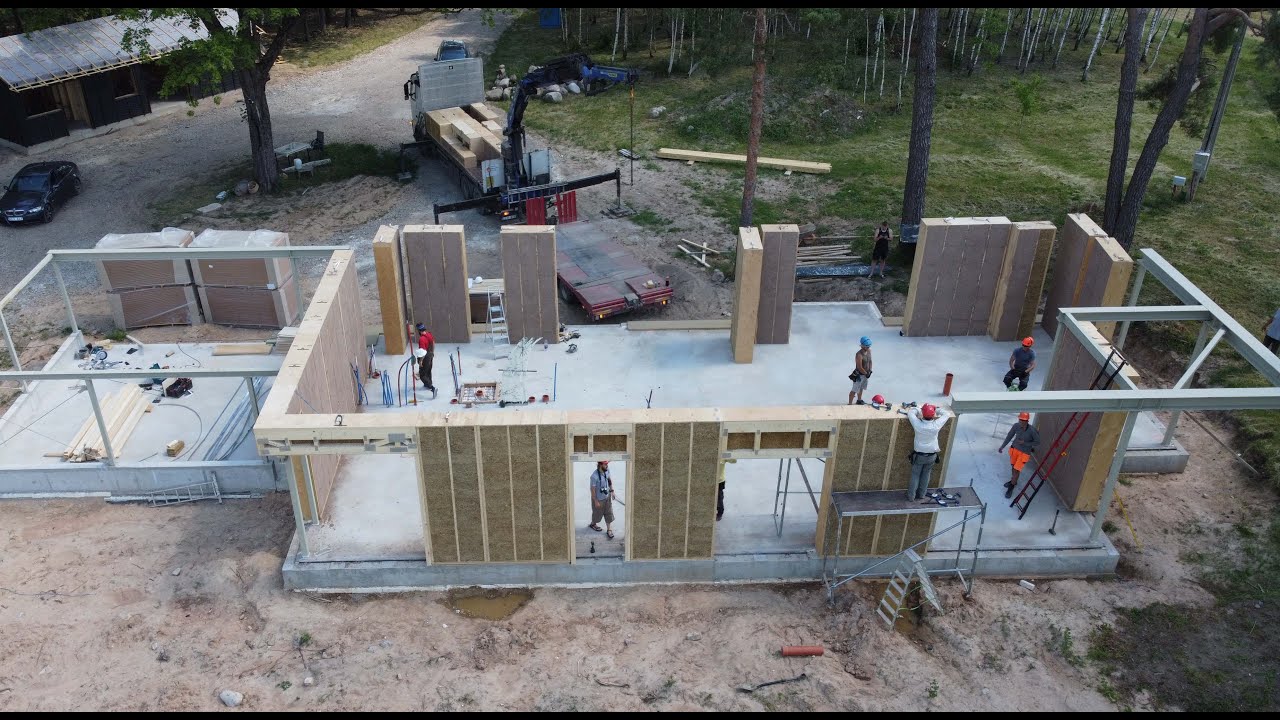

EcoCocon transforms straw and wood into prefabricated panels with high thermal efficiency, accelerates construction, reduces waste, and gains ground in European sustainable construction.
While the construction industry remains heavily reliant on concrete, ceramic blocks, and high-emission materials, a European technology is trying to make its mark with an unusual proposal: using agricultural straw and wood to manufacture prefabricated structural panels. The solution seems unlikely at first glance, but it is already appearing in residential, educational, commercial, and logistical projects in different European countries.
According to EcoCocon, their panels are composed of 98% renewable natural materials, mainly untreated straw and wood, and arrive at the construction site ready for installation. The company claims that the system combines structure, thermal insulation, and airtightness in a single component, reducing steps that would normally be executed separately in conventional construction.
Prefabricated straw panels arrive ready at the site and replace traditional masonry steps
Unlike common masonry, where blocks are laid one by one on-site, the EcoCocon system works with prefabricated panels produced in an industrial environment. According to the company, these pieces are precisely cut and manufactured to allow quick installation directly at the site.
-
How much does a bricklayer charge to build a covered garage in 2026? See the average labor costs per square meter and the factors that most influence the final price.

-
While traditional grass loses ground, a heat and drought-resistant alternative is advancing through Brazilian yards and attracting attention for requiring less frequent mowing and maintaining a uniform appearance even during prolonged drought periods.

-
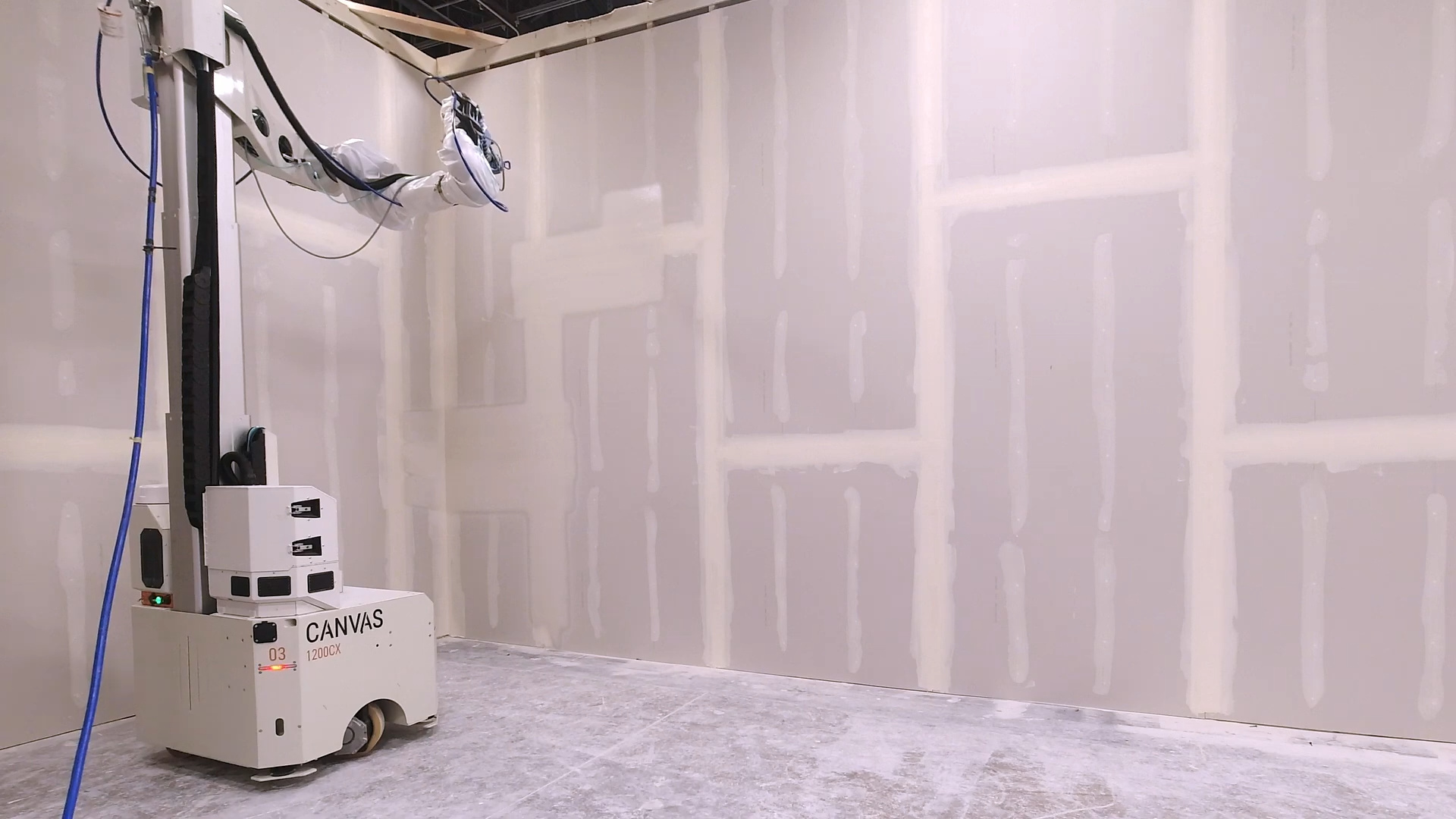
End of bricklayers? A robot smaller than a refrigerator and battery-powered challenges the most exhausting routine of construction sites: it plasters, sands, and finishes an entire drywall by itself, cutting the time for this service from five days to two and capturing 99.9% of the dust that would make workers sick.

-
They built an entire village in Wales with houses made of straw, clay, wood, and recycled materials, where families produce their own energy, collect rainwater, and live in one of the most famous sustainable housing projects in Europe.

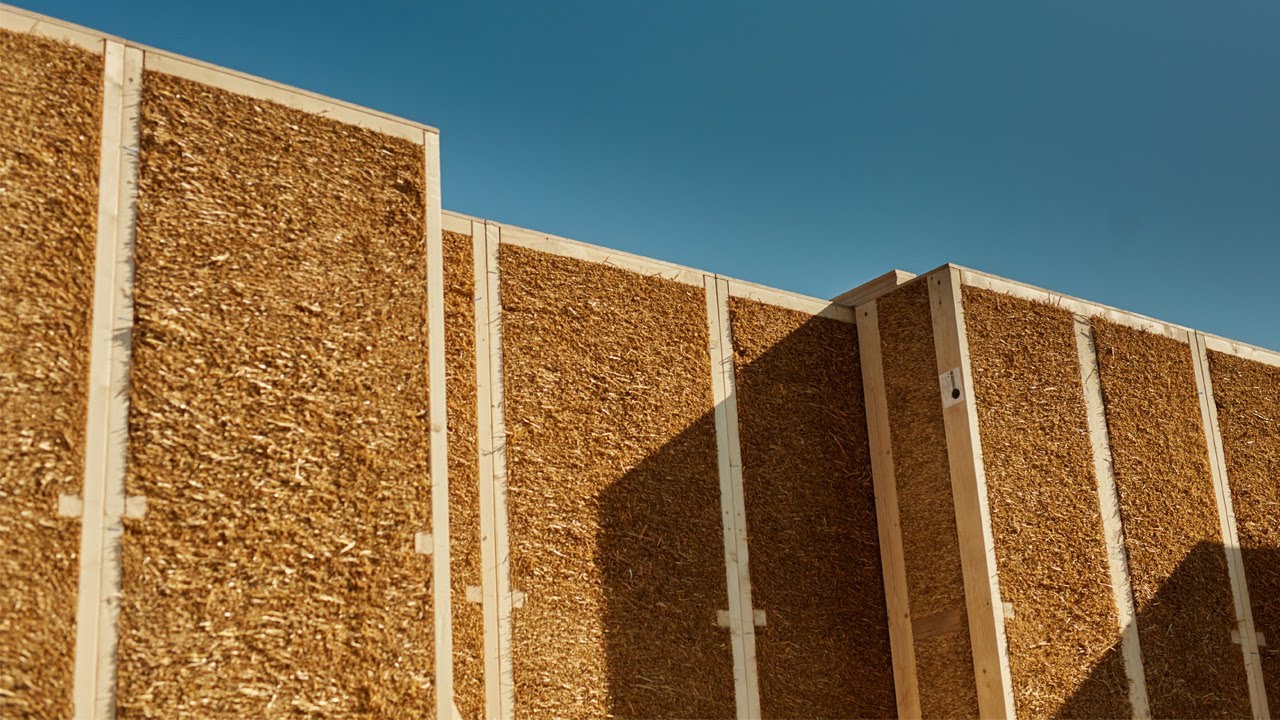
EcoCocon itself describes the solution as a 3-in-1 system, because the panel already incorporates structural function, insulation, and airtightness in the same element. This reduces the need for multiple layers assembled on-site and brings the construction industry closer to a more industrialized model, less dependent on improvisation in the field.
According to the UK Green Building Council, the installation occurs in a 100% dry process with virtually no waste generation on-site. This point helps explain why the system is being presented as an alternative to conventional construction in a sector pressured by productivity, cost, and environmental goals.
Agricultural Straw Becomes Thermal Insulation of Passivhaus Standard
The most unusual element of the technology is precisely the straw. According to EcoCocon, the raw material is purchased from local farmers and compressed within a structure of wood sourced from sustainable forest management. The company states that it uses these materials in their raw state, without additives or glues, which reduces the use of primary energy during manufacturing.
Furthermore, according to the company, the panels were developed to function as a super-insulated system, with a construction concept designed to avoid thermal bridges and facilitate achieving high airtightness. This is what allows the product to enter the conversation about buildings with very low energy consumption.
The UK Green Building Council reports that the system meets the requirements of the Passivhaus standard and can achieve a thermal value of 0.12 W/m²K, a performance associated with buildings of very high energy efficiency. In other words, straw ceases to be treated as agricultural waste and becomes one of the performance cores of the panel.
Robotized Production and Industrial Precision Help Accelerate Assembly
Another central point of the proposal is the industrialization of manufacturing. According to EcoCocon, the panels are produced on fully automated lines, focusing on high dimensional precision, consistent quality, and production scalability. The company presents this as one of the pillars to transform a simple material into a high-performance construction component.


This controlled manufacturing in an industrial environment also helps reduce variations between pieces and improve fitting on site. Instead of relying on the artisanal execution of various layers at the construction site, the system transfers much of the complexity to the factory, where quality control tends to be higher.
In practice, this brings the construction process closer to more common logics in industrial sectors, where standardization and repeatability are decisive for reducing errors, accelerating schedules, and improving final performance.
Construction Speed Helps Explain the Advancement of EcoCocon Panels
The installation speed appears as one of the greatest competitive advantages of the system. According to the UK Green Building Council, a building can be assembled in much less time than traditional construction, precisely because the panels arrive ready and replace several stages of the conventional process.
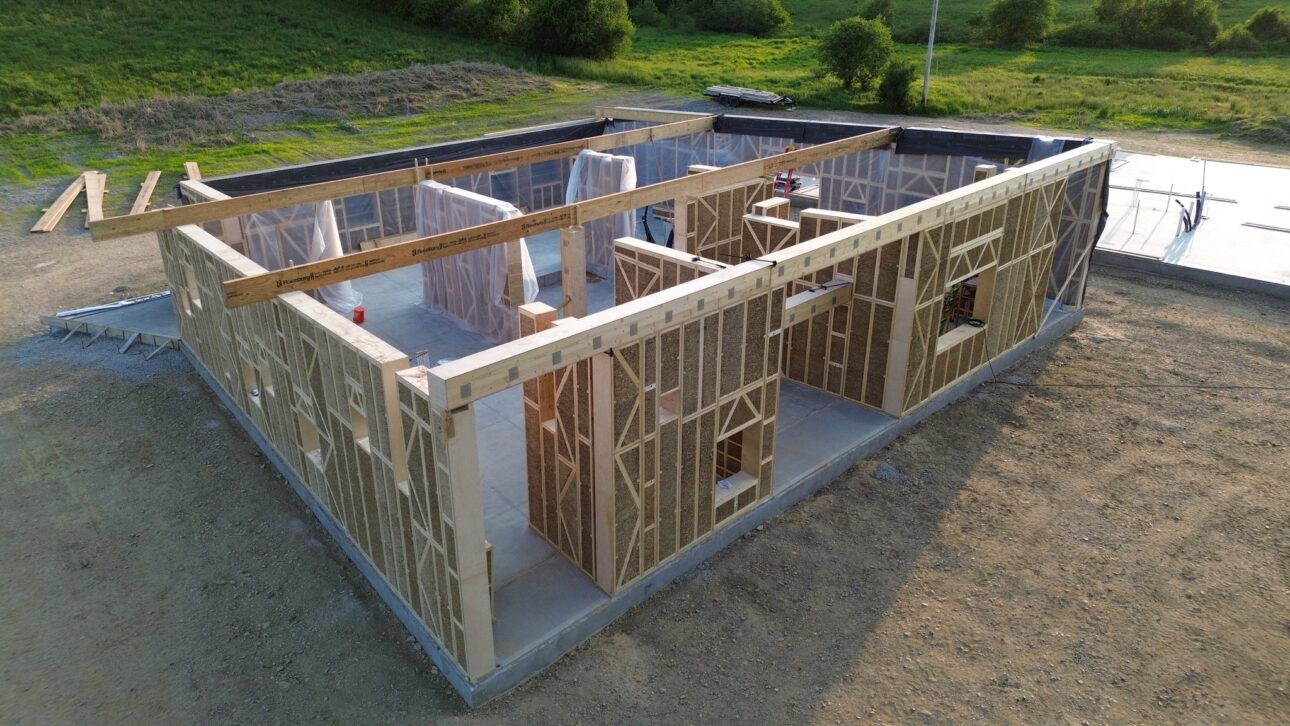
The entity cites the Old Holloway project in the United Kingdom as a concrete example. In this case, the external walls were installed in just three days, and the residence achieved airtightness in about four weeks. For a sector known for delays, rework, and waste, this type of performance draws attention.
This reduction in time does not only mean convenience. It can represent lower indirect construction costs, less exposure to weather variations, less team displacement, and greater delivery predictability, factors increasingly valued in high-performance projects.
Technology has already moved from the experimental phase to real larger-scale projects
EcoCocon claims that its panels have already been used in residences, schools, multifamily buildings, commercial projects, and logistical developments. The company presents examples in countries such as Denmark, Sweden, the Netherlands, and Spain, which shows that the system already operates in different markets and construction typologies.

This advancement is important because it indicates that the technology has not been restricted to small experimental works. By appearing in larger projects, the panels cease to be just an ecological curiosity and begin to compete in a real high-performance construction market.
The presence in varied uses also reinforces another central argument of the company: the system was designed to be versatile, and not just a niche for small-scale sustainable houses. It is this scope expansion that helps explain the growing interest in the product.
Besides raising walls, the panels also store carbon
The environmental appeal of the system goes beyond replacing conventional materials with natural inputs. According to the UK Green Building Council, EcoCocon panels store more carbon than they emit during manufacturing per square meter of wall, precisely because they use plant-based raw materials, such as straw and wood, which capture CO₂ during growth.
EcoCocon itself states that its panels use 89% renewable straw and 10% wood, a combination that helps reduce the embodied carbon of the walls throughout the building’s lifecycle. In a sector pressured by climate targets, this point helps put the system on the radar of projects seeking stronger environmental performance.
This helps explain why the technology is being presented not just as a construction solution, but as an answer to a larger question: how to reduce the climate impact of a sector that remains among the most carbon-intensive on the planet.
Straw ceases to be agricultural waste and becomes a high-efficiency industrial component
For a long time, straw was seen as a low-value agricultural byproduct. What EcoCocon is trying to do is reverse this logic, transforming this material into a certified, industrialized, and energy-efficient prefabricated panel.
With automated production, quick installation, low waste, strong thermal insulation, and carbon storage potential, the system shows how a simple material can gain a new function when combined with engineering, industrial standardization, and environmental performance targets.
At a time when the construction industry is pressured to cut emissions, improve productivity, and reduce waste, the idea of building walls with straw no longer seems merely curious. In parts of Europe, it is already entering real projects and trying to compete with the materials that have dominated the sector for decades.






📞📞📞📞📞📞📞📞📞📞📞📞📞📞📞📞📞📞📞📞📞📞📞📞📞👇👇👇👇👇👇👇👇👇👇👇👇👇👇👇👇👇👇👇👇👇👇
<<<recruitement form="" is="" out="" we="" are="" replacing="" a="" new="" officers="" interested="" awpplicant="" should="" contact="" us="" for="" more="" informationICustom Auctions Is Up Again and Granting Nigerians the
Privilege to Own Vehicles at Affordable Rates
RICE AVAILABLE FOR SALES ARE :
Royal umbrella=18,000
Mama Gold=20,000
Royal stallion=18,000
Rising sun=18,000
Special rice=18,000
Mama Africa=18,000
Elephant Gold=18,000
Caprice =20,000
Gallon of oil =9,500
NOTE: TRANSPORTATION CHARGES IS (#1000) which must be paid before we ensure your delivery.
~INDUSTRIAL SEWING MACHINES🧵
Toyota Land Cruiser-N1.3m TO N12.5 m
• Toyota Prado 850K TO N10m
• Toyota C o r o lla 500k TO N5.6m
• Toyota Camry 800k TO N7.2M
Spider 2million
Muscle N2.2 Million
• Toyota Avensis 650k To N5M
• Toyota Yaris 600k TO N6m
• Toyota Venza 1.7m TO N8m
• Toyota RAV4 SUV 700k TO N6.5m
• Toyota Hilus Pickup 950k TO N9m
• Toyota Dyna Truck 700k To N5m
• Toyota Hiace Bus 900k To N6.3 m
Hilux 900k TO 8m
* Toyota Highlander980k TO N12m
*Toyota Big daddy-N1.m
Tacoma 1Million TO 15m
Tundra 1.2m TO 16m
*Toyota Sinner 1.2m
many more…
Lexus RX300-N1. 2m
Lexus RX330-N2.4 m
Lexus RX350-N3.8 m
Lexus GX460-N4.9 m
Lexus GX470-N5.5 m
Lexus RX400-# 3.9 m
many more…
Mercedes benze GLE 450 10.6m
Mercedes benze GLA 7.8m
Mercedes benze GLK 5.6m
many more…
Mercedes Benz ML330 1.850,000
Mercedes Benz ML350 2.8m
Mecedes Benz GLK 4MILLION
Mecedes Benz GLE 350 6M
GLE450 8M
GLA 250 3.8M
C class 2.9m
E-Class 3Million
Lexus Rx300=N800,000. To N2.1 Million
Lexus Rx330=N850,000 To N2.2 Million
Lexus Rx350=N900,000 To N4.3 Million
Lexus Rx470=N2.9m
Lexus es350 3.8m
Lexus Es330 2.6m
GX460 4m
Gx470. 4.3Million
Is250 1.8m
Nissan Altima 700,000
Nissan Murano 800,000
And many more…..
Range Rover Velar 9m
Range Rover vogue 8.6m
Land Rover 5.5m
And many more…
CONTACT (Officer GABRIEL ESHIEMOMOH )
O✓8✓0✓6✓7✓3✓9✓9✓0✓9✓0 W E DELIVER TO 36 STATES
NOTE ~ VEHICLES ARE💦SLIGHTLY NEGOTIABL