Portuguese
  Spanish


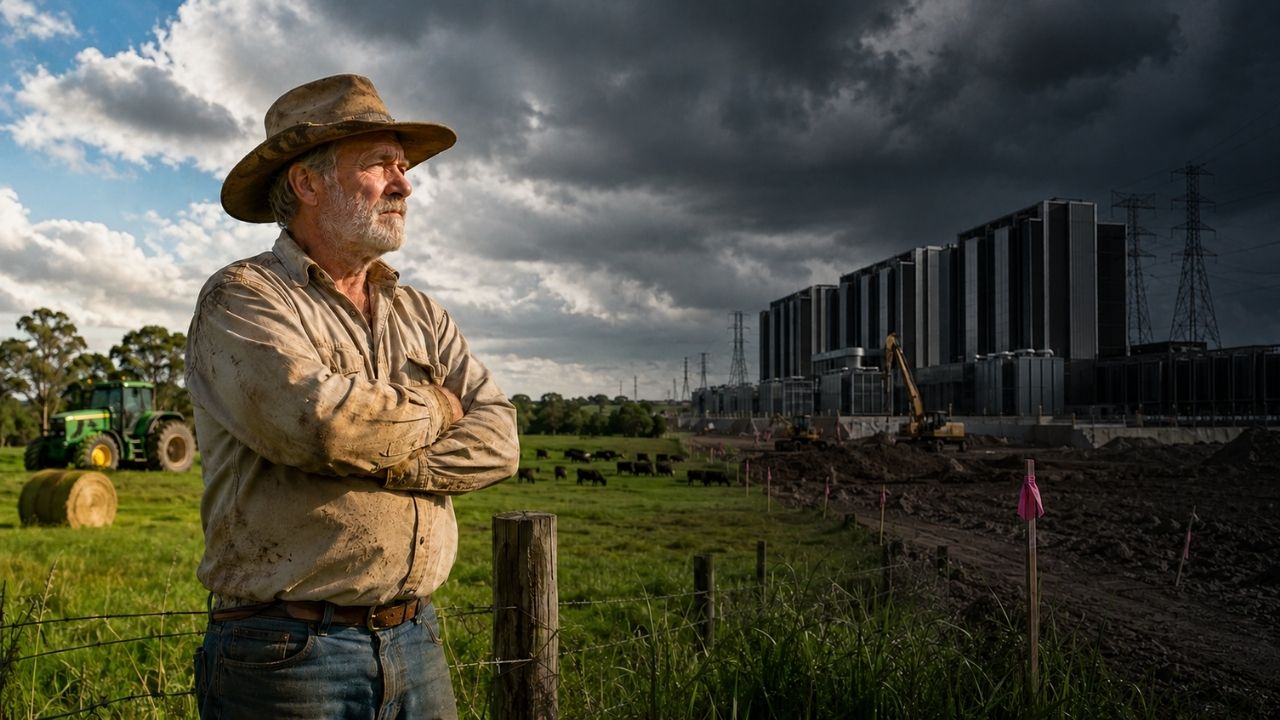

Farmers in the US rejected million-dollar offers for land destined for data centers, while analysis by Digital Agriculture Services identified more than 21 billion Australian dollars in farmland within favorable zones for these projects in Australia. The pressure reignites debate on AI, food, and rural land use.
The farmers who reject millions to keep agricultural land in the US now appear within a larger discussion: the race for data centers, driven by artificial intelligence, has ceased to be just a technology topic and has started to compete for physical space with areas that still produce food.
In Australia, the company Digital Agriculture Services, based in Melbourne, identified more than 21 billion Australian dollars in farmland located in zones favorable for the development of data centers in New South Wales and Victoria. The survey was released on June 16, 2026, by Business News Australia.
When AI meets productive land
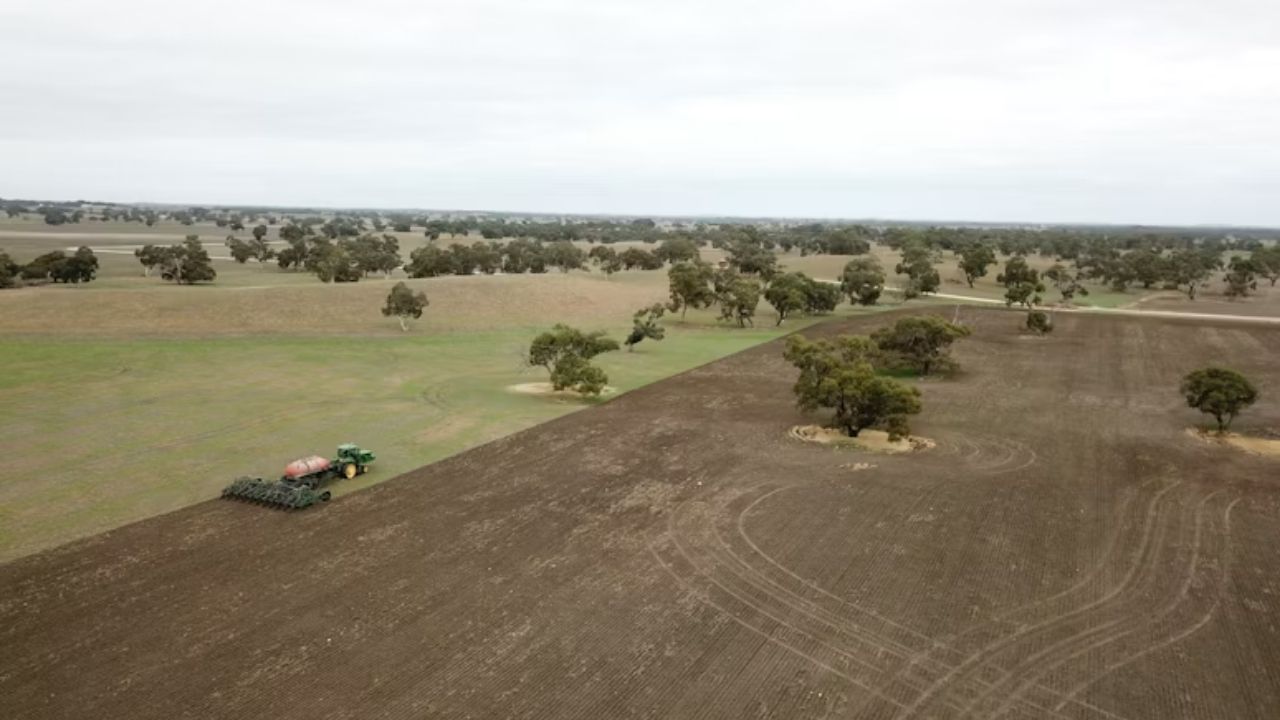
The expansion of data centers depends on energy, water, connectivity, and large available areas. Therefore, rural regions have come onto the radar of companies linked to cloud computing and artificial intelligence.
-
Brazil Launches Ambitious Project to Recycle Toothpaste Tubes and Toothbrushes, Aiming to Revolutionize Waste Management

-
The Mystery of Roanoke: Entire Colony Vanished Without a Trace, Leaving Only “Croatoan” as a Clue and Becoming a Historical Legend

-
Namibia Plans to Build Homes for the Homeless Using Mushrooms and Invasive Plants to Tackle Housing Crisis

-
Brazilian Innovator Converts Old Car into Electric Vehicle Using Laptop Batteries and Forklift Motor, Achieves Nearly 90 km/h in Urban Settings




The problem is that many of these areas are not unproductive voids. They are farms, family properties, and agricultural lands that sustain food production, local income, and rural identity, which makes each million-dollar proposal a difficult choice.
Farmers reject money to preserve the land
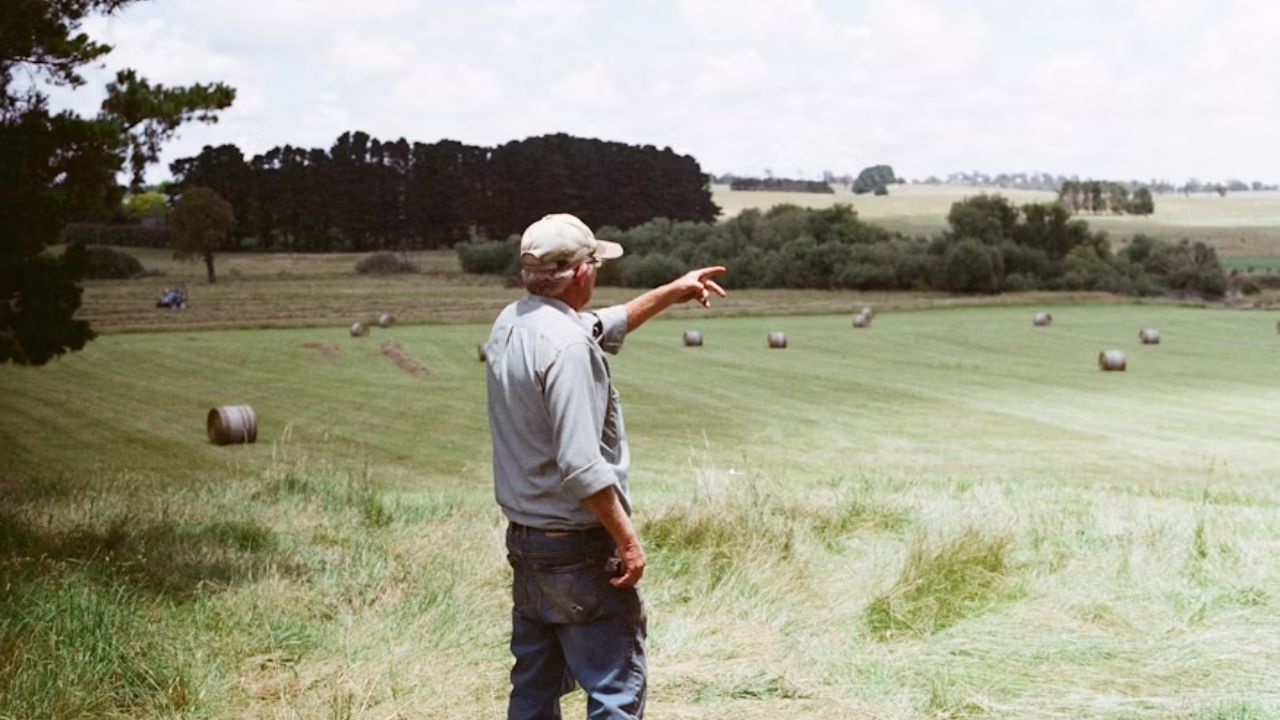
In the USA, cases of farmers who refused million-dollar offers gained attention because they show that not all land for sale is treated solely as a financial asset. In some cases, the property carries decades of work, family memory, and a bond with agricultural production.
One of the cases reported by the American press involves Mervin Raudabaugh, an 86-year-old farmer from Pennsylvania, who refused an offer of over $15 million for his land. The area was coveted by developers linked to data centers, but he chose to preserve its agricultural use.
The refusal exposes a conflict greater than money
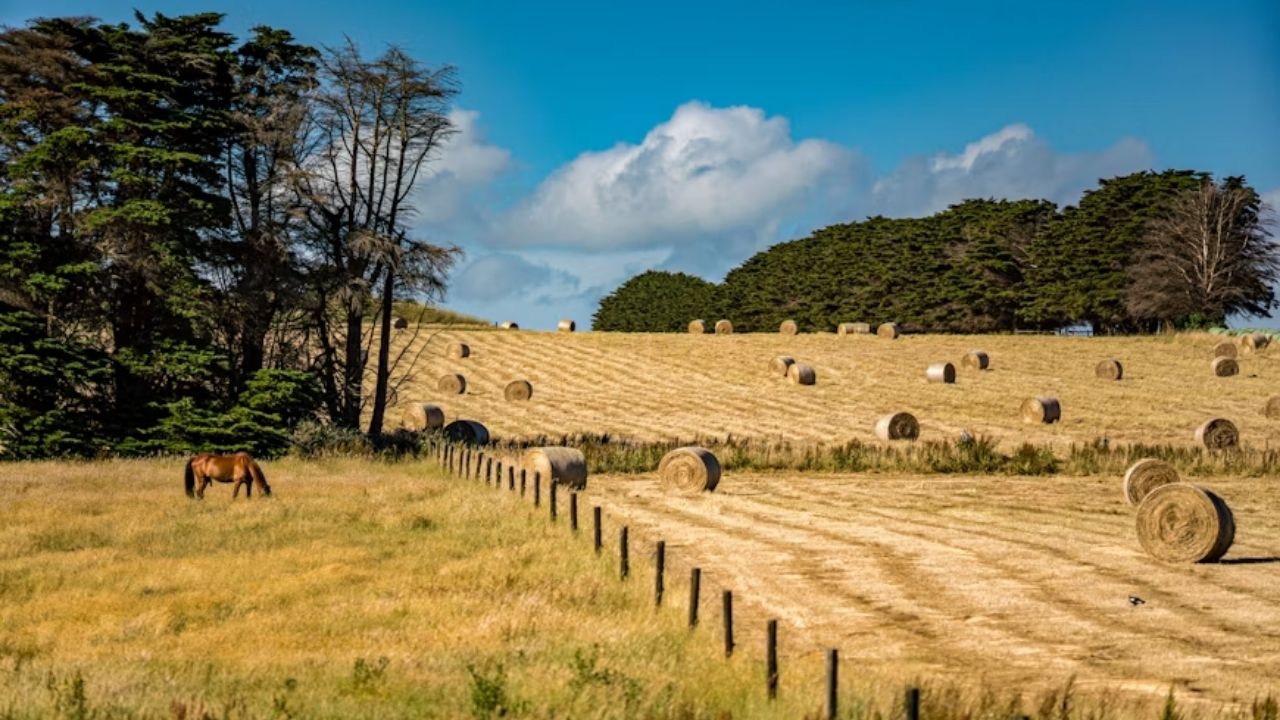
The decision of these farmers does not mean that the offers are small or irrelevant. On the contrary: many values far exceed the traditional price of rural lands in some regions.
The central point is different. For some producers, selling the farm would mean erasing a life story and interrupting the land’s food function, replacing crops, pastures, and rural work with digital processing warehouses.
Australia sees $21 billion in land on the radar
In Australia, Digital Agriculture Services mapped more than 2.1 million hectares in 21,000 farms in New South Wales and Victoria. These areas are within current and proposed corridors of renewable energy zones and data center development.
The analysis indicates that rural land transactions already recorded in 2025 in these zones totaled 2.74 billion Australian dollars. The scale of the mapping shows that the land dispute is no longer sporadic and has taken on a strategic dimension.
Agricultural regions appear as a priority
According to the analysis, five regions concentrate a large part of the transactions: Northwest of New South Wales, Central West of New South Wales, Riverina, Hume in Victoria, and Melton, also in Victoria.
These regions appear in the survey because they combine land, infrastructure, connection with energy corridors, and potential for new developments. The same factor that makes the area attractive for data centers may put it in conflict with agricultural production.
Data centers become critical national infrastructure
Sarah Gorman, co-founder of Digital Agriculture Services, acknowledges that data centers represent important national infrastructure. They support digital services, cloud, artificial intelligence, and systems used by companies, governments, and consumers.
But the executive also warns about the pressure on productive agricultural lands. The debate is not simply for or against technology, but about where it should grow and what territorial cost this growth imposes.
Land use enters the center of risk
For years, the discussion about agricultural lands in Australia revolved around ownership, land concentration, and climate risks. Now, according to DAS’s analysis, a third layer emerges: the final use of the land.
It is not just about who buys or how the climate will affect productivity. The question becomes what that land will be used for: food production, energy generation, digital expansion, or industrial infrastructure.
Microsoft and AWS increase pressure for infrastructure
The race for data centers in Australia follows billion-dollar commitments from technology companies. Microsoft announced an investment of 25 billion Australian dollars in data center and AI infrastructure in the country by 2029.
Amazon Web Services also promised 20 billion Australian dollars to expand its data centers in Australia. These numbers help explain why regional and rural areas have come to be seen as part of the country’s digital future.
Regional projects are already underway
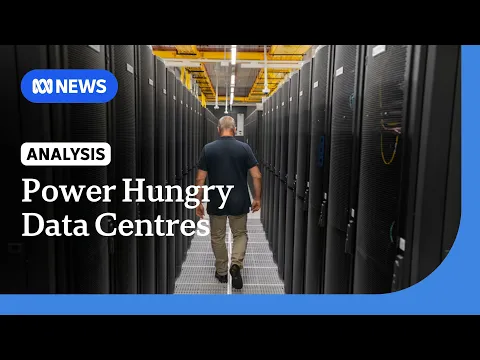

The internalization of Australian data centers already has concrete examples. Keppel, a company listed in Singapore, has proposed a hyperscale campus worth 10 billion Australian dollars in Gippsland, Victoria.
In Western Australia, Gingerah Energy is developing the Meridien Project in Kimberley, with an initial capacity of 240 megawatts and potential expansion to one gigawatt. These projects show that digital infrastructure is seeking territory outside the capitals.
Renewable energy also attracts data centers
Many rural areas come onto the radar because they are close to renewable energy corridors. For data centers, this is relevant because these enterprises require a large amount of electricity and need to demonstrate concern for clean energy.
The problem is that the same region may have agricultural vocation, environmental value, and importance for local communities. The dispute ceases to be merely technological and starts to involve territorial planning, food production, and public policy.
Food security becomes a central argument
The pressure on productive farms is concerning because food production depends on soil, water, logistics, and continuity. Once converted into industrial or digital infrastructure, the land rarely returns quickly to its previous agricultural function.
Therefore, farmers, analysts, and rural communities raise the issue of food security. In a scenario of pressured global chains, high input costs, and extreme weather events, the cumulative loss of productive areas may weigh in the future.
AI also has a physical footprint
Artificial intelligence is often seen as something abstract, linked to algorithms, software, and invisible servers. But each system depends on real data centers, built on real land, connected to energy and water networks.
This materiality changes the debate. AI does not only occupy screens: it occupies land, consumes resources, and competes for space with traditional activities, including farms that continue to produce food.
Rural communities see opportunity and risk
Data centers can bring investment, taxes, specialized jobs, and infrastructure to some regions. For small towns, the economic promise can be attractive, especially when there is a need for diversification.
At the same time, communities fear the loss of rural landscape, pressure on energy and water, noise, change in land use, and reduction of the productive base. The conflict arises precisely from this mix of economic opportunity and local cost.
Not every farm is just real estate
For investors, a farm may appear as available land on a map. For those who live off it, the meaning is different. Rural land can represent heritage, daily work, production, autonomy, and family continuity.
That’s why refusals in the USA resonate so much. When farmers say no to millions, they expose a boundary that money doesn’t always cross: the symbolic and productive value of the land.
Australia tries to balance attraction and sustainability
The government of Victoria launched a 5.5 million Australian dollar Sustainable Data Centers Action Plan, intending to balance investment attraction with energy and water sustainability.
This type of initiative shows that governments already perceive the need for clearer rules. Without planning, digital expansion can advance faster than the public’s ability to measure its effects on agricultural lands.
The countryside enters the digital century dispute
The race for data centers shows that the countryside is not outside the technological revolution. On the contrary: farms, energy corridors, water, and regional lands have become part of the necessary infrastructure to keep the digital economy running.
The challenge is to decide how this transition will be made. The question is not just how much land is worth, but what is lost when it stops producing food to support servers.
Between food, data, and the rural future
The cases of the USA and Australia point to the same dilemma: the digital economy needs to grow, but this growth has physical consequences. Data centers do not float in the air; they require land, energy, licensing, and social acceptance.
For farmers, the decision can be even deeper. Selling may mean immediate wealth, but also the end of an agricultural story. Refusing may preserve a productive landscape, but leave aside values that would change a family’s life.
When the farm is worth more than millions
The pressure from data centers on agricultural lands turns AI into a concrete force in the field. It doesn’t just appear as cutting-edge technology, but as a new competitor for the use of rural land.
The farmers who refuse millions help reveal this conflict before it becomes invisible on investment maps.
Do you think productive lands should be protected even in the face of million-dollar offers for data centers, or does the expansion of AI justify changing the purpose of these areas? Leave your opinion in the comments.