Portuguese
  Spanish


Region of 454 Thousand Km² on the Border of AM, AC, and RO, the AMACRO Concentrated 76% of Deforestation in the Three States Between 2018 and 2022, Study Shows.
A new and alarming epicenter of deforestation has consolidated in the Brazilian Amazon. Known as AMACRO, a vast area of 454 thousand km² spanning 32 municipalities on the border between Amazonas, Acre, and Rondônia, has become the main focus of forest destruction. According to a detailed study released by Agência FAPESP in March 2024, this region was responsible for an impressive 76% of all deforestation recorded in the three states between 2018 and 2022, now being considered the “new arc of deforestation”.
The escalation of devastation in AMACRO is not an isolated phenomenon, but rather the result of coordinated pressure for the expansion of the agribusiness frontier. The advance is primarily driven by extensive livestock farming, land speculation, and land grabbing. The dynamics reveal a systemic process that rapidly transforms the forest landscape into pastures, intensifying socio-environmental conflicts and challenging the State’s ability to protect territories and ensure legality in the most coveted area of the biome.
What Defines the “New Arc of Deforestation”?
The term AMACRO refers to a strategic planning zone that, although proposed with the idea of development, ended up signaling to the market a new frontier for commodity expansion. According to the study by Agência FAPESP, pressure on the region intensified starting in 2018, coinciding with the planning of the Abunã-Madeira Sustainable Development Zone (ZDS). This initiative, nicknamed “Matopiba of the North”, acted as a trigger for the land rush, attracting land grabbers and ranchers who saw an opportunity for high real estate appreciation and business expansion.
-
Seen from space, an astronaut captures in Canada a geometric carpet of crops drawn over the backdrop of a ghost lake that disappeared 12,000 years ago, was once larger than all the Great Lakes combined, and left a scar of fertile mud that still sustains agriculture.

-
Billionaire says the most valuable skill will help overcome job elimination caused by AI, following Bill Gates’ fears

-
A Dutchman created a ‘box’ that makes trees grow in the desert almost without water and without irrigation: the invention has already brought seedlings to dozens of countries and achieves up to 90% survival where common planting did not exceed 10%.

-
Abandoned warehouse hid a giant collection of rare computers, with over 2,000 artifacts from the 1930s to the 1980s.




The geospatial analysis confirms that this area was not chosen at random. It represents the forefront of forest conversion for agricultural use, a historical process in the Amazon. Data from MapBiomas shows that between 1985 and 2020, 99% of the 44.5 million hectares deforested in the biome were intended for agriculture. Of this total, 86.3% became pastures, highlighting the central role of livestock farming. The AMACRO is, therefore, the most recent and aggressive chapter in this long history of replacing forest with pasture, consolidating an occupation model that advances over public lands and protected areas.
The Vectors of Devastation: Livestock Farming and Systemic Land Grabbing
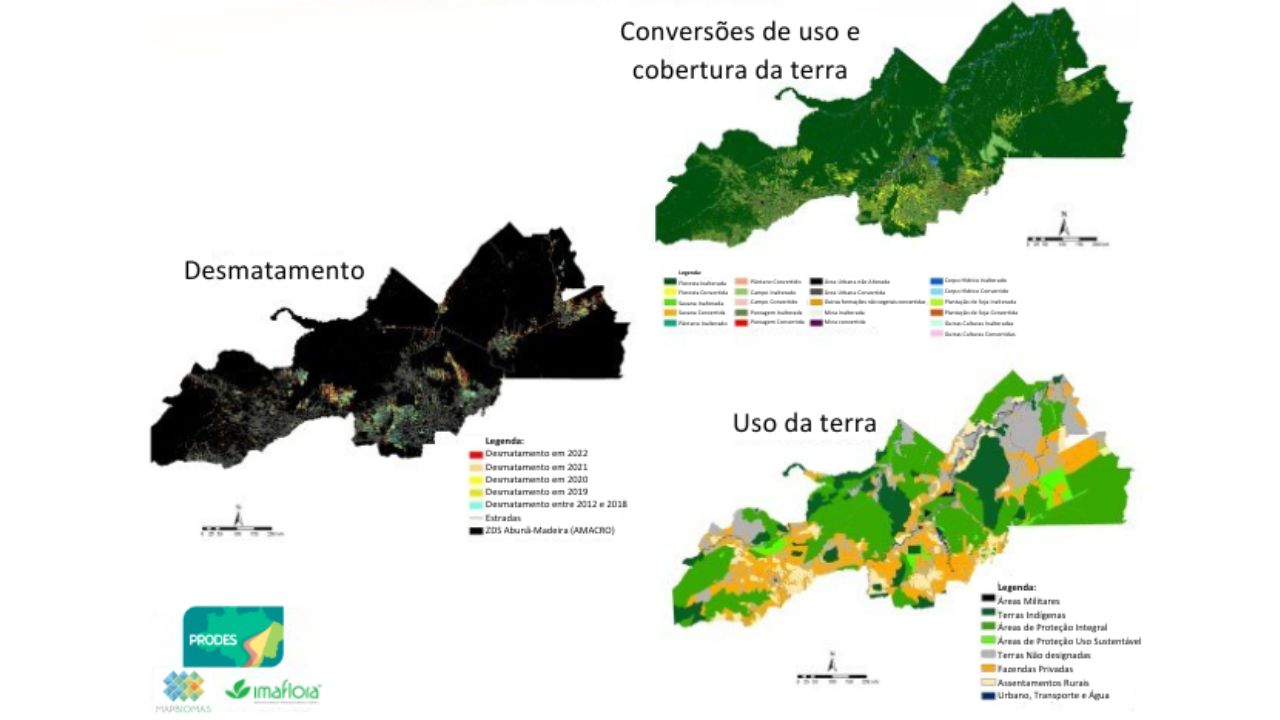
The main economic driver behind the advance in AMACRO is extensive livestock farming, often associated with land grabbing. The process of illegal appropriation follows a well-defined script: first, a public forest area is invaded; then, the vegetation is cut down and burned to “clean” the land. Finally, the invader introduces cattle and, crucially, fences the entire perimeter. This fence serves not only to contain the animals but also functions as a physical declaration of possession and a “improvement” that will be used later to claim legal title to the property.
This strategy transforms a criminal act, the invasion and deforestation of public property, into an asset that appears legal. The fence becomes the tool that effectively privatizes what is still public by right, creating “facts on the ground” that hinder enforcement actions and the recognition of traditional peoples’ territories. It is a vicious cycle where deforestation is the means for land appropriation, and livestock farming is the economic justification for occupation, consolidating a predatory model that ignores environmental legislation and territorial rights.
Social Conflicts and the Fragility of Law on the Border
The advance of the “wall” of agribusiness over AMACRO inevitably collides with the territories of indigenous peoples, riverine communities, and conservation units. The pressure on these protected areas intensifies violence in the field, a phenomenon that researchers describe as “agrobandidagem”: the articulation between agribusiness capital and criminal practices to concentrate land. In this scenario, violence and intimidation are used to expel traditional occupants, and the fence becomes the ultimate symbol of expropriation.
The complexity of the situation is exacerbated by legal instability. As noted in a publication from the Federal Government portal, updated by Funai in August 2025, the agency faces enormous challenges in demarcating indigenous lands. Legislative threats, such as the thesis of the “temporal framework”, create an environment of insecurity that encourages invaders to encroach on unrecognized territories. The action of Funai in mediating agrarian conflicts is constant, but the absence of robust land governance and the slowness of demarcation processes leave traditional communities extremely vulnerable to the advance of the agribusiness frontier.
The Economic Paradox: A High-Cost and Low-Return Investment?
The consolidation of AMACRO as an agricultural frontier raises a fundamental economic question: is it worth it? The model based on extensive livestock farming requires substantial investments in infrastructure, such as building thousands of kilometers of fences, for a relatively low productive return. At the same time, an asset of incalculable value is being destroyed. The World Bank assesses the wealth of standing forest at US$ 317 billion, while the economic potential of Amazonian bioeconomy, the sustainable use of biodiversity, is estimated at R$ 1.3 trillion per year by 2050.
The paradox deepens when it is observed that part of this advance is financed, directly or indirectly, by public and private credit. Investigations show that farms with a history of illegal deforestation and embargoed areas in the Amazon continued to receive rural credit. This reveals a glaring contradiction in public policies: while one part of the State tries to combat environmental crime, another finances it. The capital invested to build fences and clear forests could be directed towards regenerative models, such as agroforestry systems and bioeconomy, which generate more wealth, quality jobs, and maintain a healthy and functional ecosystem.
The expansion of agribusiness in the Amazon, as seen in AMACRO, appears to follow a script that has already proven destructive in other parts of the country. The lingering question is whether this is an inevitable path to development or a strategic error with unpayable environmental, social, and economic costs in the long term.
Do you agree with this change? Do you think it impacts the market? Share your opinion in the comments; we want to hear from those who live this in practice.