Portuguese
  Spanish


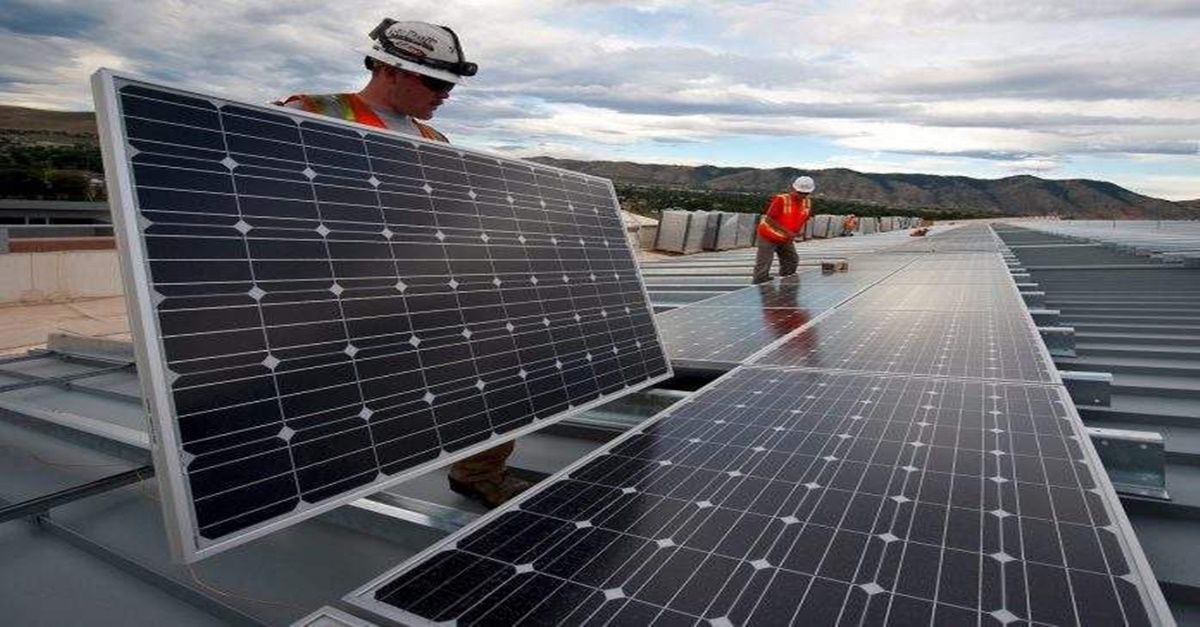

Johnson & Johnson’s Solar Farm in SP Will Avoid Emitting 215 Tons of CO2 into the Atmosphere, Equivalent to Planting 600 New Trees Per Year
It was in São José dos Campos, in the interior of São Paulo, that the American company Johnson & Johnson installed its first solar power plant in South America. The photovoltaic farm with a capacity of 1 megawatt-peak (MWp) was built by EDP Smart, the largest Portuguese investor in Brazil, which will triple its resources in solar energy in the country.
Read Also
- New Solar-Powered Panels Transform Steam into Drinking Water
- Get Ready for the FOURTH Industrial Revolution, Senai Opens 280 Slots for Free Training Courses in Industry
- Renewable Energy Has Great Potential to Help During Droughts in Rural Areas
“We are already seeing a positive impact with this project, which will allow for a much broader study in the area of sustainability,” says Gerardo Vargas, Vice President of Logistics and Customer Service for Johnson & Johnson in Latin America, in an exclusive interview with EXAME.
The solar farm was installed within the largest manufacturing park — in area — of Johnson & Johnson in the world, featuring 3,240 photovoltaic modules, in an area of 6,000 square meters — equivalent to a soccer field.
-
Robots Clean Solar Panels in Desert Power Plants Without Water, Preventing Energy Losses

-
Brazil’s Offshore Wind Energy Potential Worth $1 Trillion Stalled by Long-Delayed Agreement

-
World’s Largest Engie Solar Plant in Brazil Highlights Billion-Dollar Energy Waste Issue: Company Considers Batteries and Bitcoin Mining to Avoid Wasting Production

-
Air Products Cancels $2.9 Billion Clean Hydrogen Megaproject in Louisiana, Shuts Down Arizona Unit, Highlighting High Costs of U.S. Energy Transition


The renewable energy generated on-site will prevent the emission of 215 tons of CO2 into the atmosphere, a volume that would require the planting of 600 new trees per year to be neutralized.
The recent investment of 800 million dollars in sustainable actions by 2030 shows that this is just one of the steps towards a greener future for Johnson & Johnson.
Here Is a Summary of Johnson & Johnson’s Renewable Energy Initiatives in Brazil and Worldwide
Solar Energy Shanghai and Changzhou, China; Pulogadung, Indonesia; Baddi, India; Toluca, Mexico and Manaus, Brazil
At SC Johnson’s factories in China, Indonesia, and India, solar projects help provide water heating for the company’s operations, including aerosol production and quality control processes.
Its manufacturing unit in Toluca, Mexico, uses solar-heated water to replace liquefied petroleum gas (LPG) in the cafeteria and employee facilities. In Manaus, its solar power manufacturing plant produces 100% of the renewable electricity needed for local services to power the factory.