Portuguese
  Spanish


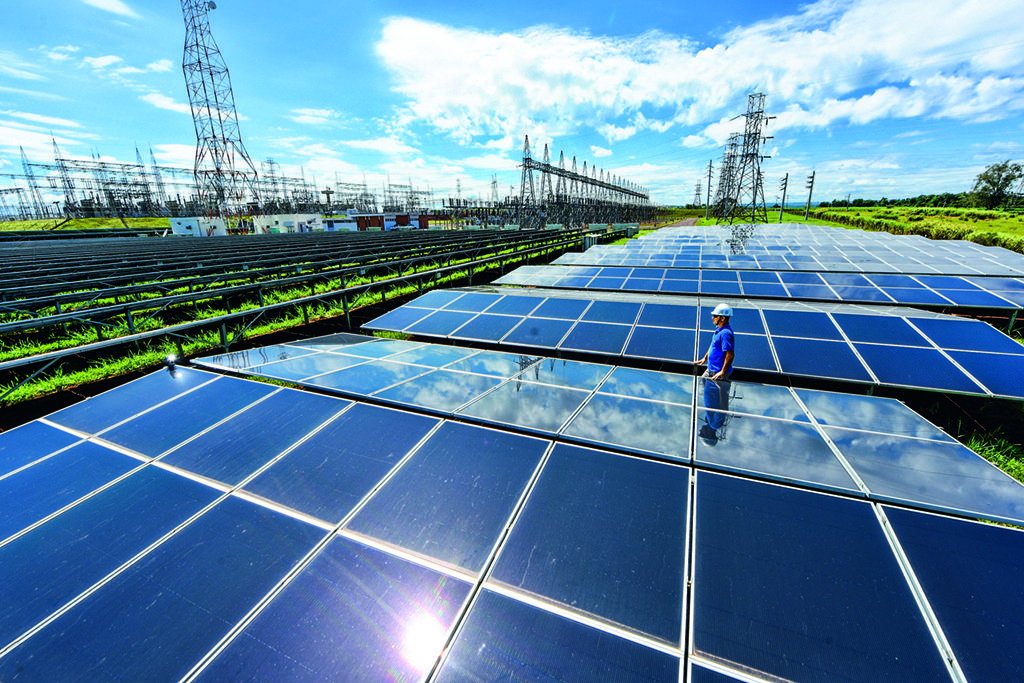

Solar Energy Generation, EDP Aims to Maintain a Pioneering and Innovative Attitude in More Areas That Will Gain Significant Ground in Brazil
The Portuguese EDP, through EDP Smart, will triple its investments in solar energy in Brazil, increasing from the current R$ 100 million to R$ 300 million annually. The company already has 29 MWp of installed capacity in the country and 59 MWp in sold projects. The Roof Tile That Generates Solar Energy from Eternit is Approved by Inmetro and Can Be Sold in Brazil
Read Also
- The Potential of Solar Energy Can Contribute to the Development of the Amazon
- Solar Energy Projects Are Growing in Brazil and Attracting Investors’ Attention
- The Roof Tile That Generates Solar Energy from Eternit is Approved by Inmetro and Can Be Sold in Brazil
“If there is a place in the world with potential for solar energy growth, that place is Brazil. We have an unmatched competitive advantage,” said Carlos Andrade, Vice President of Strategy and Business Development at EDP.
“We will also invest in centralized generation. However, we are not interested in providing energy for the entire system, but rather for the end customer, such as commerce, industry, and together with EDP Renováveis,” Andrade commented.
-
World’s Largest Engie Solar Plant in Brazil Highlights Billion-Dollar Energy Waste Issue: Company Considers Batteries and Bitcoin Mining to Avoid Wasting Production

-
Air Products Cancels $2.9 Billion Clean Hydrogen Megaproject in Louisiana, Shuts Down Arizona Unit, Highlighting High Costs of U.S. Energy Transition
-
Over 60 Tractors Take to the Streets in Lopera as Solar Parks Compete with Olive Groves, Affecting 13,000 to 100,000 Trees According to Conflicting Reports

-
Green Hydrogen Projects in Northeastern Brazil Stalled for 18 Months Awaiting Government Decree, Delaying Billions in Investments


For the B2B (Business-to-Business) segment, the company seeks long-term contracts, between 10 and 15 years. “It is important to establish a long-term relationship with our clients,” explained the executive.
According to Rodrigo Sauaia, CEO of ABSOLAR (Brazilian Solar Photovoltaic Energy Association), the technology for producing energy through solar irradiation conversion is a “revolution” that cannot be reversed.
Currently, Brazil has 6.4 GW of installed solar energy capacity, accumulating over R$ 33.1 billion in investments and generating more than 190,000 jobs.
According to ABSOLAR, the country ranks 16th in the world for solar energy usage.
Expectations for EDP Renováveis
EDP believes that, after the peak and worst moment of COVID-19, Brazil will be able to resume its growth trajectory. It is a resilient economy, with immense resources and great capacity for recovery.
“Therefore, we continue to have long-term plans for the country, with consistent investments in Distribution, aiming to continuously improve our service, and completing our transmission lots within the agreed costs and deadlines, maintaining the excellence for which EDP has become recognized in the country. We have been working to increase our presence also in the B2C segment, consolidating EDP Smart and the entire range of services offered in solar generation, energy efficiency, and electric mobility,” says the president of EDP Brazil.
In Brazil, EDP is also a reference in areas such as Innovation, Governance, and Sustainability, having been for 14 consecutive years in the Corporate Sustainability Index (ISE) of B3. One of EDP’s most recent and emblematic initiatives in this field was to undertake with the United Nations (UN) the commitment to ensure that, by 2030, 100% of the energy generated by the Company in Brazil will be from renewable sources.
EDP also subscribes to a series of national and international initiatives related to sustainability, particularly the UN Global Compact; the Brazilian GHG Protocol Program, a business initiative for greenhouse gas accounting; and the Carbon Disclosure Project (CDP), related to climate change.